
Last updated November 25, 2026
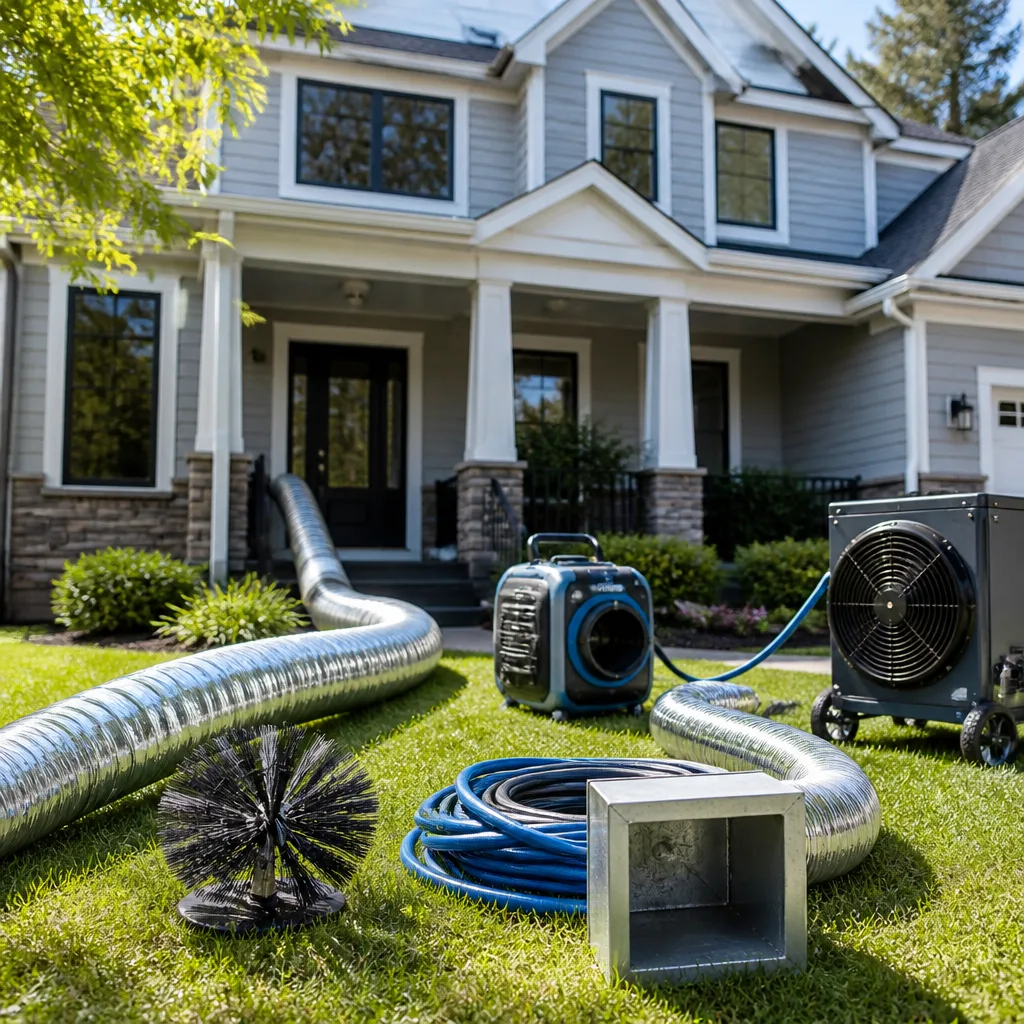 Whole-home duct cleaning
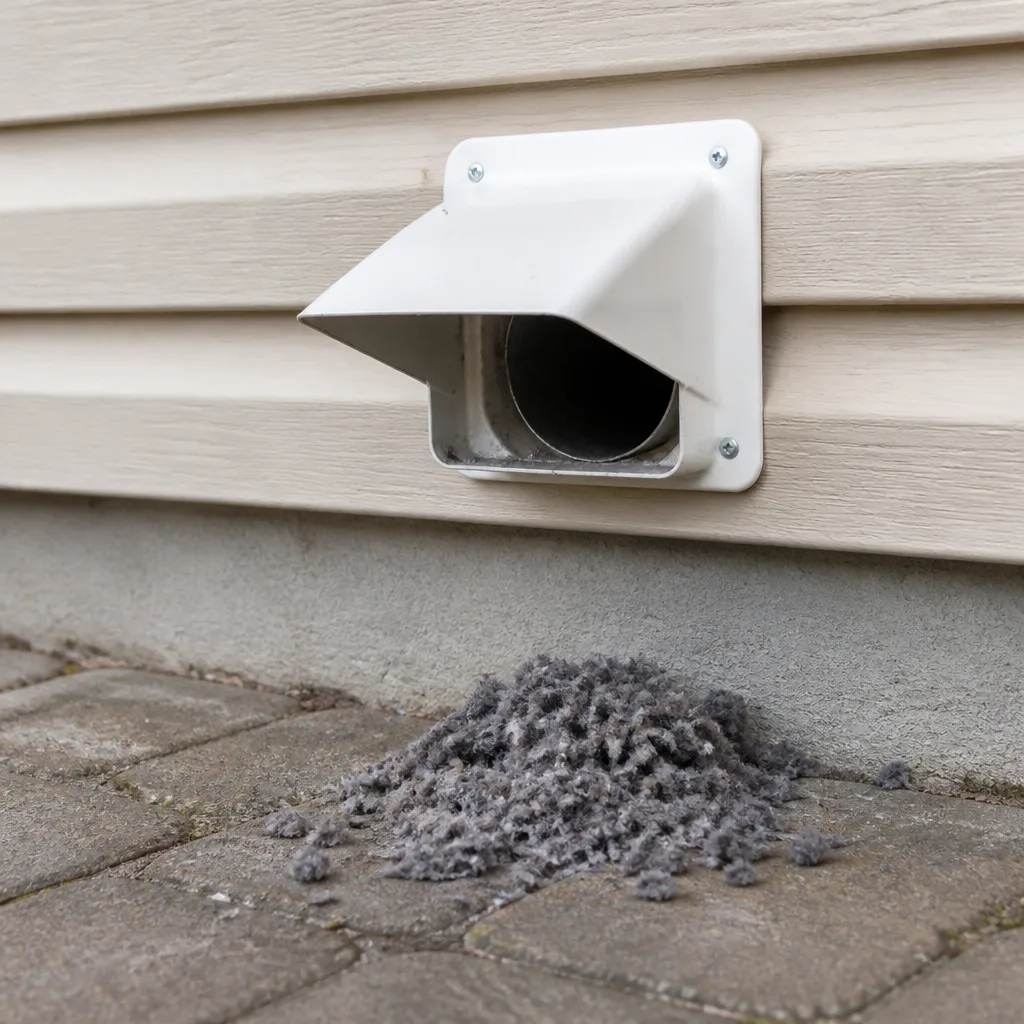 Dryer vent cleaning
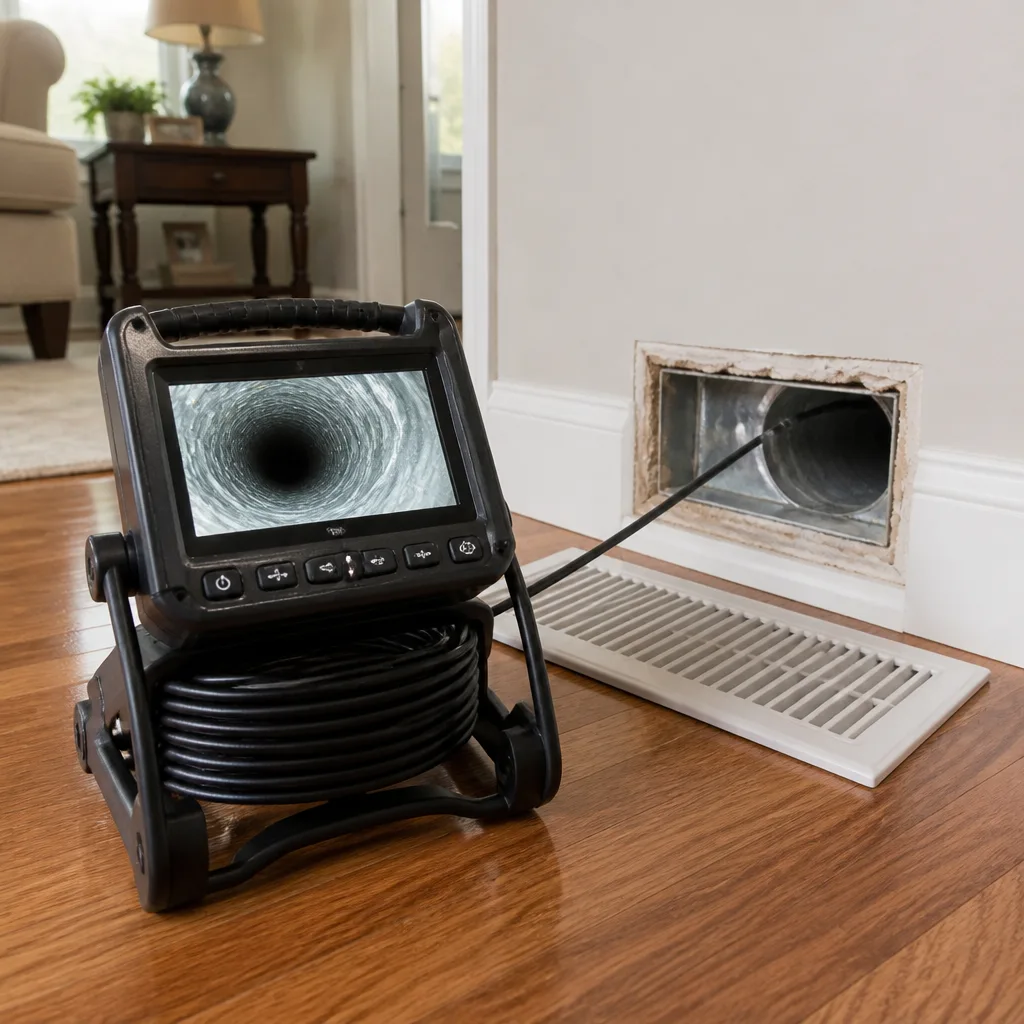 Camera inspection
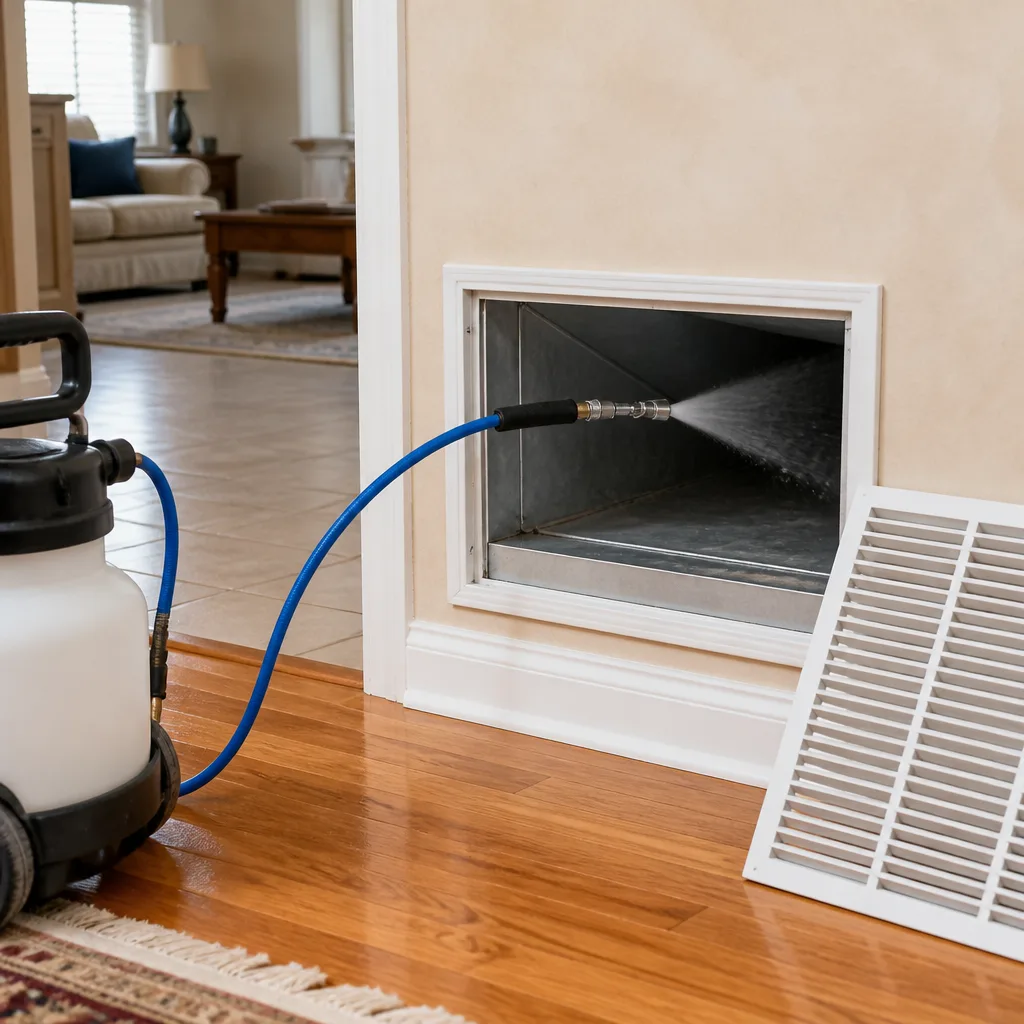 Sanitizing & deodorizing
Whole-system duct and dryer vent check with before-and-after photos - you see exactly what came out of your vents
That "$99 whole-house special" is a bait ad - the real number appears once they are in your hallway, or the "clean" is a shop-vac at the register. We photograph the inside of your ducts before and after instead.
Air Duct Cleaning Maintenance Checklist for Steele Creek Homeowners
The most expensive duct problem in a Steele Creek home is almost never the one that caused the bad smell. It’s usually a disconnected flex duct joint in the crawlspace or attic that’s been quietly conditioning empty space instead of a bedroom, sometimes for years, while the system compensates with longer run times and higher bills. The smell gets noticed immediately. The disconnected joint doesn’t. This checklist gives you a systematic inspection schedule tied to the failure points we actually see in Steele Creek homes: flex duct joints, vapor barriers, and crawlspace-adjacent runs. You’ll learn what to check, when to check it, and what each finding means before it gets expensive.
Quick Answer
A good air duct maintenance checklist for a Steele Creek home includes filter changes every 60 to 90 days, seasonal visual checks at every supply register and return grille, twice-yearly inspections of accessible duct sections in the crawlspace or attic, and a professional full-system cleaning every 3 to 5 years. The single most important habit is comparing airflow at each register to the others, because a weak register is the earliest sign of a disconnected or crushed duct joint.
Styles & brands we work with
- Whole-home duct cleaning
- Dryer vent cleaning
- Camera inspection
- Sanitizing & deodorizing
Table of Contents
- Why Steele Creek Homes Need Their Own Checklist
- Month-by-Month Maintenance Calendar
- Filter Selection Reality Check: MERV Ratings vs. Airflow
- Visual Checks You Can Do at Grilles and Registers Without Tools
- The Crawlspace and Attic Inspections Most Checklists Skip
- What to Document Between Professional Cleanings
- When a Professional Cleaning Is Actually Due
- Duct Repair and Sealing: Fixing the Root Cause
Why Steele Creek Homes Need Their Own Checklist
Steele Creek sits in a part of the Charlotte area where a lot of housing stock was built fast during the 1990s and 2000s boom. That era of construction leaned heavily on flex duct, and flex duct has a predictable lifespan and a predictable set of failure points. The joints between sections are taped or zip-tied, and over years of summer heat in the attic and winter dryness in the crawlspace, that tape dries out and lets go. The duct doesn’t fall apart. It just quietly leaks or separates.
Add in the local climate. Steele Creek summers push the air handler to run long, humid cycles, and winters bring enough cold snaps that the heat runs hard in January and February. Every one of those cycles expands and contracts the ductwork slightly. Multiply that by thousands of cycles and you get sagging runs, torn vapor barriers, and joints that pull apart at the seams. In a dry climate, that matters less. Here, a torn vapor barrier in a humid crawlspace means condensation on the duct, which means moisture where you don’t want it.
Neighborhoods around Steele Creek Crossing, Berewick, and the older sections near the airport all share variations of this. Newer builds in Berewick may still be under original builder-grade ductwork. Older homes may have already had partial replacements where a contractor patched a section instead of fixing the whole run. Both situations are worth inspecting on schedule rather than waiting for a symptom.
This guide is built around those realities: seasonal load patterns, flex duct vulnerabilities, and crawlspace conditions. If you’d rather skip the DIY inspection and get a professional baseline, our Air Duct Cleaning Steele Creek page covers the full-system service and what a professional evaluation includes.
Month-by-Month Maintenance Calendar
Here’s a maintenance schedule calibrated to how HVAC systems actually run in Steele Creek. Tasks are lightweight. The point is consistency, not complexity.
- January: Check the air filter (heat has been running hard since December). Walk the house and feel airflow at every supply register. Note any room that feels weak compared to the rest.
- February: Look at the return grille for dust buildup. If dust is visibly caking the grille, the filter may be undersized for the system. Check for cold drafts near floor registers, which can indicate a leak nearby.
- March: Transition from heating to cooling season. Replace the filter even if it looks fine. This is the best month to schedule a professional inspection before the summer crunch.
- April: First cooling season run. Smell-test each room. If any room smells musty or dusty when the AC kicks on, note which register and which room.
- May through August: Peak cooling load. Check the filter monthly during these months because it’s pulling the most air. Watch for condensation stains on ceilings below attic ductwork, which point to a sweating duct or a torn vapor barrier.
- September: Post-summer inspection. Look for water stains, dust trails around registers, and any new weak spots in airflow after a hard cooling season.
- October and November: Before heating season, replace the filter and verify nothing has nested or settled in accessible duct sections or the outdoor unit area.
- December: Check the crawlspace or attic for moisture, especially after fall rain. Close the year with a filter change and a quick airflow comparison.
If you want to consolidate the seasonal touch points into a single professional visit, plan around spring. A full-system cleaning done in March or April catches problems before the cooling season makes them worse. Our air duct cleaning service page walks through what a professional-grade cleaning does at each stage.
Filter Selection Reality Check: MERV Ratings vs. Airflow
The filter advice you see online often says “use the highest MERV you can.” For a typical residential system, that advice is wrong more often than it’s right. Higher MERV means tighter filtration, which means more airflow restriction. In an older or undersized residential system, a high-MERV filter can choke the air handler, raise static pressure, and cause the blower to work harder than it should. The result is reduced airflow to the farthest registers and a coil that doesn’t get the air it needs.
For most Steele Creek homes, a MERV 8 to MERV 11 filter is the sensible starting point. If anyone in the house has allergies or asthma, or if you have pets, a MERV 11 or MERV 13 may be worth discussing, but only after confirming the system can handle the restriction. That’s a conversation to have with a technician who can measure static pressure, not a decision to make from a filter box alone.
- MERV 6 to 8: Fine for basic dust and pollen. Lowest restriction. Good default for older systems.
- MERV 11: Better capture of fine particles and pet dander. Usually manageable on modern systems.
- MERV 13: Strong filtration but noticeably more restrictive. Confirm the system can handle it before committing.
- 1-inch vs. 4-inch: A 4-inch filter has more surface area and less restriction for the same MERV. If your filter slot allows it, the deeper filter is often the better choice.
The filter is only one layer of the air quality picture. If you want to go beyond filter swaps, we install HVAC cleaning as part of the full-system approach, and we work with Honeywell and Aprilaire filtration products when the goal is ongoing air quality rather than just a clean filter.
A Quick Note on Filter Frequency
“Every 90 days” is a common rule, but it doesn’t hold up in every home. Homes with pets, homes near active construction, and homes that run the system hard in summer should check the filter monthly during peak season. A filter is cheap. A blower motor is not. If the filter looks gray and matted after 30 days, it’s overdue.
Visual Checks You Can Do at Grilles and Registers Without Tools
You don’t need a tool kit to catch most early duct problems. Your eyes and your hands will find more than you’d expect, and each check takes under a minute per register.
- Shine a light through the return grille. Look for visible dust buildup on the grille slats, and check whether the grille itself is loose or rattling.
- Hold your hand at each supply register. Compare airflow and temperature across rooms. Farthest runs will feel slightly weaker, but any register that’s dramatically weaker is worth noting.
- Check for dust streaks. A dark ring or streak around the edge of a register where it meets the drywall or ceiling often means air is escaping from a loose boot or a leaking joint behind the grille.
- Look for discoloration. Water stains, brown rings, or rust spots near registers signal moisture or condensation. In Steele Creek’s humidity, that’s a sign worth acting on early.
- Run the fan only (no heat or cool). Walk each room. If you smell dust or a musty odor when the fan is running, the source is likely ductwork, not the HVAC unit itself.
- Check the return grille size. A single small return serving a large home is a common design shortcut. If it’s loud when the fan runs, the return may be undersized.
Write down what you find. Even a single note like “guest bedroom register feels half the air of the hallway” is useful information for a technician. Small observations become diagnostic clues later.
The Crawlspace and Attic Inspections Most Checklists Skip
Most maintenance checklists stay inside the house because that’s where people live. But in Steele Creek, the most consequential duct problems live in the crawlspace or attic, out of sight and often out of mind. Both spaces are worth a twice-yearly look. You don’t need to move through them if access is difficult or unsafe. A flashlight and careful sight lines from the access hatch will reveal the most common issues.
- Disconnected flex joints: Look for a duct run that ends in the open air instead of connecting to a boot or another section. The joint tape will typically be cracked, peeled, or hanging.
- Torn vapor barrier: The outer jacket on flex duct should be continuous. Rips or tears let in crawlspace air and moisture, which pulls contaminant into the airstream.
- Sagging runs: Flex duct should be supported at regular intervals and stay relatively straight. A sagging run means restricted airflow and, eventually, a pinch point where dust and moisture collect.
- Improperly sealed boots: Where a duct connects to a floor or ceiling boot, gaps around the boot should be sealed to the framing, not just to the ductwork.
- Pest activity: Rodents and insects find crawlspace ductwork appealing in cold months. Look for droppings, nesting material, or chewed jacket material.
- Condensation: Damp spots on the duct jacket or on the crawlspace vapor barrier underneath the duct run suggest a moisture problem worth addressing at the source.
If you’re not sure what you’re looking at, taking three or four photos with a phone will give you enough to show a technician. Don’t crawl into tight or unsafe spaces. The point is observation, not deep exploration. A trained eye can tell more from one photo than most homeowners can tell from an hour of looking.
What to Document Between Professional Cleanings
Between cleanings, the most useful thing you can hand a technician is a simple record of what’s changed. Documentation isn’t a big project. It’s a short note or a photo or two a few times a year, and it saves guessing later.
- Date of the last professional cleaning. Keep it somewhere obvious: the inside of the air handler closet door, a note on your phone, or a folder with your HVAC paperwork.
- Filter change dates and filter ratings. Which MERV, which size, which date. When problems start, filter history is one of the first things a technician will ask about.
- Register-by-register airflow notes. A quick list written twice a year (spring and fall) is enough. Note which rooms feel strong, which feel weak, which have changed.
- Odor observations. Note when you smell something and which room. “Musty smell in the main bedroom, only when cooling runs” is useful. “Something smells bad” is not.
- Photos of accessible duct sections. Twice a year, snap a photo of the same spot in the attic or crawlspace so you can compare. Small changes become obvious side by side.
- Any repairs or sealing work. Note the date, the location, and what was done. This prevents a technician from re-diagnosing a section that was already addressed.
Documented history turns a vague question into a specific one. When you share it with a technician, you both save time and the diagnosis gets sharper.
When a Professional Cleaning Is Actually Due
Every 3 to 5 years is the usual residential guideline, but it’s a guideline, not a rule. Some Steele Creek homes need cleaning closer to every 3 years because of pets, humidity loads, or duct configurations where the crawlspace runs pick up contamination. Others can stretch toward 5 years if the system is tight and the filter is changed on schedule.
The bigger question than “when” is “how.” A proper cleaning uses professional-grade equipment that actually scours duct interiors and contains the debris, not a shop vac and a hose. We run Rotobrush and Nikro systems because they’re two of the recognized professional platforms in the trade, and we use Abatement Technologies containment and filtration equipment when the job calls for addressing allergens, mold spores, and particulates beyond ordinary dust. If you’re comparing local providers, ask specifically what equipment they’ll use. That one question tells you more than any price quote.
Real signs that cleaning is due sooner than your calendar says:
- A musty or dusty smell that appears when the HVAC fan runs
- Visible dust plumes from registers on startup
- Allergy symptoms that follow the HVAC cycle
- Recent remodeling, which pulls construction dust into the return
- A move into a home where you don’t know the duct history
Sanitizing is a separate step from cleaning, and it’s not right for every system. We incorporate Guardsman protection products into sanitizing treatments when cleaning alone won’t address microbial concerns. If your goal is air quality rather than just clean metal, the right combination of cleaning, sanitizing, and filtration matters more than speed.
One thing we don’t skip in this region: dryer vent cleaning. Lint buildup in a dryer vent is a genuine fire risk and often goes unnoticed until it causes a problem. Treating it as part of the same maintenance rhythm as your ductwork makes sense.
Duct Repair and Sealing: Fixing the Root Cause
Cleaning without repair is temporary. If the ducts leak, the system will pull the same crawlspace dust back in within months. Sealing and repairing ductwork addresses the failure directly, which is why it’s a core part of the work we do rather than an upsell.
Common repairs we handle:
- Reconnecting separated flex joints and sealing them with proper materials, not just new tape that fails in a season
- Replacing crushed or sagging flex runs that have lost structural integrity
- Repairing torn vapor barriers that let moisture into the duct jacket
- Sealing boot-to-floor gaps where the duct connection isn’t airtight to the house
- Sealing attic and crawlspace penetrations where ducts pass through framing
Sealed and restored ducts deliver what they’re supposed to: conditioned air to the rooms it was intended for. If you’re seeing high energy bills or rooms that never quite get comfortable, a duct evaluation is often the more useful starting point than another filter swap or thermostat tweak. That’s true for newer builds in Berewick as much as for older homes closer to Steele Creek Crossing.
If you want to know what a proper evaluation looks like before you commit to anything, our team gives free estimates across Steele Creek and can walk through what’s actually happening in your system. Call (855) 550-7321 to set one up. We answer 24/7. Fast dispatch from 7am to 7pm, Sunday through Friday.
Common Mistakes to Avoid
- Using the highest-MERV filter available as a default. In many Steele Creek homes, a high-restriction filter chokes airflow and overloads the blower. Match the filter to the system’s actual capacity, not to the marketing on the box.
- Skipping the crawlspace and attic because they’re inconvenient. The most common duct problems in this region start in those spaces, and checking them from the access hatch takes minutes.
- Assuming a musty smell means the ducts need cleaning. A smell can also come from a wet coil, a leaking vapor barrier, or a disconnected run pulling crawlspace air. Cleaning without diagnosing the source often doesn’t fix it.
- Booking the cheapest advertised cleaning and expecting a full-system job. Price differences usually reflect equipment and scope. A shop vac crew and a Rotobrush crew are not doing the same work, even if both call it duct cleaning.
- Ignoring duct repair after cleaning. If the joints leak, the ducts will be re-contaminated within months. Cleaning and sealing belong together, not as separate visits.
- Forgetting the dryer vent entirely. Lint buildup is a real fire risk and is completely unaddressed by duct cleaning, even though both are part of the same air-and-exhaust pathway.
- Not recording anything between services. Without notes, a technician has to re-diagnose from scratch, and you lose the ability to spot slow changes that matter.
See the difference
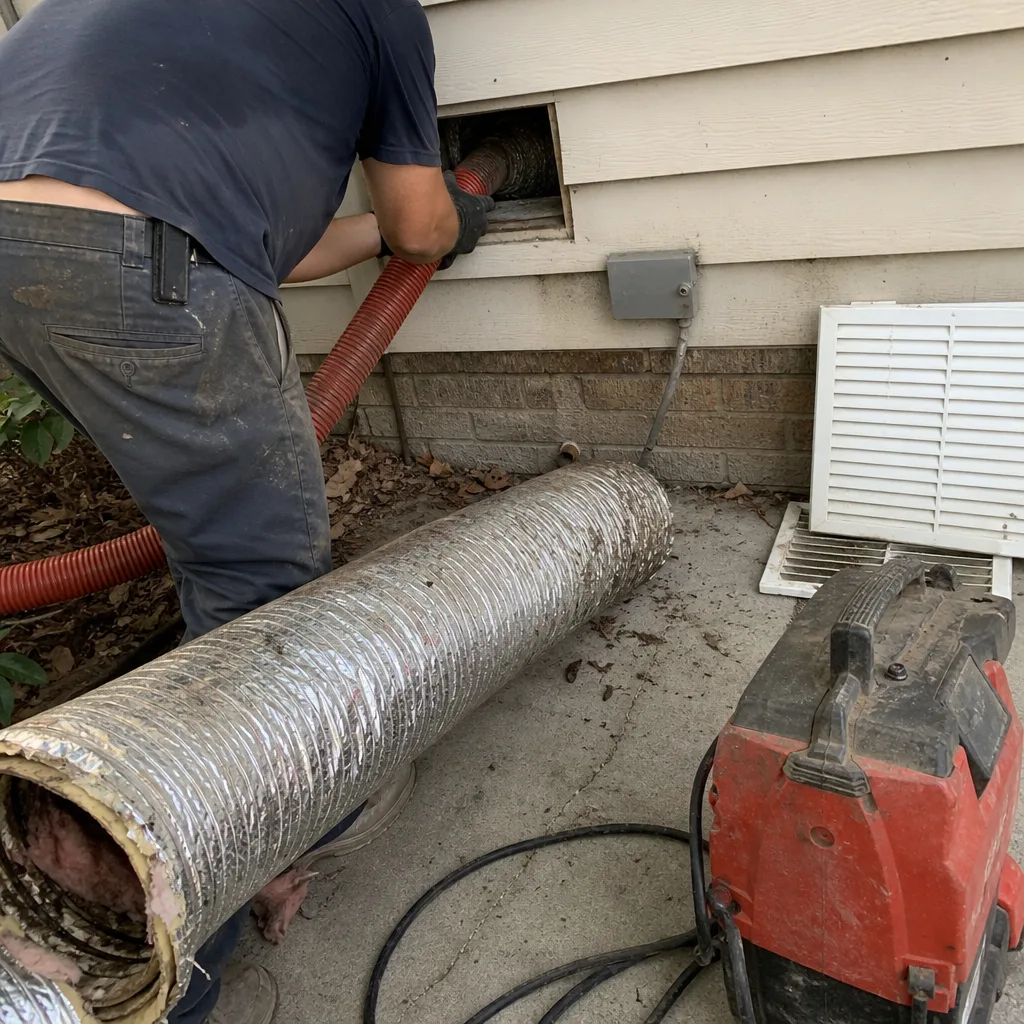 Before
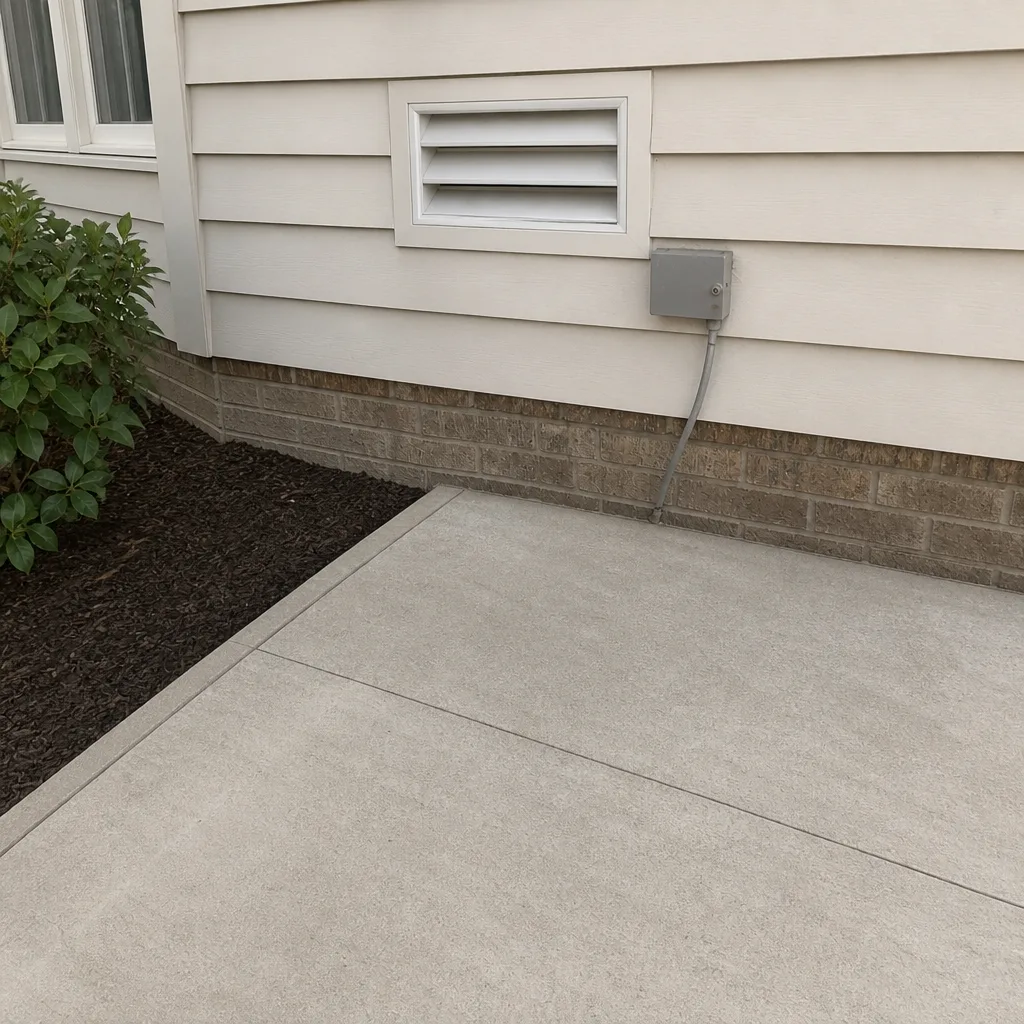 After
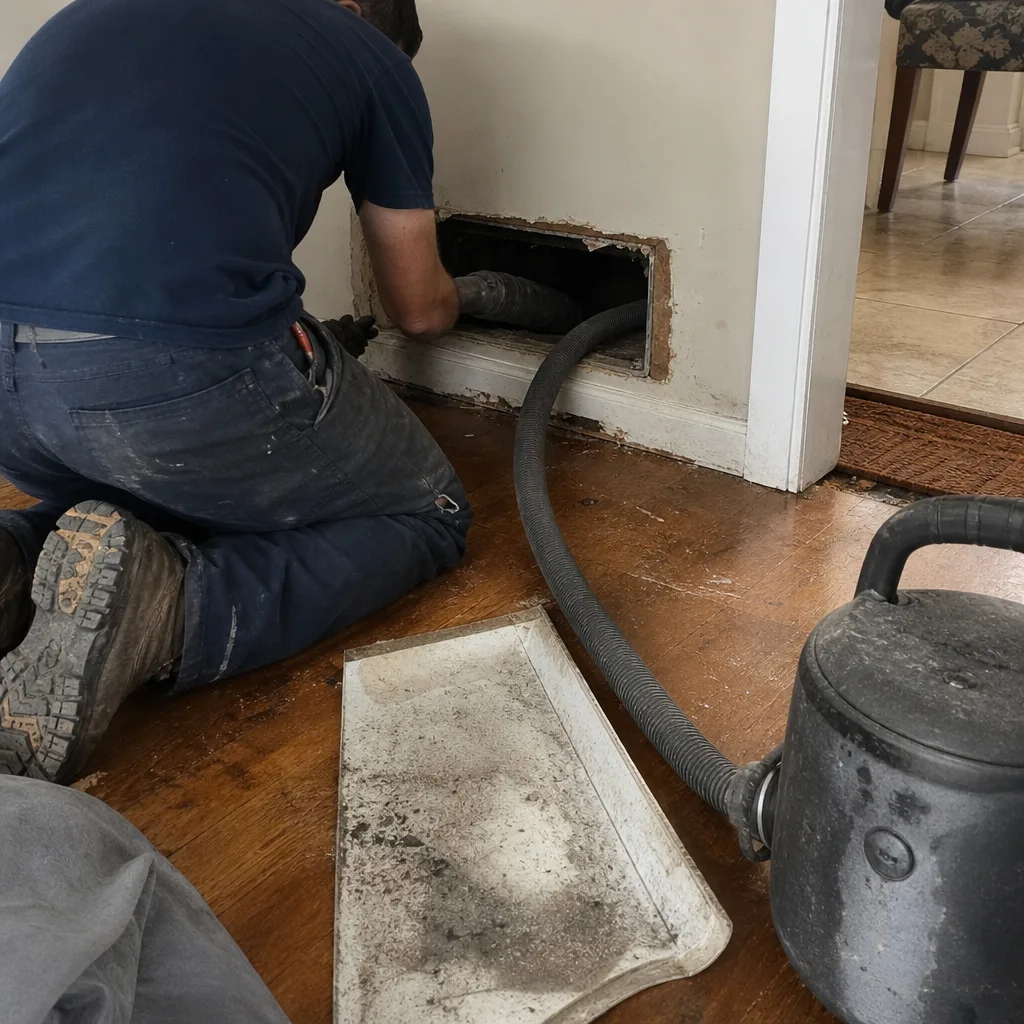 Before
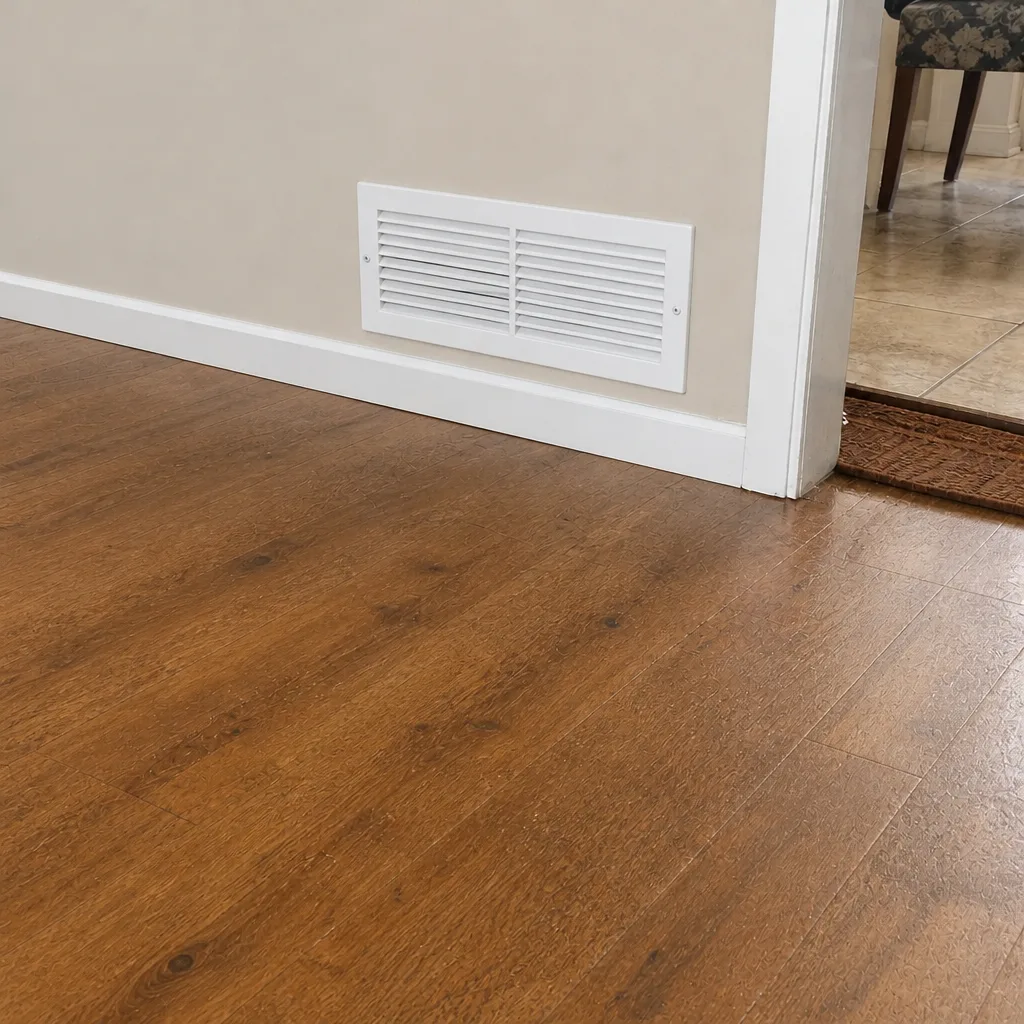 After
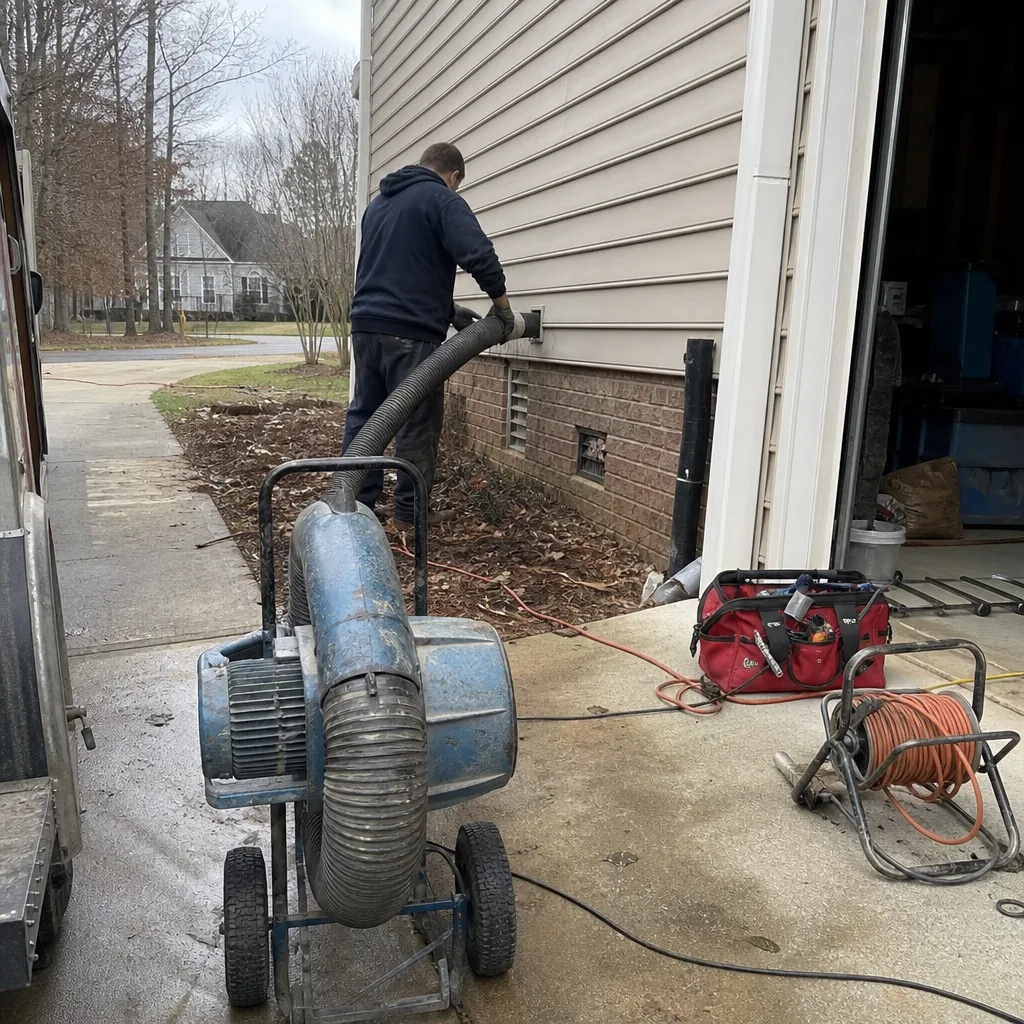 Before
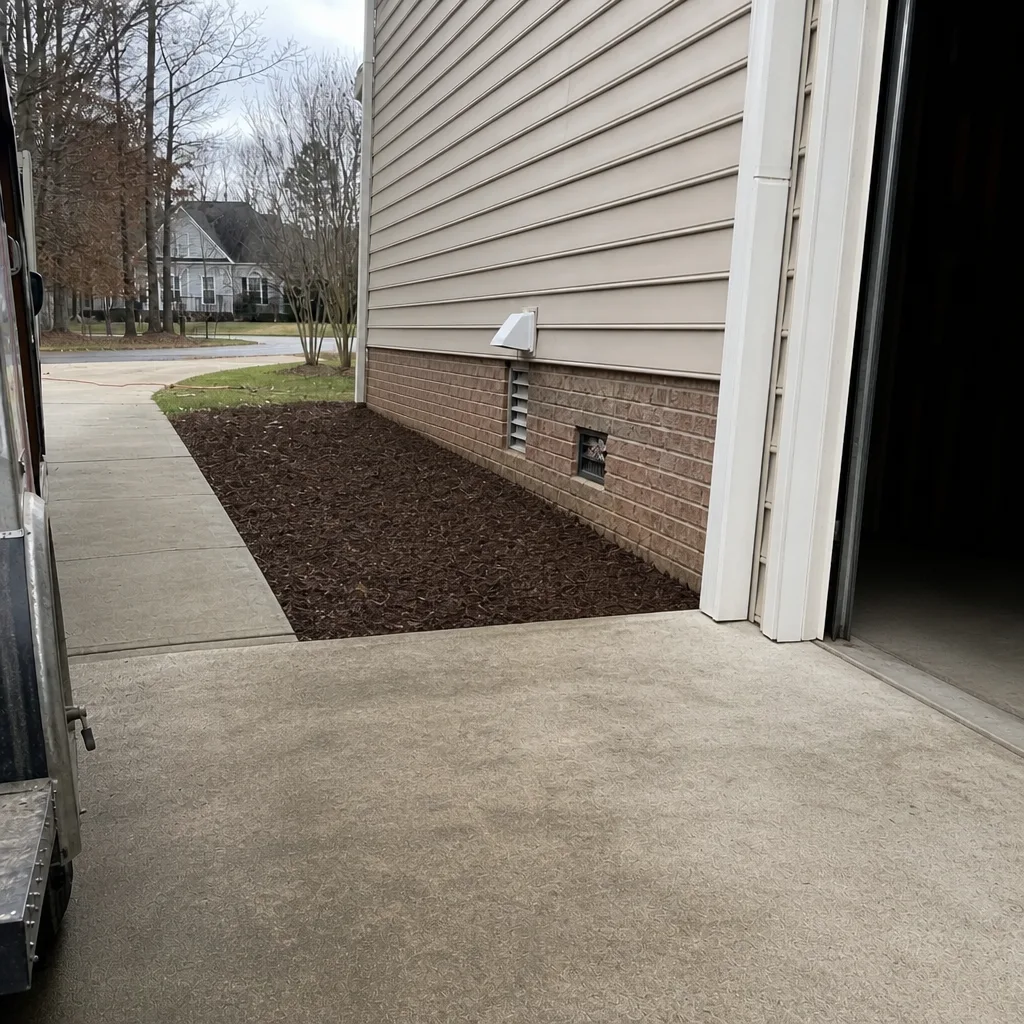 After
When to Call a Professional
Homeowners can and should handle filter changes, register-level airflow comparisons, and visual checks at grilles. The line to call a professional falls at signs a flashlight won’t resolve: persistent musty odors tied to the HVAC cycle, visible dust plumes from registers on startup, disconnected or torn duct sections in the crawlspace or attic, and rooms that never get comfortable even after all the easy fixes. If you’ve had ductwork cleaned before and symptoms returned within a year, that’s a strong indication the underlying joints weren’t sealed.
Air Duct Cleaning Steele Creek offers free estimates in Steele Creek. Call (855) 550-7321 for a written estimate. We answer 24/7, and fast dispatch runs from 7am to 7pm, Sunday through Friday. Our technicians have up to 14 years of experience, and the local pro we connect you with is licensed and insured as their state requires. The written estimate sets the final price, and it’s agreed before work starts.
Frequently Asked Questions
Every 3 to 5 years is the standard residential guideline for Steele Creek homes, but homes with pets, recent remodeling, or visible crawlspace duct issues often benefit from closer to every 3 years. If you don’t know the duct history of a home you just moved into, start with an inspection. Call (855) 550-7321 for an exact quote on a cleaning – estimates are free.
Air duct cleaning in Steele Creek is priced per system by written estimate, not per vent, and the estimate you receive before work starts is the price you pay. That structure exists to avoid the low-coupon-then-surprise-invoice pattern common in this industry. Call (855) 550-7321 for a free estimate and a clear scope in writing.
Cheap quotes usually reflect shop-vac equipment, partial scope, or a per-vent price that balloons once the crew is on site. Professional-grade systems like Rotobrush and Nikro cost more to run, but they clean the duct interior properly and contain the debris, which is the entire point. Ask what equipment will be used before you compare price. Call (855) 550-7321 to talk through what a full-system job involves in your home.
Ask for before-and-after photos of your own ducts, and be wary of a provider who can’t supply them. A professional-grade cleaning with containment equipment produces clear visual evidence, and the photos give you a baseline for future cleanings. Call (855) 550-7321 to book an estimate and see what proper documentation looks like.
MERV 8 to MERV 11 is the sensible starting point for most Steele Creek residential systems, with MERV 13 only after confirming the system can handle the added restriction. Going higher than the system can handle reduces airflow and causes more problems than it solves. If you’re not sure what your system can handle, call (855) 550-7321 for guidance.
Not always. Sanitizing is for cases where cleaning alone won’t address microbial, allergen, or odor concerns, and we incorporate Guardsman protection products into the sanitizing process when that applies. A technician should be able to explain whether sanitizing is necessary for your specific situation before you commit to it. Call (855) 550-7321 for a free estimate that covers both options.
The Bottom Line
Duct maintenance in Steele Creek works best as a rhythm, not a one-time fix. Change filters on a real schedule and match the MERV rating to your system. Do the visual checks at every register twice a year. Look twice a year into the crawlspace or attic, where disconnected flex joints, torn vapor barriers, and sagging runs quietly cost you comfort and money. Document what you see so the next technician starts with information instead of a blank slate. And when a professional cleaning is due, pair it with repair and sealing so the ducts stay clean after the crew leaves. Done this way, the checklist stops being busywork and starts being a way to catch problems before they get expensive.
Our technicians have up to 14 years of experience, and we run the equipment the trade actually trusts: Rotobrush and Nikro duct cleaning systems, Abatement Technologies containment equipment, and Honeywell and Aprilaire air quality products. Call (855) 550-7321 for a free estimate in Steele Creek. We answer 24/7. Fast dispatch from 7am to 7pm, Sunday through Friday.
Written by the team at Air Duct Cleaning Steele Creek.