
Last updated November 25, 2026
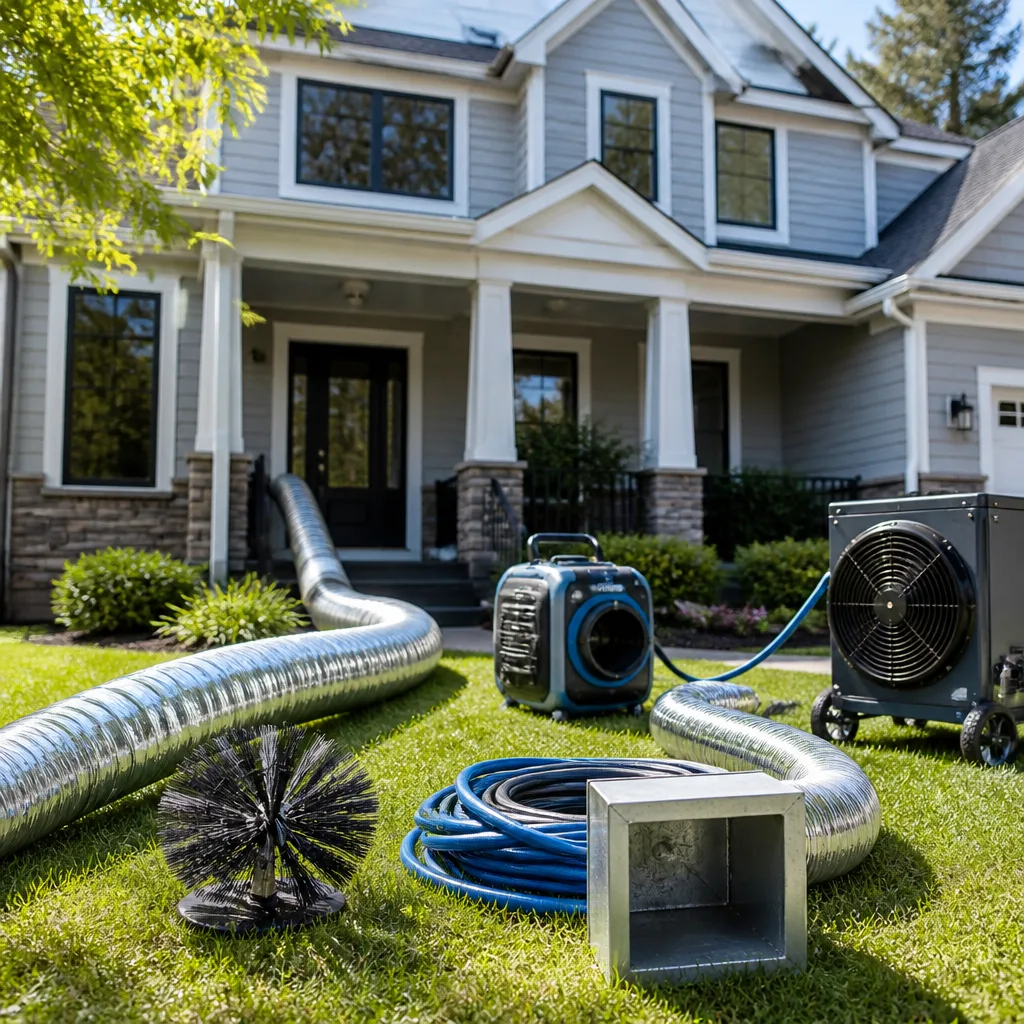 Whole-home duct cleaning
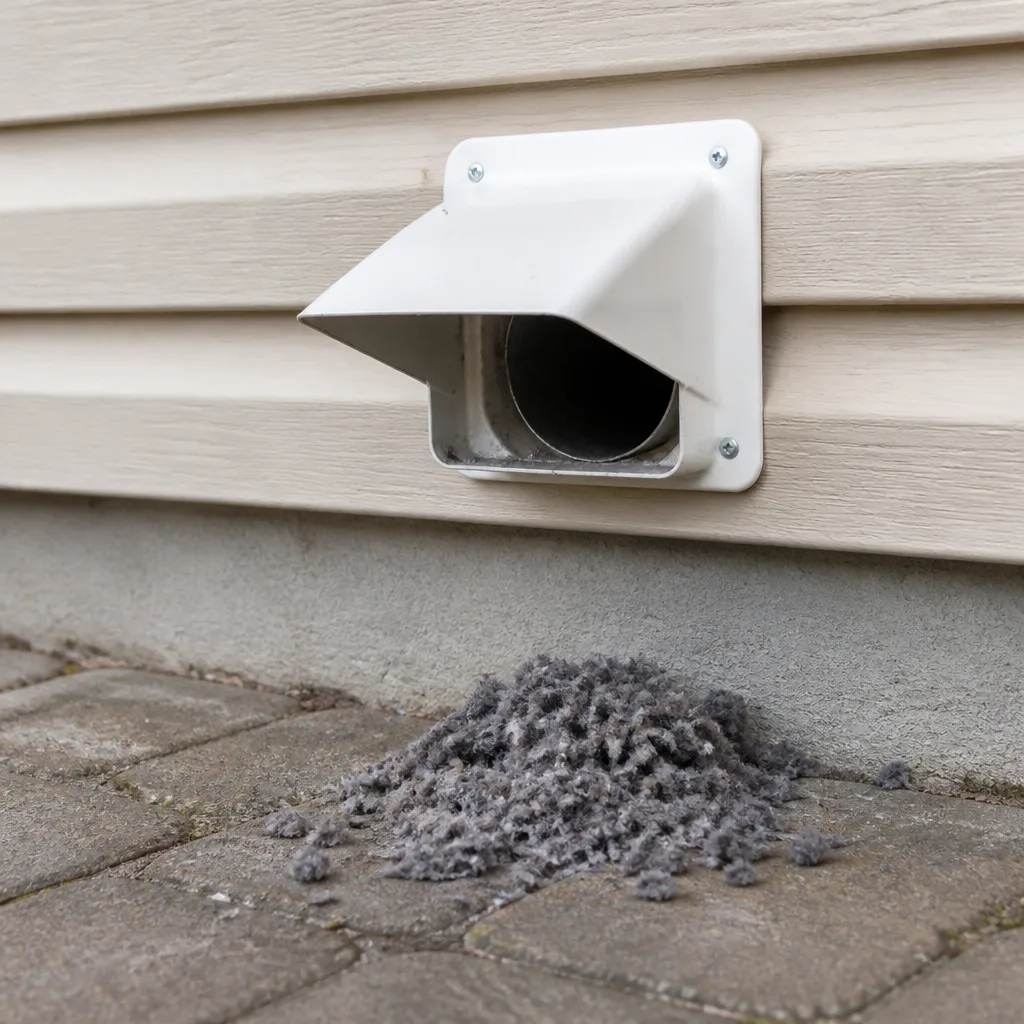 Dryer vent cleaning
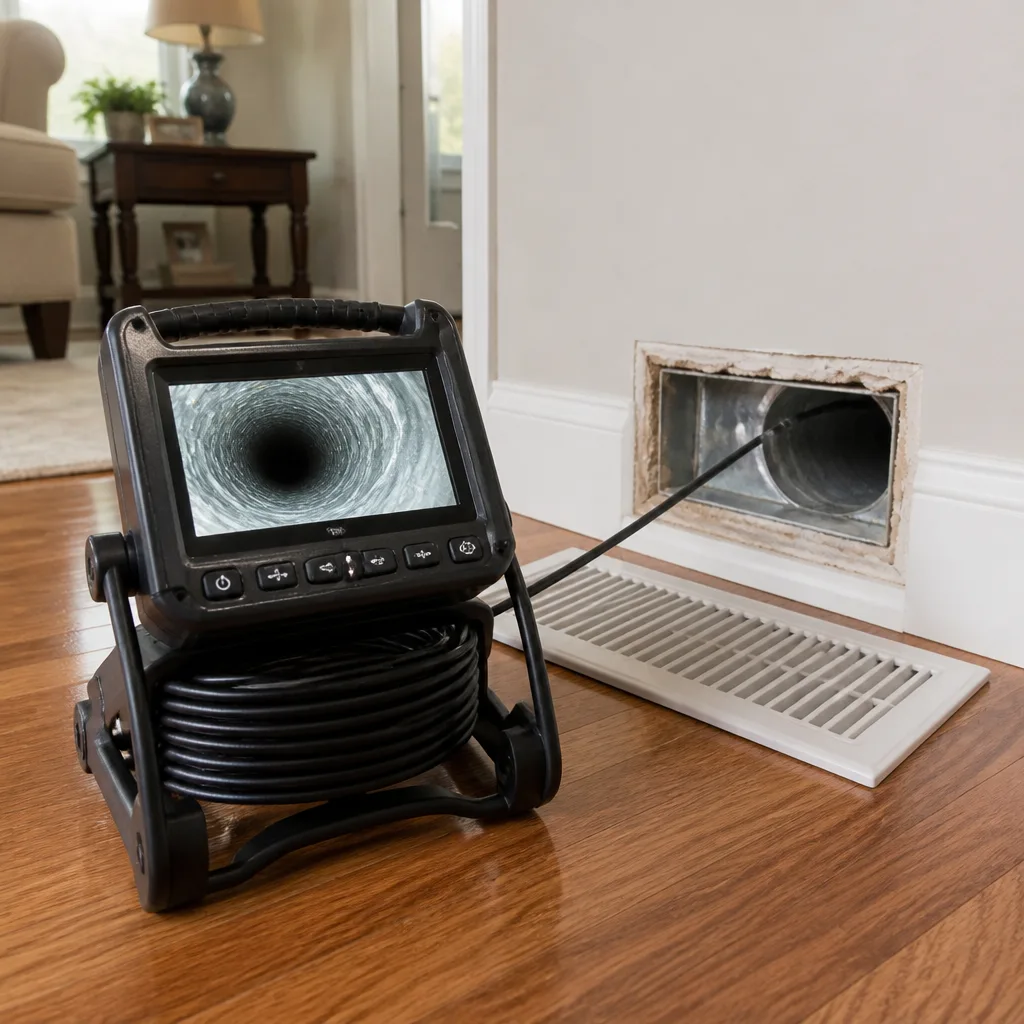 Camera inspection
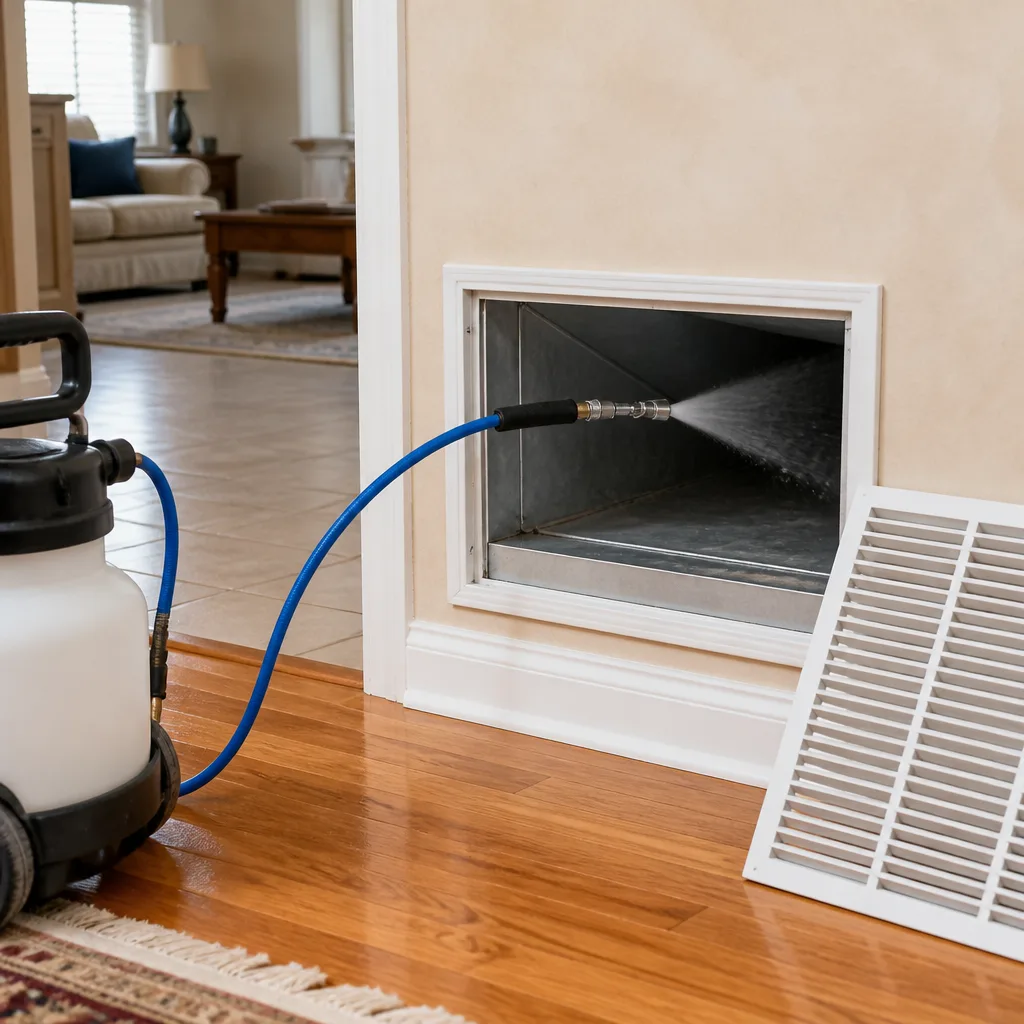 Sanitizing & deodorizing
Whole-system duct and dryer vent check with before-and-after photos - you see exactly what came out of your vents
That "$99 whole-house special" is a bait ad - the real number appears once they are in your hallway, or the "clean" is a shop-vac at the register. We photograph the inside of your ducts before and after instead.
Air Duct Cleaning Permits, Codes & Inspections in Steele Creek, NC: What You Need to Know
If a “duct cleaning” contractor replaced a flex duct section, re-seated a plenum, or applied mastic to a supply trunk without pulling a mechanical permit, your home’s HVAC work history has an undocumented gap. Most homeowners never think to ask about it. But that gap can surface years later in a resale inspection, a home insurance review, or a code compliance visit. Cleaning the inside of your ducts is routine maintenance in North Carolina. Opening up the duct system to repair it is regulated construction work. This guide draws that line for Steele Creek homeowners and shows what to ask before anyone picks up a tool.
Quick Answer
Routine air duct cleaning does not require a permit in North Carolina. But any work that cuts into ductwork, seals a plenum, or modifies an air handler connection is mechanical work under the NC State Building Code and does require a permit and inspection. In Steele Creek, that permit runs through Mecklenburg County. Homeowners should confirm the scope in writing before work starts.
Styles & brands we work with
- Whole-home duct cleaning
- Dryer vent cleaning
- Camera inspection
- Sanitizing & deodorizing
Table of Contents
- Does Air Duct Cleaning Require a Permit in NC?
- What NC Building Code Section M1601 Governs
- The Mecklenburg County Permit Process for Duct Work
- Duct Sealing: Maintenance vs. System Modification
- How Unpermitted Duct Work Affects Your Insurance
- What a Legitimate Scope of Work Document Should Say
- What a Mechanical Inspection Actually Covers
- Keeping Your Own Record of HVAC Work
Does Air Duct Cleaning Require a Permit in NC?
No, routine cleaning does not require a permit in North Carolina. The act of removing dust, debris, and contaminants from the inside of a duct system is maintenance, not construction. The NC State Building Code is not triggered by the work itself.
The confusion comes from what “cleaning” often includes. Cleaning is the act of removing contamination from inside the duct. Repair is the act of altering, adding to, or replacing part of the duct system or its connections.
Those are two different categories. One is maintenance. The other is mechanical work, and in Steele Creek, mechanical work of this kind requires a permit pulled through Mecklenburg County. The distinction matters because some contractors blur it to keep their service call simple and their price low.
What falls on which side:
- Cleaning: vacuuming the interior of supply and return ducts, cleaning grilles and registers, scrubbing the blower compartment, sanitizing duct interiors. No permit.
- Mechanical work: cutting into a duct run to replace a damaged section, removing and resetting a plenum connection, adding a return duct, resizing a supply trunk, replacing a flexible duct run. Permit required in Mecklenburg County.
For any Steele Creek homeowner with a house built in one of the many subdivisions around the Berewick or Ayrsley areas, this distinction matters more than you might think. Builder-grade duct layouts sometimes have hidden issues that only surface during a proper inspection. Knowing what category a repair falls into protects you before the work begins.
For more detail on what a full cleaning actually involves, see our guide to air duct cleaning.
What NC Building Code Section M1601 Governs
Section M1601 of the NC State Building Code addresses duct systems in residential construction. It covers installation, materials, sizing, sealing, and support. Any change to an existing duct system has to meet M1601’s requirements for materials, joint sealing, and proper support.
A contractor who replaces a failed flex duct section without pulling a permit may still install it correctly. But the installation isn’t inspected, and there’s no county record that the work occurred to standards.
What M1601 specifically governs that touches duct cleaning or repair work:
- Duct material standards: Flexible duct, sheet metal, and duct board are specified materials. Substitutions have to meet the code’s rating requirements.
- Joint sealing: Duct joints and connections have to be sealed to reduce air leakage. Mastic, mastic tape, or approved gasket materials are required at connections.
- Support and sag: Flex duct has to be supported so it doesn’t sag or kink in ways that restrict airflow. Improper installation is a common finding in homes where a quick repair was done without inspection.
- Connections at the air handler and plenum: The point where ductwork meets the air handler is a mechanical connection that M1601 addresses. Replacing or re-seating this connection is mechanical work.
If a technician shows up to clean your ducts and finds a section of flexible duct crushed under attic insulation or disconnected at a collar, that’s a real problem worth fixing. The fix, however, falls under M1601 requirements. It’s not just a cleaning task.
The best contractors separate the two in their proposal so the homeowner knows exactly which part of the work requires a permit and which does not. We’ve seen too many Steele Creek homes where a duct “cleaning” invoice included ductwork repairs that were never inspected or documented. The homeowner didn’t know the difference until it came up at resale.
The Mecklenburg County Permit Process for Duct Work
Mecklenburg County’s Code Enforcement office issues mechanical permits for residential HVAC work. Duct cleaning itself does not require a permit.
Duct repair or modification that changes the system’s configuration does. Examples include adding or removing duct runs, replacing duct sections, resizing or moving an air handler connection, and changing the routing of a duct through a wall or ceiling assembly.
The process typically works this way, though specific steps and fees are set by Mecklenburg County Code Enforcement:
- Confirm the scope in writing: The contractor provides a written proposal describing exactly what will be repaired or replaced, what materials will be used, and whether the work requires a permit.
- Contractor pulls the permit: For most residential duct modifications, the licensed contractor pulls the permit under their credentials. Some homeowner permits exist for owner-occupied single-family homes, but the homeowner becomes responsible for the work and the inspection.
- Work is performed and inspected: The county sends a mechanical inspector to confirm the ductwork meets M1601. The inspection is about the physical installation, not the cleaning.
- Inspection is signed off: Once the inspector signs off, the permit record exists in the county system. That record is the proof that the work was done and inspected.
What this means for a Steele Creek homeowner planning duct work: ask the contractor up front if a permit is required for the proposed scope. If they say no and the work involves cutting, replacing, or resecuring duct connections, ask them to explain why. A contractor who knows the code can answer that clearly. One who can’t probably isn’t pulling permits on any of their work.
If you’re also thinking about the air handler itself, our guide to HVAC cleaning covers what’s involved in that side of the system.
Duct Sealing: Maintenance vs. System Modification
This is where the line gets blurry, and where a lot of homeowners end up with unpermitted work. Duct sealing as routine maintenance does not require a permit. Duct sealing that changes how the system is configured, or that involves resealing at a plenum or air handler connection, is mechanical work.
Here’s the practical distinction:
- Maintenance sealing: Applying mastic or approved tape to existing accessible joints along a run of duct that is already installed and functioning. No structural change, no reconnection, no permit.
- Modification sealing: Sealing at a plenum flange that had to be removed and reset, sealing after a duct section is cut and replaced, sealing after rerouting or resizing. This is mechanical work that changes the system and requires a permit in Mecklenburg County.
The reason this matters is that sealing isn’t just a comfort improvement. Poorly sealed ductwork in any home pulls air from unconditioned spaces like attics and crawlspaces into the living space. In Steele Creek’s climate, where summer heat and humidity put real pressure on attic duct runs, sealing problems show up as hot rooms, high bills, and moisture risk. Sealing done right solves the root problem. Sealing done as a patch job without permit or inspection just hides it.
This is one reason duct repair and sealing works better as one step than two. If a contractor is already cleaning the system, they can see where the leaks and failures are. Repairing them at that point resolves the root issue rather than just cleaning around it. Our position is straightforward: cleaning alone doesn’t stop recontamination if the duct system is leaking. Sealed and restored ductwork does.
For more on the full-pathway approach that includes both cleaning and repair, see our Air Duct Cleaning Steele Creek overview.
How Unpermitted Duct Work Affects Your Insurance
This is where the real-world cost of skipping a permit becomes clear. Unpermitted duct modifications don’t just leave a gap in your records. They can affect a homeowner’s insurance claim if air quality or HVAC damage comes up.
The general chain of events looks like this:
- An insurance claim is filed: Related to HVAC damage, water intrusion from a condensate issue, or a claim involving air quality and moisture.
- An adjuster reviews the property’s modification history: Unpermitted repairs that altered the mechanical system get flagged as a possible code compliance issue.
- The claim gets questioned or denied: If the duct modification contributed to the damage and was completed without a permit or inspection, the insurer may decline coverage for that portion or restrict the claim.
The specific language that applies depends on your policy, and it’s worth reading that section before any major duct work is done. (This is general information, not legal or insurance advice; your policy and adjuster set the terms.) But the pattern is consistent enough to matter: unpermitted work quietly puts the homeowner on the wrong side of a future claim.
For Steele Creek homeowners, this is a practical consideration. Homes in the Steele Creek area see plenty of storm-driven moisture and humidity swings. Duct leaks and improper connections that go unnoticed until a claim comes up are exactly the kind of thing an adjuster looks for. A permit and inspection record is your proof that the work was done right.
One thing to be clear about: we can work with your insurer if a claim touches duct work. The work still has to be legitimate, documented, and code-compliant.
What a Legitimate Scope of Work Document Should Say
A written scope of work is the homeowner’s protection against both unpermitted repairs and vague promises. A legitimate contractor provides one before any work starts. Yours should include all of the following.
- A clear description of what will be cleaned vs. repaired: Which ducts, which components, what equipment will be used, and where the cleaning ends and repair begins.
- A materials list for any duct replacement or resealing: Specific duct type, sealing materials, and whether they meet M1601 requirements.
- A statement of whether a permit is required: If yes, who pulls it and when the inspection is scheduled. If no, the written reason why.
- Photographic documentation before and after: Reputable contractors photograph the work. It’s the simplest way to confirm the cleaning was actually performed.
- A single flat price for the agreed scope: Not a low per-vent teaser price that grows once the technician is on site. One flat price per system, agreed in advance, with the written estimate setting the final number.
- Confirmation of licensing and insurance for the local pro: The local professional performing the work is licensed and insured as the state requires. Ask to see that before work starts.
A scope written this way protects both parties. It also makes it easier to tell the difference between a contractor who’s serious about the trade and one who is working without care. If the proposal is one line long, that’s your signal.
What a Mechanical Inspection Actually Covers
If a permit was pulled on your duct repair, the Mecklenburg County mechanical inspector will visit the property. The inspection is a code-compliance check, and it happens before the work is considered complete. The inspector is verifying that what was installed matches what M1601 requires.
The inspection typically covers:
- Materials: That the duct material used matches the permitted scope and meets code ratings.
- Joins and connections: That the connections at the plenum, collars, and duct transitions are sealed properly with approved materials.
- Support: That flexible duct runs are supported properly and don’t sag or kink in ways that violate the code.
- Accessibility: That the installed ductwork is serviceable and any access panels or cleanouts are in place as required.
The inspection is not a cleaning verification. It does not confirm that the interior of the ducts was cleaned properly, that contamination was removed, or that the whole air pathway was treated. That’s a separate concern and a separate capability. It’s the difference between code compliance and actual indoor air quality improvement.
This is also the reason professional equipment matters. The Rotobrush and Nikro systems we use are the standard the trade relies on for actual duct cleaning, not just a pass with a shop vac. Abatement Technologies filtration and containment equipment comes into play when contamination is beyond ordinary dust. The inspection is the county’s job. Confirming the cleaning itself was thorough is a different question, and it’s the one that matters most for what you’re breathing.
Keeping Your Own Record of HVAC Work
The single most important habit a homeowner can develop around HVAC work is keeping records. Not just invoices, but permits, inspection sign-offs, and any documentation of what was done and when.
Here’s why it matters. When you sell your home, the inspector and the buyer’s agent check the property’s modification history. A gap in the record around HVAC work raises questions. A clean record eliminates them.
- Save the invoice for every cleaning or repair: The written invoice should match the scope of work you agreed to.
- Save the permit number and inspection record: Mechanical permits and inspections are public record in Mecklenburg County, so they can be retrieved, but keeping your own copy saves time.
- Keep before-and-after photos of any duct work: They stack alongside the invoices as your record of what the system actually looked like.
- Note the contractor’s name and any licensure details provided: This connects the documented work to the professional who performed it, which is useful if a warranty or insurance question arises later.
This is one reason we photograph every job. It’s not marketing. It’s the homeowner’s record, and it should exist whether or not the job ever gets inspected.
Common Mistakes to Avoid
- Treating duct repair as cleaning and skipping the permit. If a contractor cuts, replaces, or reseats ductwork without a permit in Mecklenburg County, the work is unpermitted mechanical work. That gap can follow the property.
- Assuming any low price is a fair one. A low quote that doesn’t include a written scope, permits where required, or photographic documentation is a quote for a fraction of the work. What gets billed later becomes the real cost.
- Letting a contractor bundle a repair into a cleaning invoice without a line item. If a duct section is being replaced, it should appear in the scope as a mechanical repair, not as “cleaning.”
- Not asking for proof of licensure and insurance. The local professional performing work in your home should be licensed and insured as the state requires. Ask before the work starts.
- Skipping the documentation step. Even a properly completed permit and inspection won’t help you at resale if you don’t have the record. Keep invoices, permits, inspection documents, and photos.
- Assuming sealing always means “maintenance.” Sealing existing accessible joints is maintenance. Sealing after a reconnection or plenum reset is mechanical modification. Know which is being done.
- Ignoring the whole air pathway. Only cleaning ducts without addressing leaks or failed connections leaves the system in the same condition that allowed contamination to build up. The fix has to address the system, not just the interior.
See the difference
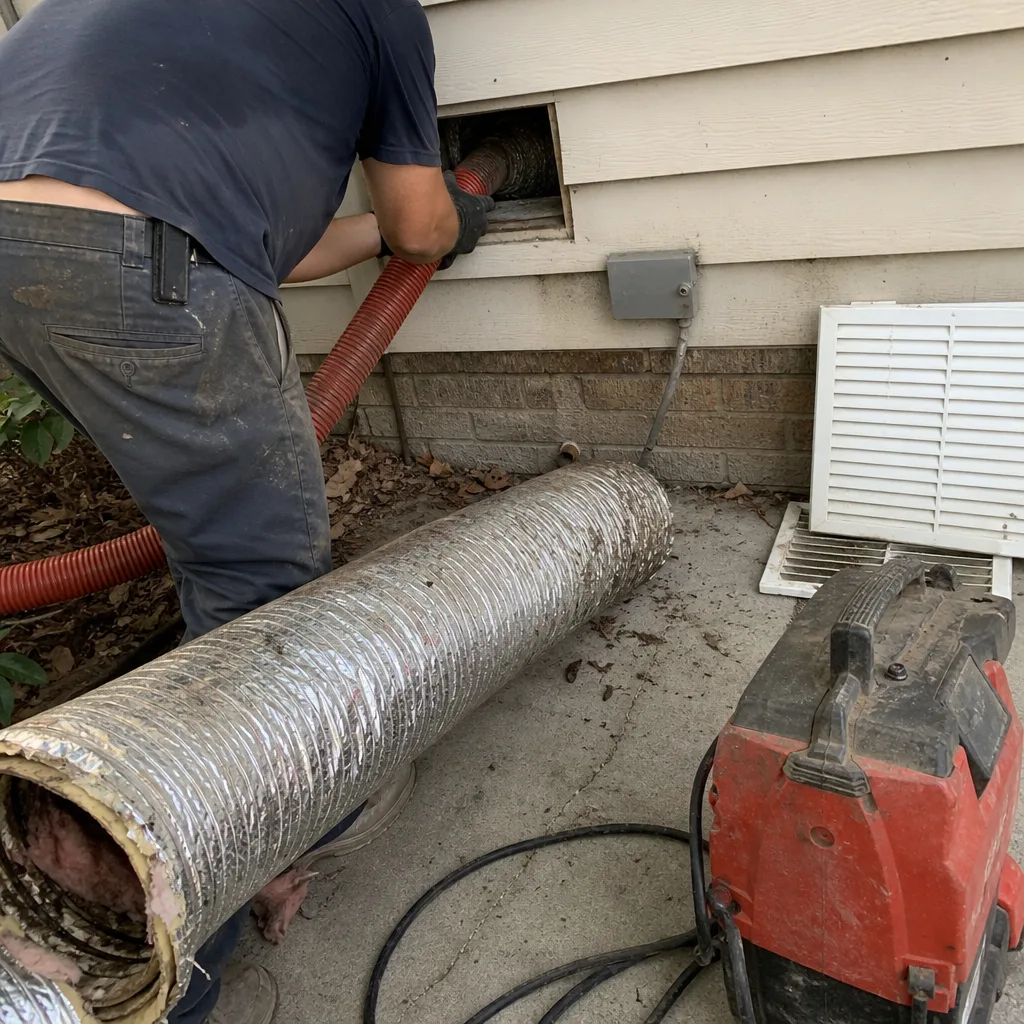 Before
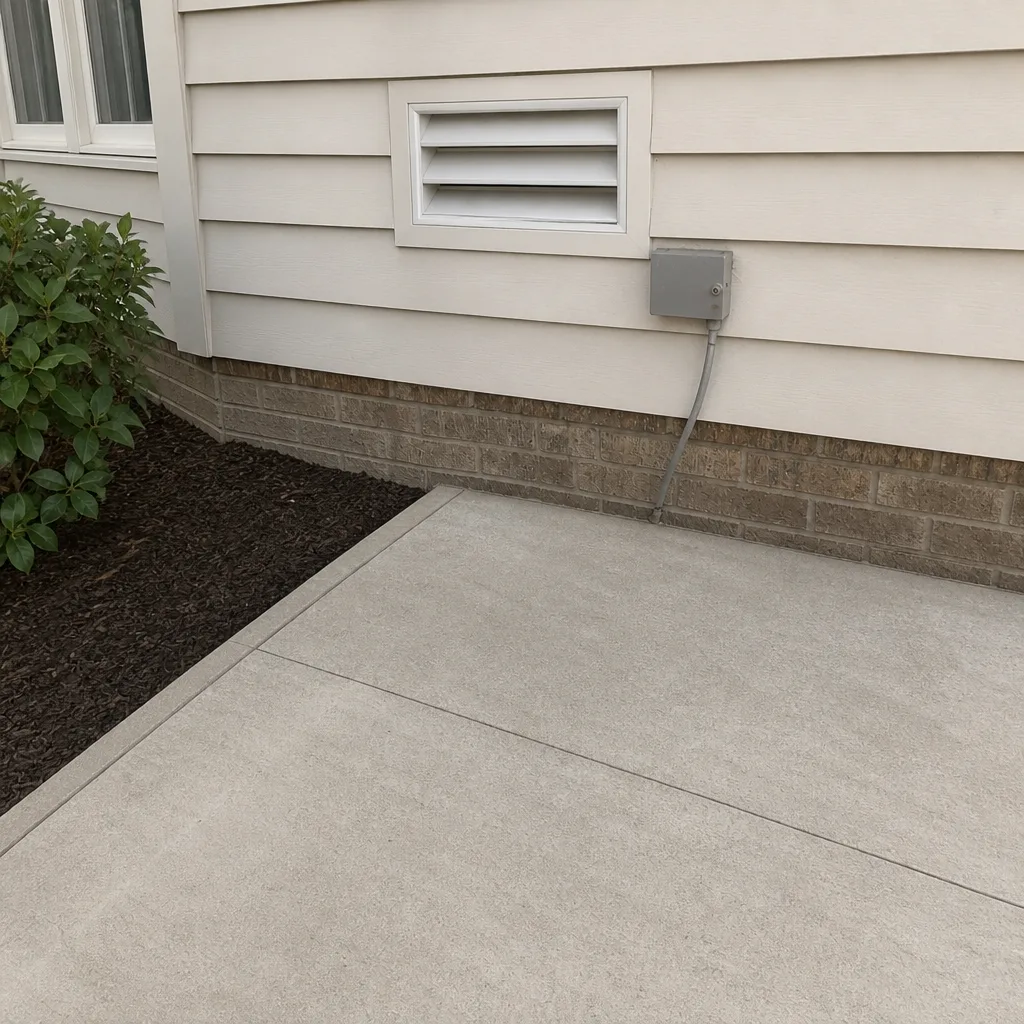 After
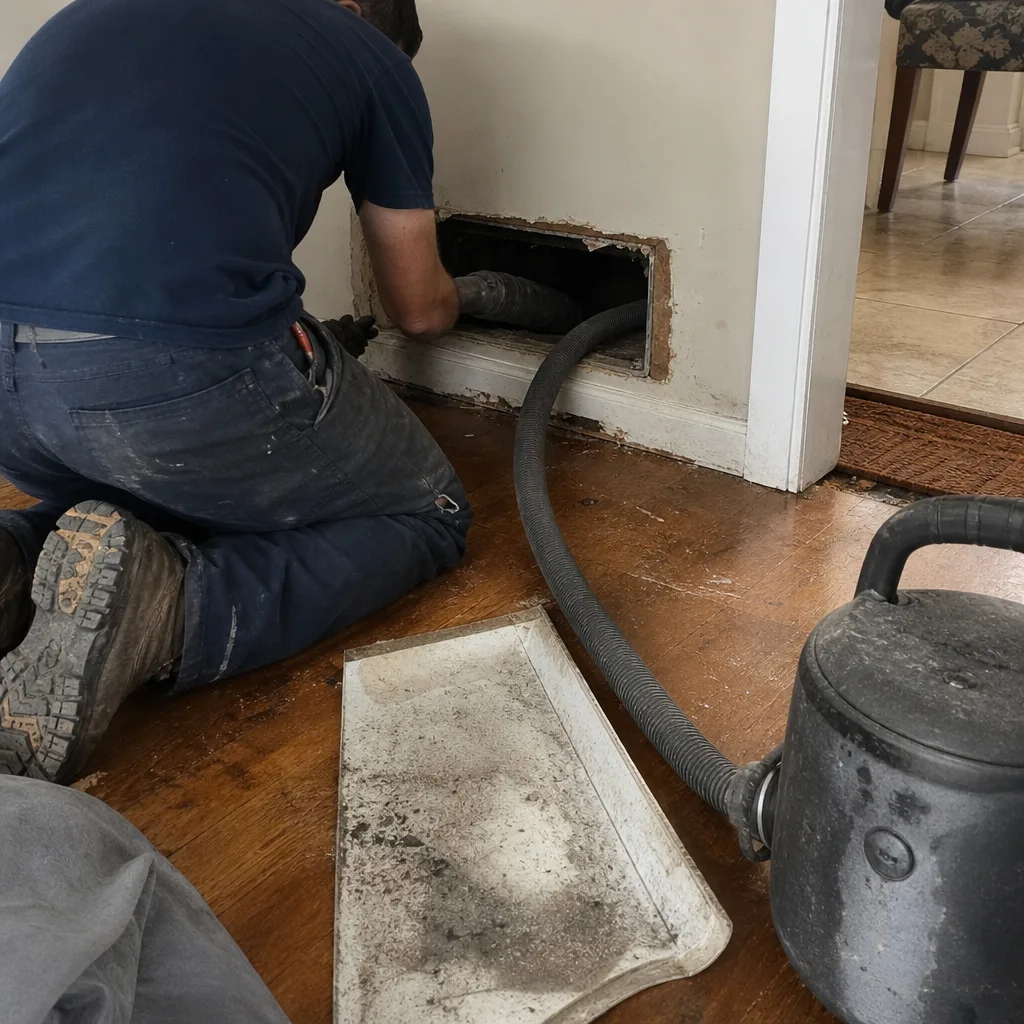 Before
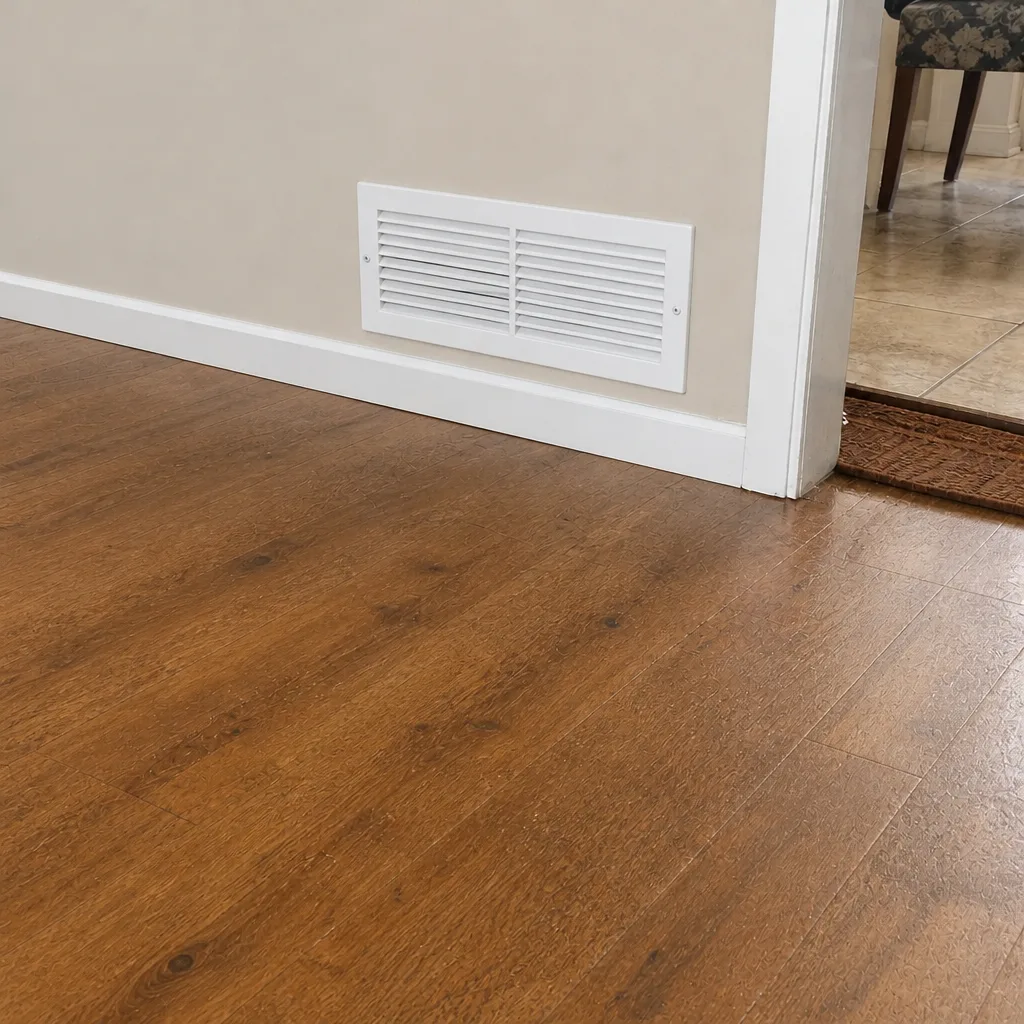 After
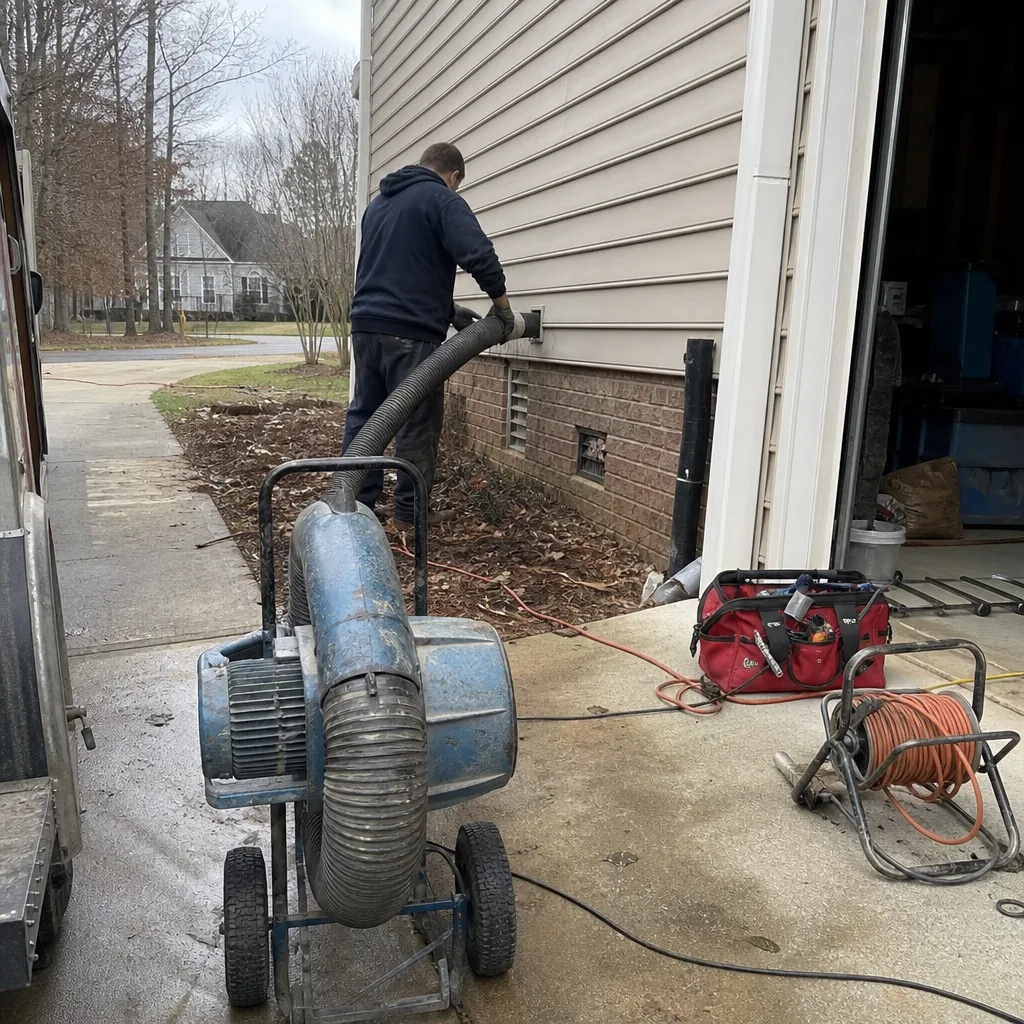 Before
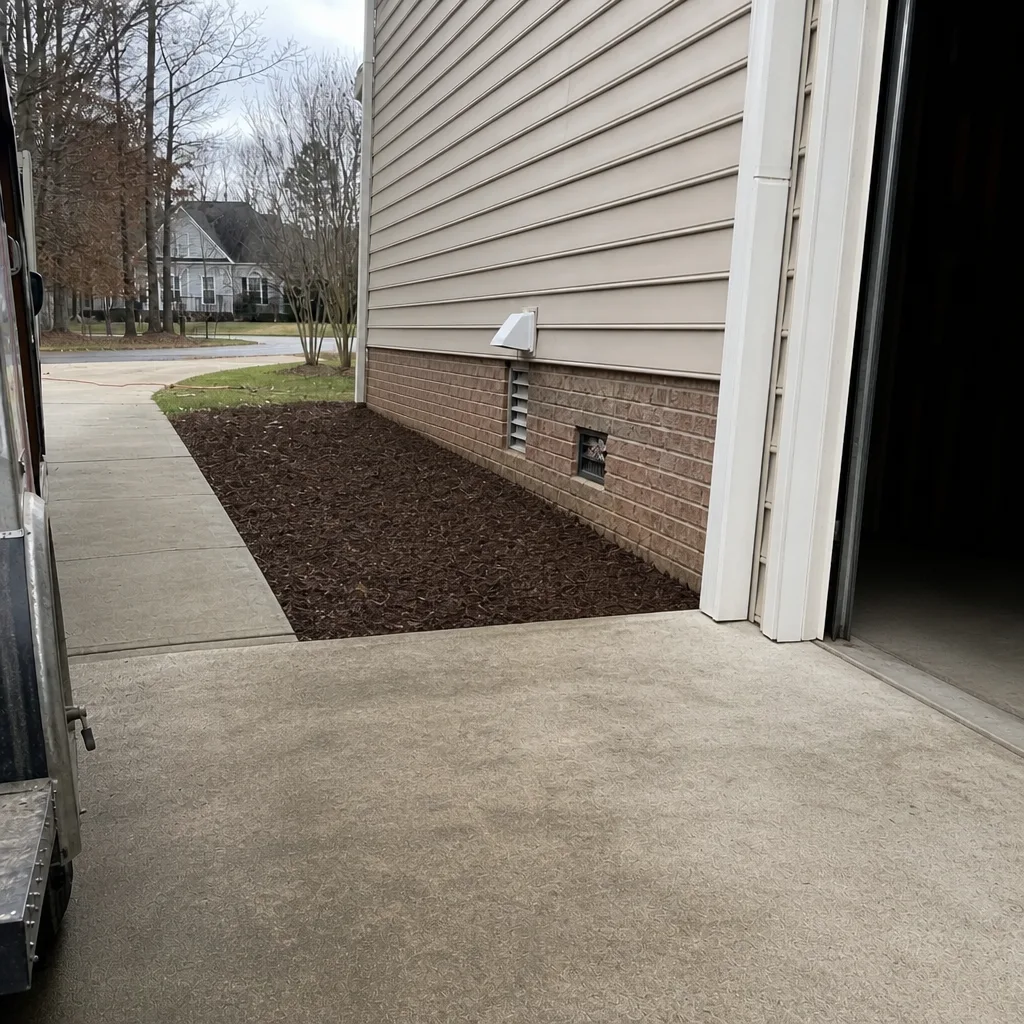 After
When to Call a Professional
The line between “schedule a cleaning” and “call a professional now” is usually about what’s happening inside the system. When you notice actual symptoms rather than just a routine interval, a professional diagnostic look is worth it.
Scenarios where calling a professional is the right move in Steele Creek:
- Visible dust or debris blowing out of registers shortly after the HVAC system starts.
- A persistent musty or stale smell that doesn’t clear when the system runs.
- Rising energy bills without a rate change or a clear explanation.
- Airflow that’s clearly weak or uneven room to room.
- Visible mold at supply registers or around the air handler.
- Any evidence that duct connections have been cut, reseated, or resealed without documentation.
These symptoms point to problems a surface cleaning doesn’t fix. A proper inspection identifies whether repairs or sealing are part of the solution, and whether that repair work requires a permit. Air Duct Cleaning Steele Creek offers free estimates in Steele Creek. Call (855) 550-7321. We answer 24/7. Fast dispatch from 7am to 7pm, Sunday through Friday.
Frequently Asked Questions
Routine air duct cleaning does not require a permit in North Carolina. Cleaning is maintenance, and the NC State Building Code is not triggered by the work itself. The moment ductwork is cut, replaced, reseated at a plenum, or reconfigured, the work is mechanical construction and requires a permit in Mecklenburg County. Call (855) 550-7321 for an estimate. We’ll tell you what your specific scope needs.
For most residential duct modification work in Steele Creek, the licensed contractor pulls the permit through Mecklenburg County Code Enforcement. Owner-occupied single-family permit options exist, but the homeowner becomes responsible for compliance and scheduling the inspection. The simpler path is to have the professional performing the work pull the permit. Call (855) 550-7321 for a free estimate and a clear scope.
If the sealing is applied to existing accessible joints on installed ductwork without cutting or reconnecting anything, it’s maintenance and doesn’t require a permit. If the sealing happens after a plenum is reset, a duct section is cut and replaced, or a connection is reconfigured, it’s mechanical modification requiring a permit. Call (855) 550-7321 and we’ll walk you through which category your work falls into.
Unpermitted duct modifications can affect an insurance claim if the modification contributed to the damage. Adjusters reviewing an air quality or HVAC damage claim look at the property’s modification history and may flag unpermitted mechanical work. Whether the claim is denied or restricted depends on the specific policy language. The safer path is a permit and inspection on any duct work that changes the system. Call (855) 550-7321 for a free estimate.
A proper scope of work in Steele Creek should list what’s being cleaned, what’s being repaired or replaced, the materials used, whether a permit is required, before-and-after photos, and a single flat price agreed in advance. It should also confirm the local pro is licensed and insured as the state requires. If any of that is missing, ask why. Call (855) 550-7321 for a written estimate.
Low quotes usually leave out the parts that matter: permit and inspection where required, repair of failed connections, documentation, and professional-grade equipment. The price looks low until the work starts and additions appear. A legitimate estimate reflects the full scope in writing before anyone starts. We price per system, not per vent, and the written estimate sets the final price. Call (855) 550-7321 for an exact quote. Estimates are free.
The Bottom Line
Cleaning your ducts is routine maintenance with no permit attached. Cutting into ductwork, reseating a plenum, or resealing a connection is mechanical work governed by NC Building Code Section M1601 and requires a permit through Mecklenburg County. Homeowners who understand that distinction know what to ask for, which paperwork to keep, and what a fair scope of work looks like. The work you approve today is the record that protects you at resale and at claim time. Air Duct Cleaning Steele Creek provides residential and light-commercial duct cleaning, dryer vent cleaning, HVAC cleaning, sanitizing, and duct repair and sealing, using Rotobrush and Nikro systems and Honeywell or Aprilaire filtration solutions. Our technicians have up to 14 years of experience. Call (855) 550-7321. We answer 24/7. Fast dispatch from 7am to 7pm, Sunday through Friday. Estimates are free, and one flat price per system is agreed before work starts.
Written by the team at Air Duct Cleaning Steele Creek.