
Last updated November 25, 2026
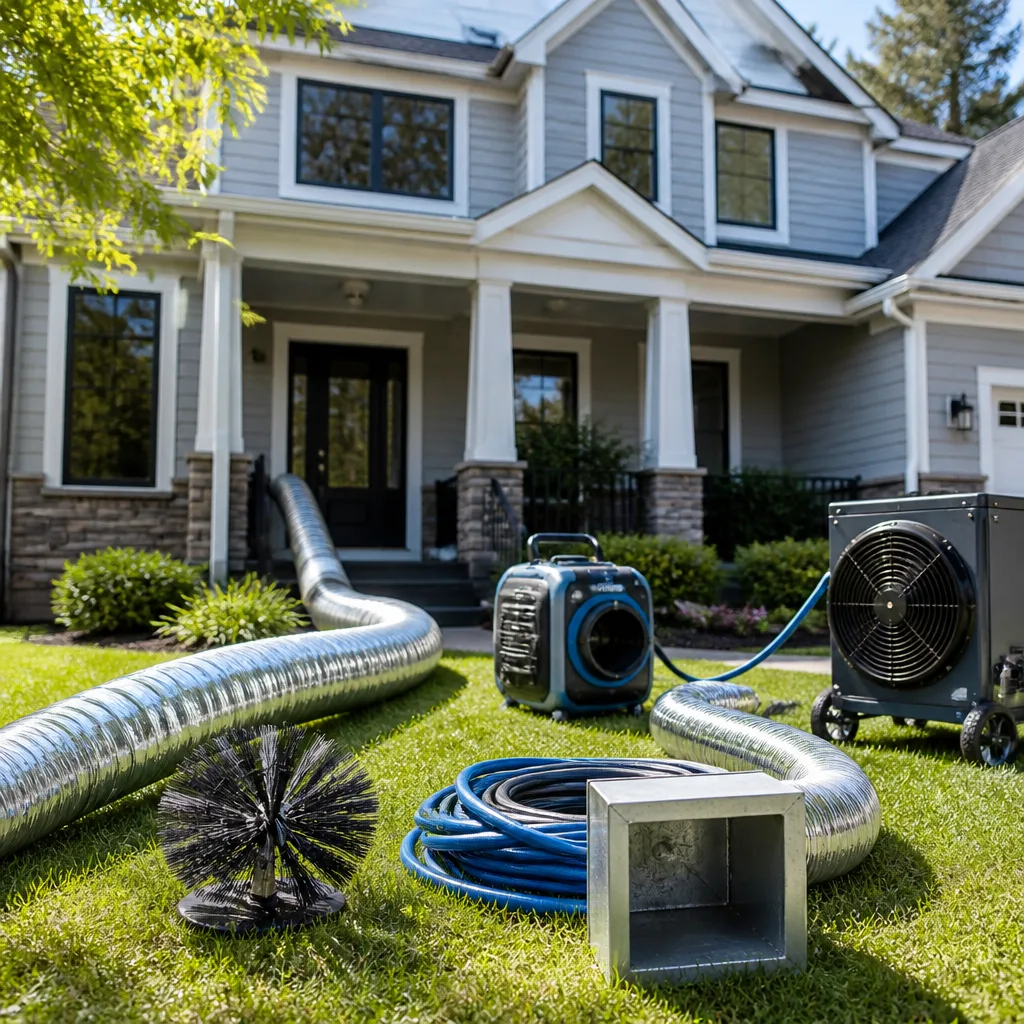 Whole-home duct cleaning
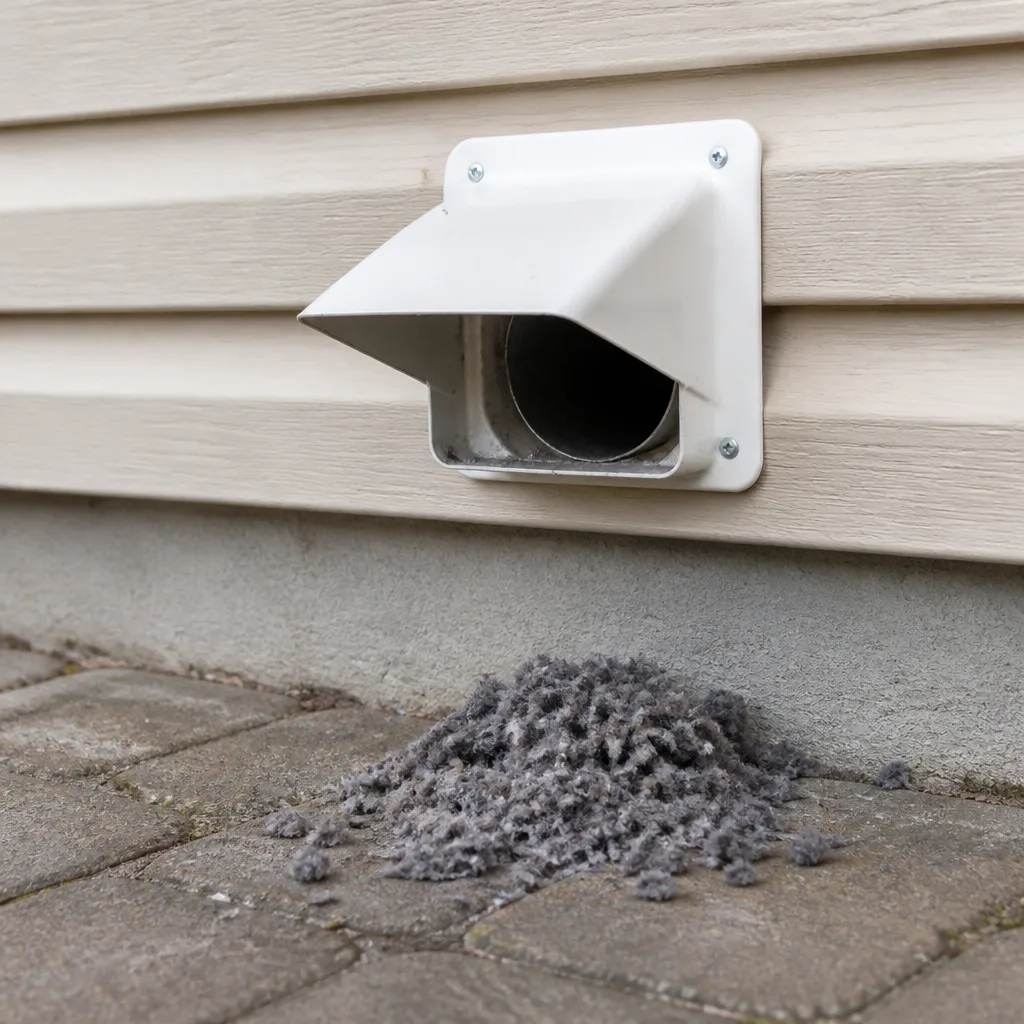 Dryer vent cleaning
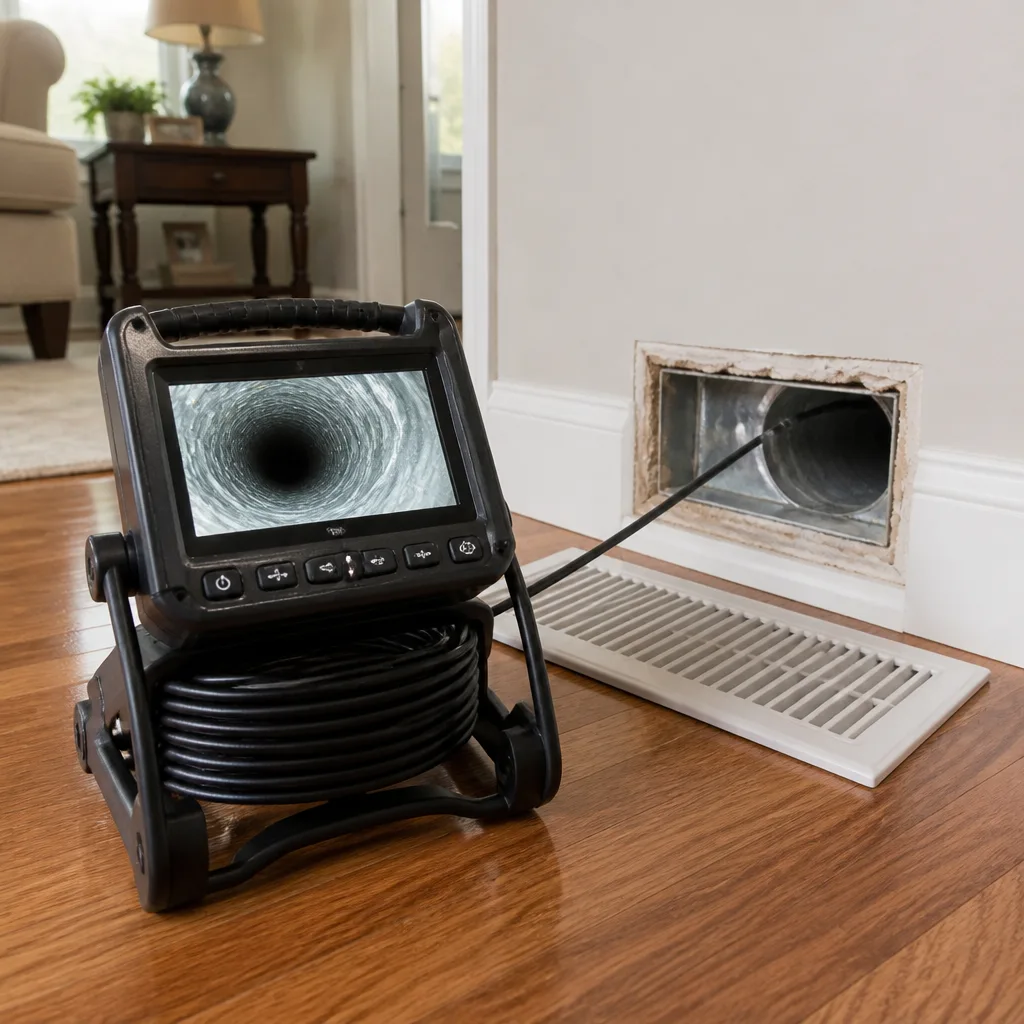 Camera inspection
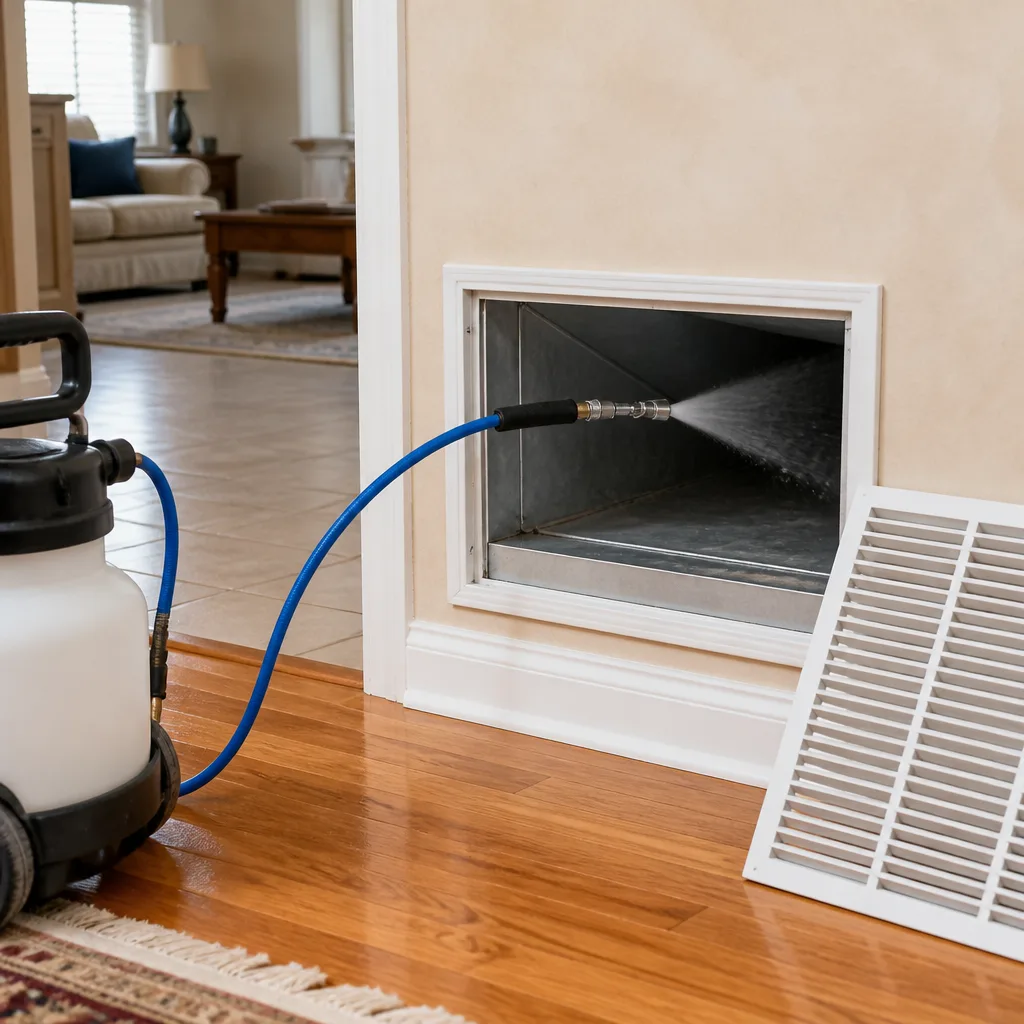 Sanitizing & deodorizing
Whole-system duct and dryer vent check with before-and-after photos - you see exactly what came out of your vents
That "$99 whole-house special" is a bait ad - the real number appears once they are in your hallway, or the "clean" is a shop-vac at the register. We photograph the inside of your ducts before and after instead.
How to Hire an Air Duct Cleaning Contractor in Steele Creek: A Step-by-Step Guide
The $49 whole-house special is the single most misleading number in home maintenance. It’s not a price. It’s a door opener. The coupon exists to get a technician inside your house, where a scripted list of pressure tactics takes over. Air duct cleaning has almost no licensing barrier in most states, which means the person knocking can be a genuine specialist with a Rotobrush system and an inspection camera, or someone with a shop vacuum and a clipboard. This guide gives you a technical vetting process, not a list of polite questions and hopes. You’ll learn what equipment a legitimate contractor must arrive with, what NADCA membership really means, how to read a quote before you sign it, and how to structure the job scope in writing so nothing gets sold to you in your attic. If you live in Steele Creek, some of this matters more than it does elsewhere.
Quick Answer
To hire an air duct cleaning contractor in Steele Creek, request a written scope that names the equipment (Rotobrush, Nikro, and a truck-mounted negative pressure unit), the contaminants being removed, and whether duct repair and sealing are included, then verify NADCA membership and sanitizer registration before work begins. Demand a flat price for the whole system, before-and-after photos of the ducts in your own home, and a signed scope document that closes the door on mid-job upsells. Take your time. Anyone rushing you toward a signature is telling you exactly how the rest of the job will go.
Styles & brands we work with
- Whole-home duct cleaning
- Dryer vent cleaning
- Camera inspection
- Sanitizing & deodorizing
Table of Contents
- What Equipment Should a Real Contractor Arrive With?
- What Does NADCA Membership Actually Mean, and How Do You Verify It?
- How Should a Quote Be Structured: Square Footage or Register Count?
- What Should You Ask About Their Sanitizer?
- How Do You Put the Job Scope in Writing Before Work Starts?
- Why Does Steele Creek Change the Vetting Process?
- A Step-by-Step Walkthrough of the Hiring Process
- How Do You Verify the Work Was Actually Done?
What Equipment Should a Real Contractor Arrive With?
A legitimate air duct cleaning contractor should arrive with a truck-mounted negative pressure unit, a mechanized source-removal tool such as a Rotobrush or Nikro system, a contact vacuum for register and boot work, and an inspection camera for looking inside the ducts. If the van shows up with a shop vacuum and a leaf blower, you’re looking at theater, not cleaning. Professional duct machines aren’t extras; they’re the baseline.
The reason equipment matters so much comes down to physics. Loose dust and debris inside a residential duct system become airborne the moment you disturb them. Without a high-volume negative pressure unit connected to the system, that debris simply redistributes into the living space (and into your furniture, bedding, and lungs). A Rotobrush or Nikro system supplies the whipping action that loosens debris from duct walls; the negative pressure unit pulls it out. You need both. One without the other is either wasted labor or a mess.
An inspection camera should be part of the toolkit even for a standard residential job. It lets the technician confirm what’s actually inside the ducts before work begins and document the before-and-after condition. Ask the contractor if they use one. If they hesitate, ask why not.
For homes with microbial, allergen, or heavy particulate concerns, a contractor should also carry HEPA-grade filtration and containment equipment. Abatement Technologies equipment is one of the recognized names in this category, and it signals the contractor can manage spore and fine particulate containment beyond ordinary dust removal.
The same principle applies to the whole system. A real duct cleaning job includes the air handler cabinet, the return plenum, and the boots and register grilles, not just the trunk lines. When we describe air duct cleaning in Steele Creek, we mean the entire air pathway.
What Does NADCA Membership Actually Mean, and How Do You Verify It?
NADCA membership means a contractor has committed to the National Air Duct Cleaners Association’s standards, including the ACR (Assessment, Cleaning, and Restoration) standard that defines what proper duct cleaning looks like. It’s not a license, and it’s not a certification for every employee. It’s a membership and standards commitment that you can verify directly through NADCA’s own directory, which takes about two minutes.
The problem is that “NADCA-compliant” and “NADCA-certified technician” get thrown around on websites and marketing materials when neither is true. A contractor can say anything. What they can’t fake is appearing in the association’s verified member directory. Go to the directory, type in the business name, and see for yourself. If the name doesn’t appear, ask the contractor directly what their NADCA connection is. A legitimate one will explain it clearly. A fraudulent one will pivot the conversation or claim the website is out of date.
This matters more for a residential air duct cleaning job than almost any other home service, because there’s no state licensing board enforcing equipment standards or process. NADCA membership is one of the few structural checks you have. Use it.
Here’s how to check the NADCA status of any Steele Creek air duct cleaning contractor:
- Visit the NADCA member directory at nadca.com.
- Search the company’s business name exactly as it appears on their quote.
- Confirm the address and business information match what you were given.
- Ask for the name of the certified technician(s) who will actually be on site. Verify those names are listed as employees of the member company.
- Ask for the technician’s most recent NADCA certification card or reference. The Air Systems Cleaning Specialist (ASCS) credential is the one to look for.
If a contractor advertises NADCA affiliation but can’t be located in the directory and can’t name a certified technician, treat those claims the way you’d treat any other unverifiable promise.
How Should a Quote Be Structured: Square Footage or Register Count?
A square-footage-priced quote signals the contractor is estimating floor area, not duct scope, which means the price has nothing to do with the actual work. A register count quote is slightly better because it references components, but it’s still vulnerable to upselling a “per-register” or “per-vent” surcharge that has no engineering basis. The only defensible quote structure is a flat price for the whole system with a defined scope. Anything else is a lever.
Per-vent and per-register pricing is the industry’s most common upsell mechanism. A contractor quotes a low base rate per vent, then on-site discovers “extra” vents, “heavy build-up” in certain runs, or “additional trunk access” that wasn’t in the original price. By the time you’ve signed, the invoice has doubled or tripled. The contract value of the coupon was never the real price.
Square footage pricing is a different flavor of the same problem. It ignores the shape of the system entirely. A 2,200-square-foot home in Steele Creek with a complex multi-trunk system may have twice the duct surface area of a 2,800-square-foot home with a simple layout. Square footage is a marketing measure. Duct linear feet and component count are what a real scope is priced against.
What you want from a quote:
- Flat price for the entire system – written, signed, and binding. No per-vent multipliers.
- Named equipment – Rotobrush, Nikro, and the specific negative pressure unit model should appear in the proposal.
- Component list – trunk lines, branch runs, boots, registers, plenums, and the air handler cabinet.
- Explicit inclusions – sanitizing, dryer vent, duct repair, sealing: each is either in the scope or out, with a price attached.
- Before-and-after photos of your system – stated in the proposal, not promised verbally.
The written estimate sets the final price. That’s the sentence you want in the contract, in writing, before work starts.
What Should You Ask About Their Sanitizer?
An EPA-registered sanitizer for HVAC ducts is a specific product approved under the EPA’s registered antimicrobial program, with a label that names the target organisms and application method. A “deodorizer” or “air freshener” is just a spray that masks smell without treating the source. Ask the contractor which product they use, and verify the EPA registration number on the label before they apply anything.
The distinction matters because the odor you’re trying to eliminate usually comes from something living. Mold spores, mildew, bacterial growth in the condensate pan or wet duct insulation, pet dander, and pest residue all produce smells that deodorizers can’t remove. If the source isn’t treated, the smell returns in two weeks. Sanitizing and treating the ducts against microbial contamination is a different process from masking the air with fragrance.
Guardsman-brand protection products are one of the recognized names in the sanitizing and treatment category, and they’re incorporated into the process by contractors who take the sanitizing step seriously. When you’re vetting a Steele Creek contractor, ask two questions:
- What is the EPA registration number on the sanitizer you’ll apply?
- Is the sanitizer fogged through the full duct system under negative pressure, or just sprayed at the registers?
A real sanitizing step fogs the entire air pathway under containment so the agent contacts every duct surface. A register-and-go spray is theater. If the contractor can’t answer the registration number question, they don’t know what they’re applying to your home.
Sanitizing isn’t always the right answer either. On a system with no microbial concern, cleaning plus targeted filtration is enough. The right contractor will tell you that. The wrong one will upsell sanitizing on every job.
If the contractor also handles the air itself after cleaning through filtration upgrades, ask which equipment brands they’re authorized to work with. Honeywell and Aprilaire are both recognized names in residential air quality controls and filtration, and a contractor who carries one or both can recommend an ongoing filtration improvement rather than a one-time service call.
How Do You Put the Job Scope in Writing Before Work Starts?
The job scope must be written, itemized, and signed before the technician enters your home. It should name every component of the air pathway, the specific equipment used, the sanitizer and its EPA registration number, any duct repair or sealing work, and the final price. Anything not in that document is not part of the job.
The reason this matters more than almost anywhere else in home service is that duct cleaning happens inside your attic, crawlspace, and interior walls, out of your sight. A technician in the attic controls the environment: what they find, what they recommend, and what they charge. Without a signed scope, all of that is negotiable at the worst possible time for you. With a signed scope, the job is fixed. Nothing else is sold once the work begins.
Here’s what a defensible scope document should itemize:
- System inventory – number of registers, boots, trunk lines, branch runs, and plenums. Counted before the quote.
- Equipment named – Rotobrush, Nikro, contact vacuum, negative pressure unit, inspection camera. Not “professional equipment.”
- Cleaning process described – assessment with camera, containment setup, source removal by mechanical agitation, negative pressure extraction, visual verification.
- Sanitizing scope stated – EPA registration number and application method, or explicitly excluded.
- Duct repair and sealing scope – which sections, what method, and why. Repair is a separate capability from cleaning and should be priced separately.
- Dryer vent cleaning – in or out, priced.
- Flat final price – one number. No multipliers, no per-vent rates, no “discovered on site” clauses.
- Before-and-after commitment – photos of your system delivered to you, in writing.
This is the document that removes the upsell leverage. Once you sign a scope that itemizes everything, the technician in the attic has nothing to sell except the work in front of them.
Why Does Steele Creek Change the Vetting Process?
Steele Creek’s housing mix spans older single-story homes, established two-story developments, and newer construction, and each type presents different ductwork realities. The vetting process here has to account for the ways duct materials, attic conditions, and system age vary block by block across the community.
Steele Creek sits in the Charlotte metro’s humid subtropical climate zone, which means most homes run the air conditioning for a long stretch of the year and pull considerable moisture load through the system. That matters for two reasons. First, duct insulation that has absorbed moisture is a growth environment for mold and mildew, and sanitizing without addressing the wet insulation doesn’t work. Second, the return-side ductwork in a humid climate can develop condensation and biological growth that a dry-climate cleaning doesn’t address. Ask specifically about moisture in the return plenums and boots when you’re getting quotes in Steele Creek.
Home construction in the Steele Creek area ranges from full-basement two-stories to slab-on-grade single-story homes with attic ductwork. Those two layouts need different equipment access. A contractor bidding the job should know which layout you have and adjust scope accordingly. If the quote doesn’t reflect your attic type, ask why.
Air quality in Steele Creek is also affected by the volume of pollen from the tree canopy in established neighborhoods and the seasonal grass pollen from surrounding open areas. That means filtration placement, return grille design, and sanitizing intervals matter more in this area than they might in a region with less pollen load. A contractor who treats every job as a generic “dust removal” is missing what’s actually accumulating in your ducts.
When you’re vetting air duct cleaning in this area, use neighborhoods as a reference point. Ask whether they’ve worked in your specific section of Steele Creek – because the housing stock varies enough that an experienced contractor will have a sense of what your neighborhood typically needs.
A Step-by-Step Walkthrough of the Hiring Process
Here’s the sequence we recommend to anyone hiring a duct cleaning contractor in Steele Creek. It’s designed to prevent the moment when a technician is already inside your home and the price suddenly has room to move.
- Ask for the equipment list first, before price. Any contractor who leads with the coupon price is telling you what they think the sale is about. Ask them to confirm Rotobrush or Nikro and the negative pressure unit before discussing money.
- Verify NADCA membership in the directory. Takes two minutes. If they’re not there, move on or ask for a specific explanation of their NADCA status.
- Request a written scope with the register and run count. Not square footage. Count the number of vents in your home yourself first, so you can check their count.
- Ask about the sanitizer’s EPA registration number. If they can’t name it, they don’t know what they’re applying.
- Ask whether duct repair and sealing are included or separately priced. A real contractor who offers air duct cleaning as a specialty will have a clear answer about whether sealing is in or out.
- Confirm dryer vent cleaning scope. Dryer vent cleaning is a fire-life-safety service, separate from duct cleaning, and worth doing alongside. Ask whether it’s in the quote or a separate line item, and get it itemized if so. Our dryer vent cleaning is priced separately and shown on the estimate.
- Ask about HVAC cleaning scope. The air handler cabinet, blower, and cooling coil surface all collect debris. Whether the contractor cleans them as part of the duct job or not, ask the question explicitly. Our HVAC cleaning scope covers the unit and cabinet, and it should be in writing.
- Get the flat price in writing and sign it. Do not sign in the attic.
- Confirm the before-and-after photo commitment. Ask what format the photos will be delivered in and when.
- Hold the final payment until the scope is complete. A contractor confident in the work won’t object.
That’s the whole process. Ten steps, no negotiation in the attic, no signature under pressure.
How Do You Verify the Work Was Actually Done?
Verification starts with the before-and-after photos of your own system, taken with the inspection camera and delivered to you in a format you can compare and keep. It continues with a visual check of the register boots and air handler cabinet, a check that all registers are back in place and sealed, and a same-day walk-through while the technician is still on site. If you can’t see the ducts, the documentation has to be your eyes.
Here’s what to look for in the verification phase:
- Photo comparison – interior duct photos, before and after, at identifiable positions in your system.
- Register boot inspection – pull the grille yourself; the boot and duct interior should be visibly clean, not just the grille face.
- Air handler cabinet – open the access panel with the technician present; the blower and cabinet floor should be clean.
- Debris removal evidence – the extracted material should be collected in a vacuum containment bag, not dumped in a bin. Ask to see it.
- System airflow check – every register should have measurable airflow after the job. If not, something is blocked or disconnected.
- Signed completion – a document stating what was completed against the original scope. If anything in the original scope wasn’t done, that’s a refund conversation.
If a contractor can’t produce photo documentation or resists a walk-through, the answer is straightforward. The work wasn’t verified because it wasn’t done to a verifiable standard. Get a second opinion before paying.
Common Mistakes to Avoid
- Calling the discounted coupon number without an equipment check. A whole-house rate with no equipment disclosure is the classic scripted upsell setup. Ask what machines they use before you discuss price.
- Accepting “NADCA-compliant” as a statement of membership. These aren’t the same thing, and the difference matters most when nobody’s checking. Verify in the directory.
- Agreeing to a per-vent or per-register price. This is the industry’s most common lever for raising the final bill. The flat price is the only defensible structure.
- Signing a scope that was presented after the technician was already in the attic. Once you’re inside the work environment, the leverage is all on their side. Get it in writing first.
- Skipping the duct repair question because the focus is on cleaning. Cleaning a system with disconnected or leaking ductwork means cleaning a system that will be re-contaminated by the next six months of operation. Repair and sealing are part of a durable fix, not an add-on.
- Treating the dryer vent as an optional extra. Dryer vents accumulate lint on a timeline independent of the duct system, and lint is a known fire load. Ask for it as a defined part of the quote in Steele Creek.
- Accepting a deodorizing spray instead of an EPA-registered sanitizer. A fragrance doesn’t remove mold spores or microbial growth. Ask for the registration number.
See the difference
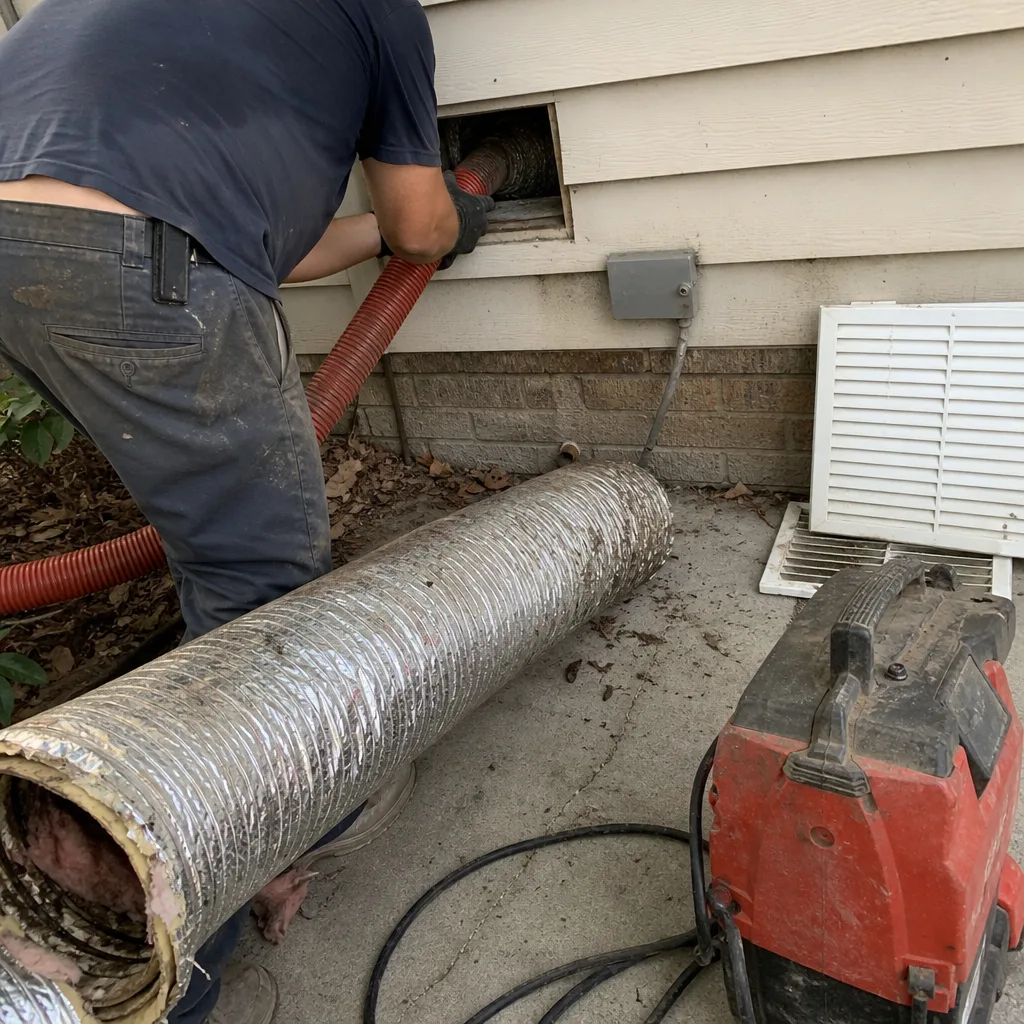 Before
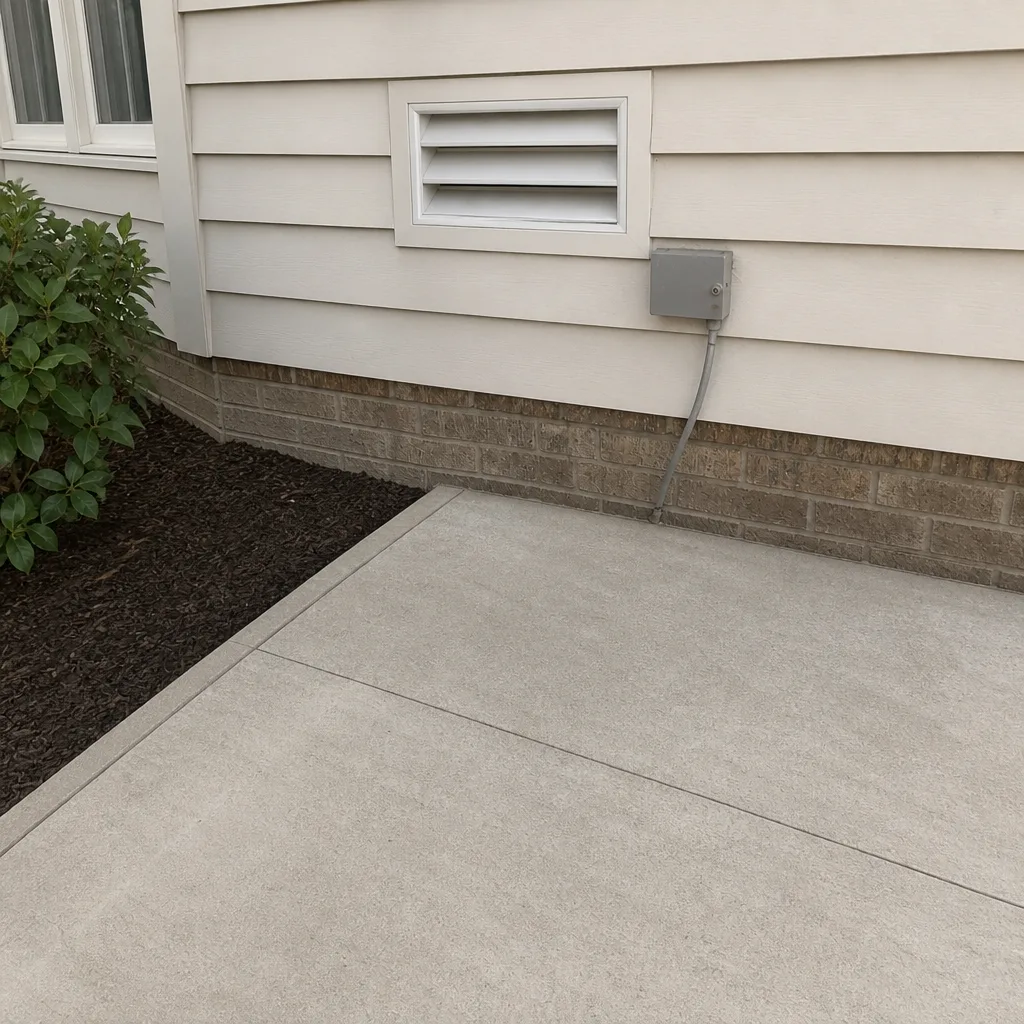 After
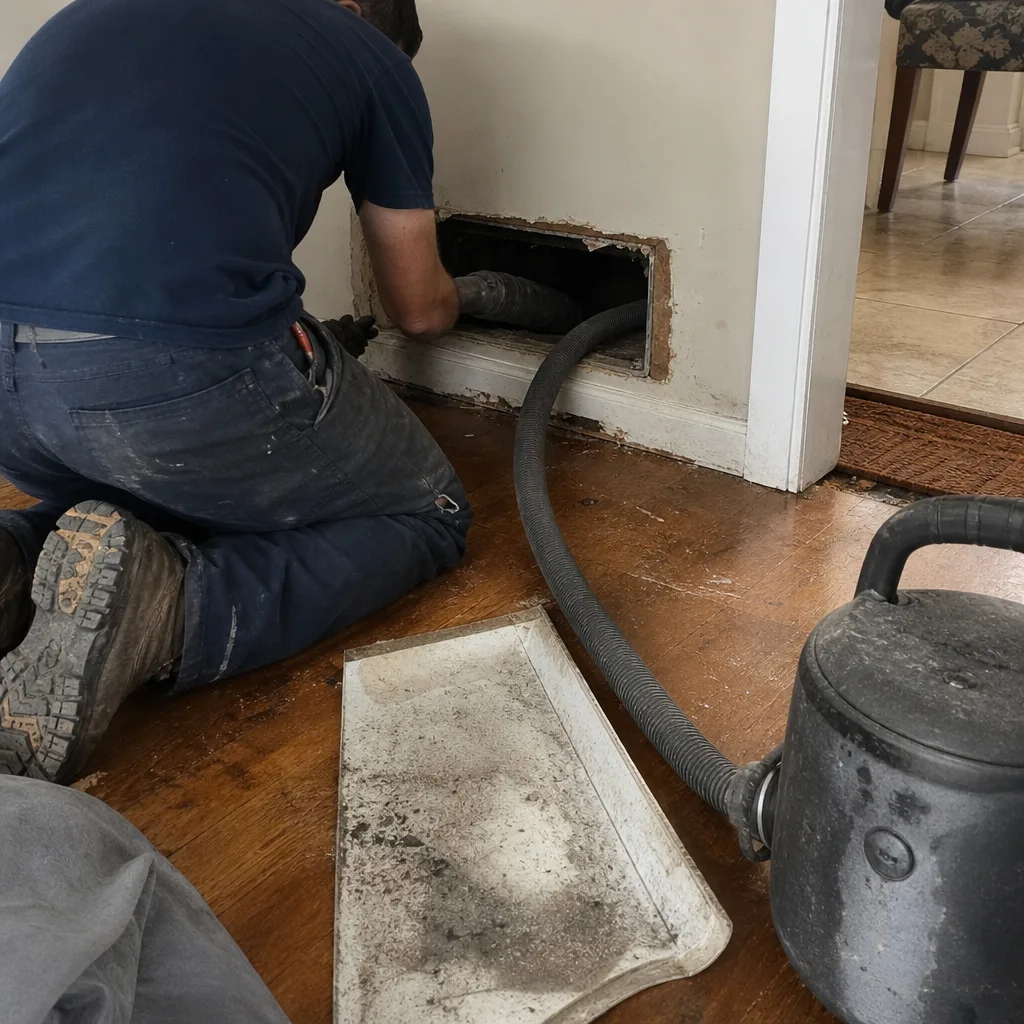 Before
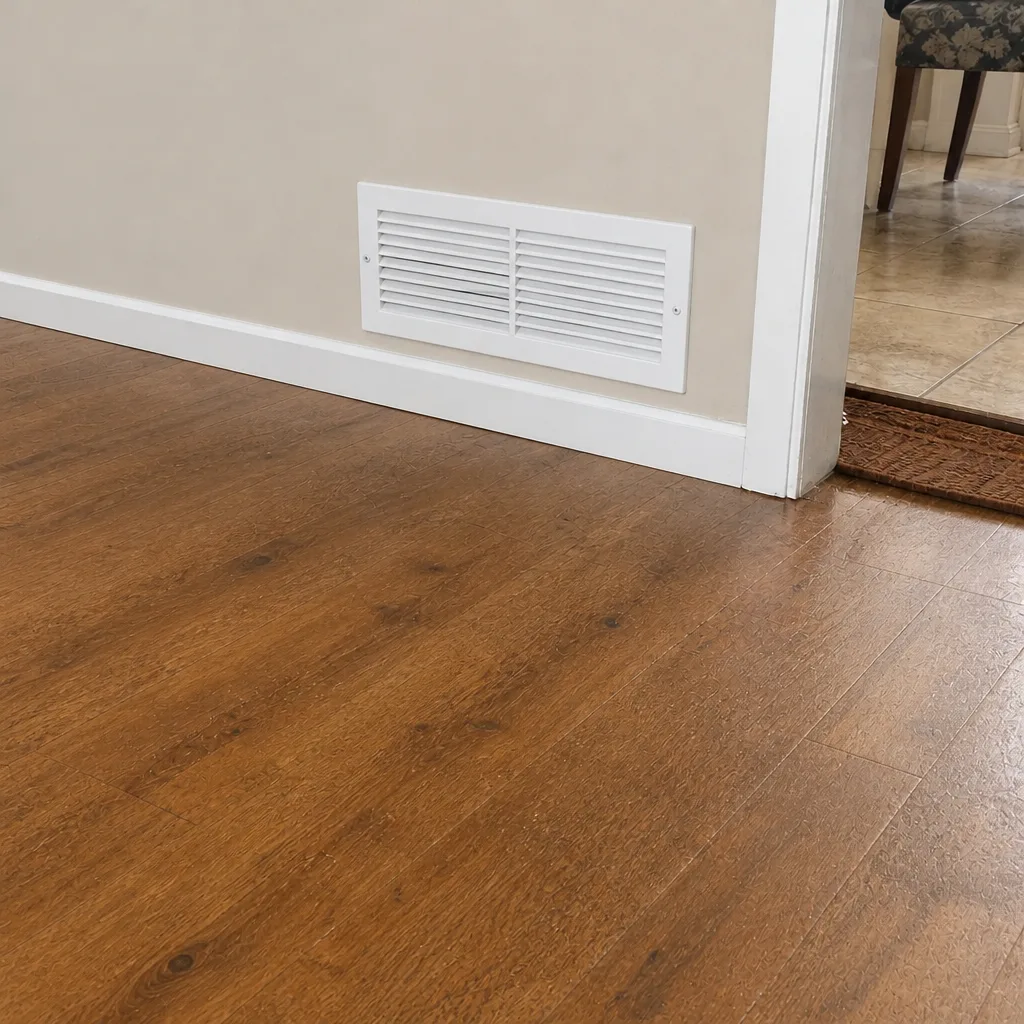 After
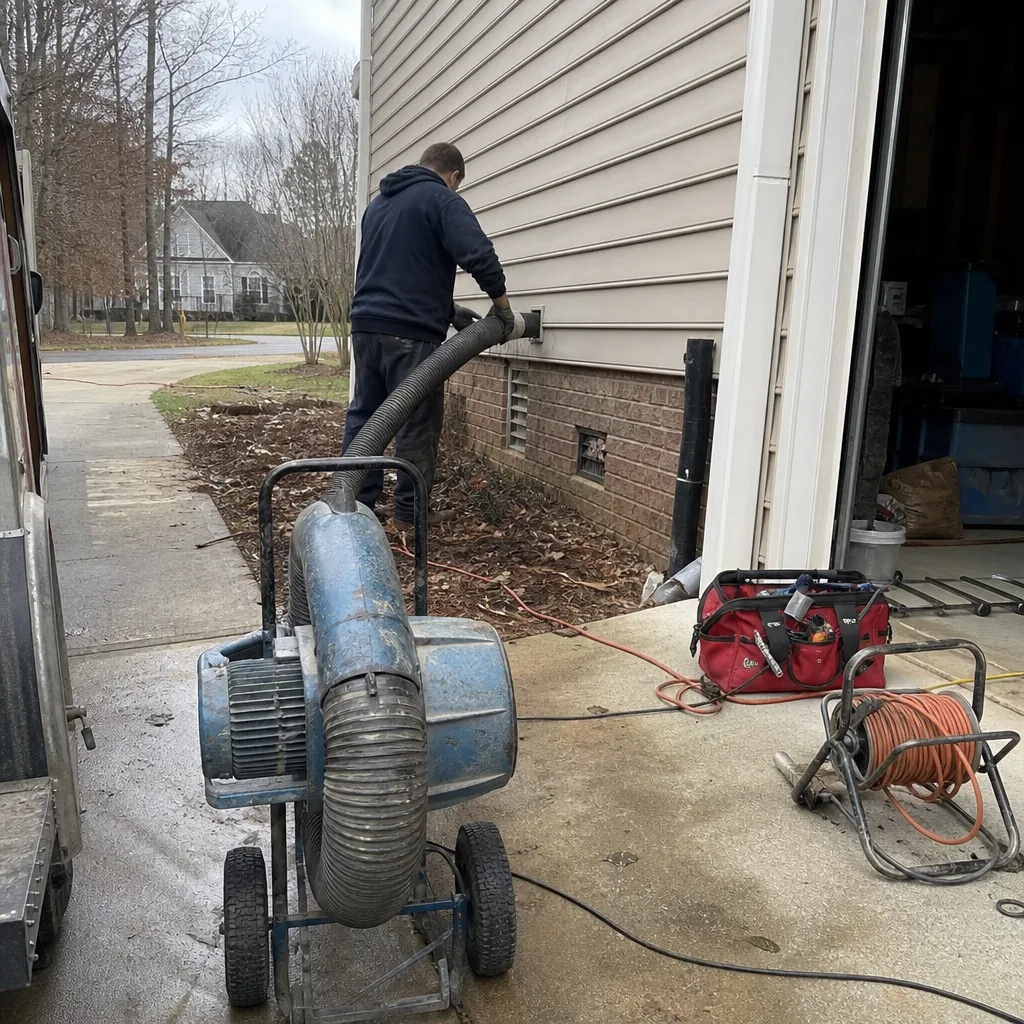 Before
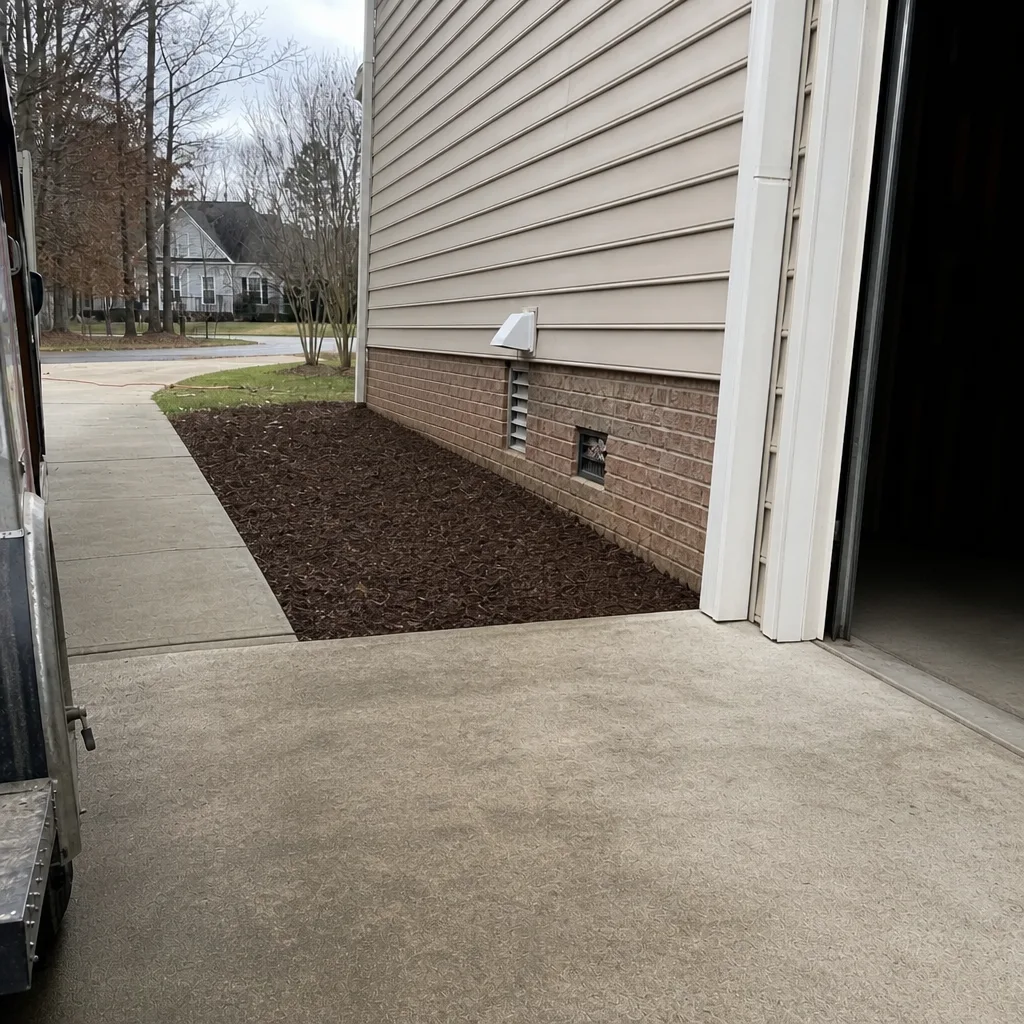 After
When to Call a Professional
If you’re seeing any of the following, it’s time to get a professional assessment: visible dust puffing from the registers when the system starts, a musty or mildew smell that’s stronger when the air conditioning runs, family members with allergy symptoms that worsen inside the house, uneven airflow between rooms, or higher-than-usual electric bills with no obvious explanation. These signals often mean the ductwork has accumulated debris or has developed leaks, and both are worth a professional look.
One more scenario: a recent renovation or remodeling project. Drywall dust, sawdust, insulation fibers, and construction debris all find their way into the ducts during any renovation, and the results are visible every time the system runs. New construction or a major remodel is a good time for a full-system clean.
Our technicians have up to 14 years of experience with the equipment and equipment combinations the industry actually trusts. Air Duct Cleaning Steele Creek offers free estimates in Steele Creek – call (855) 550-7321. We answer 24/7. Fast dispatch from 7am to 7pm, Sunday through Friday.
Frequently Asked Questions
There’s no honest way to quote a fixed price without seeing the system, but here’s what the structure should look like: a flat per-system price agreed in writing before work begins, with components itemized (trunks, branches, boots, registers, air handler), sanitizing and duct repair priced separately if needed, and dryer vent cleaning as a defined line item. Quotes based on square footage or per-vent rates should be refused. Call (855) 550-7321 for an exact quote – estimates are free.
Because the low number isn’t the price of the job; it’s the price of getting inside your house. A $49 to $99 coupon typically becomes a several-hundred-dollar or more invoice once the technician discovers “heavy build-up,” “extra runs,” or “required sanitizing” on-site. The cheap quote and the honest quote aren’t measuring the same thing – one is measuring a door open, the other is measuring the work. Call (855) 550-7321 for a flat quote in writing – estimates are free.
You verify it with before-and-after inspection camera photos of your own ducts, a walk-through with the technician where you pull a register grille and check the air handler cabinet yourself, and a signed completion document matching the original scope. A contractor with nothing to hide is happy to show the work. Call (855) 550-7321 if you’d like a free estimate – we answer 24/7.
Most homes don’t need annual duct cleaning. Every three to five years is a reasonable working interval for a typical home, with the schedule shortening for households with pets, allergy sufferers, recent renovation, or a history of moisture in the system. The honest answer is: it depends on what’s actually accumulating, so assessment comes first. Call (855) 550-7321 for an assessment – estimates are free.
NADCA certification matters because most states don’t license duct cleaning at all, and there’s no regulation of equipment standards or cleaning methodology. NADCA membership, and specifically the ASCS (Air Systems Cleaning Specialist) certification, is one of the few structural checks you have. Verifying membership through the NADCA directory takes about two minutes and rules out the majority of fly-by-night operators. Call (855) 550-7321 to ask about our certification details – estimates are free.
Duct cleaning removes accumulated debris from inside the duct system. Duct sealing addresses leaks at the joints, boots, and plenum connections which are the places where unconditioned attic air enters your system and conditioned air escapes into the attic. Cleaning alone can’t fix a leaky system, which is why we recommend both in the same engagement when the ducts show leakage during assessment. Call (855) 550-7321 to schedule a free assessment – estimates are free.
The Bottom Line
Hiring an air duct cleaning contractor in Steele Creek comes down to a small number of verifiable checks: named professional equipment (Rotobrush, Nikro, Abatement Technologies), NADCA membership confirmed in the directory, EPA registration on the sanitizer, a flat price per system defined in writing before the technician climbs into your attic, and a documented before-and-after record you keep. Get those pieces in writing and the rest of the industry’s most common bait-and-switch mechanics stop working. Skip one of them and you’re relying on a stranger’s word at the exact moment you’re least able to check it.
Air Duct Cleaning Steele Creek works from the position that air quality, not just duct cleaning, is the point. Cleaning a full air pathway, sealing what’s leaking, and improving filtration through Honeywell or Aprilaire equipment addresses the problem behind the symptom. If you’d like to talk through what your system actually needs, call (855) 550-7321. We answer 24/7. Fast dispatch from 7am to 7pm, Sunday through Friday. Free estimates, and the written estimate is the final price.
Written by the team at Air Duct Cleaning Steele Creek.