
Last updated November 25, 2026
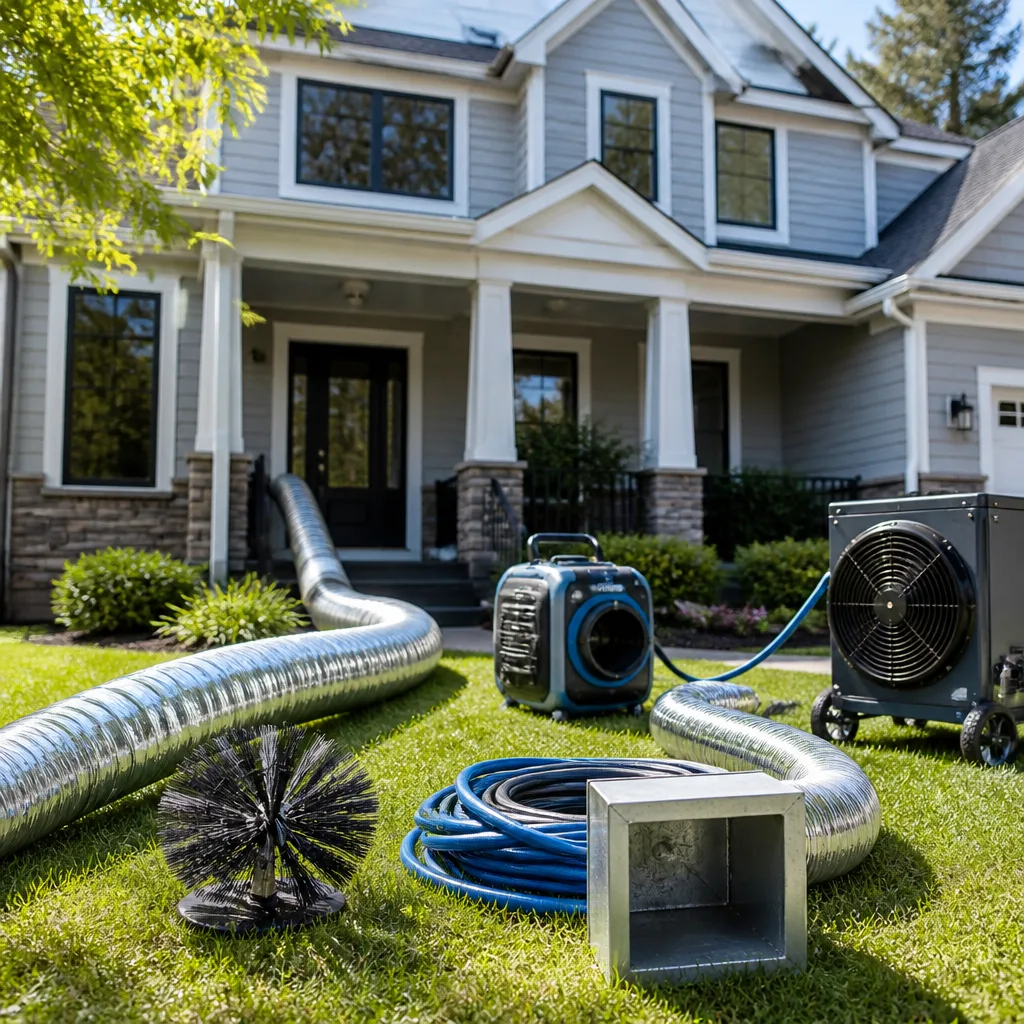 Whole-home duct cleaning
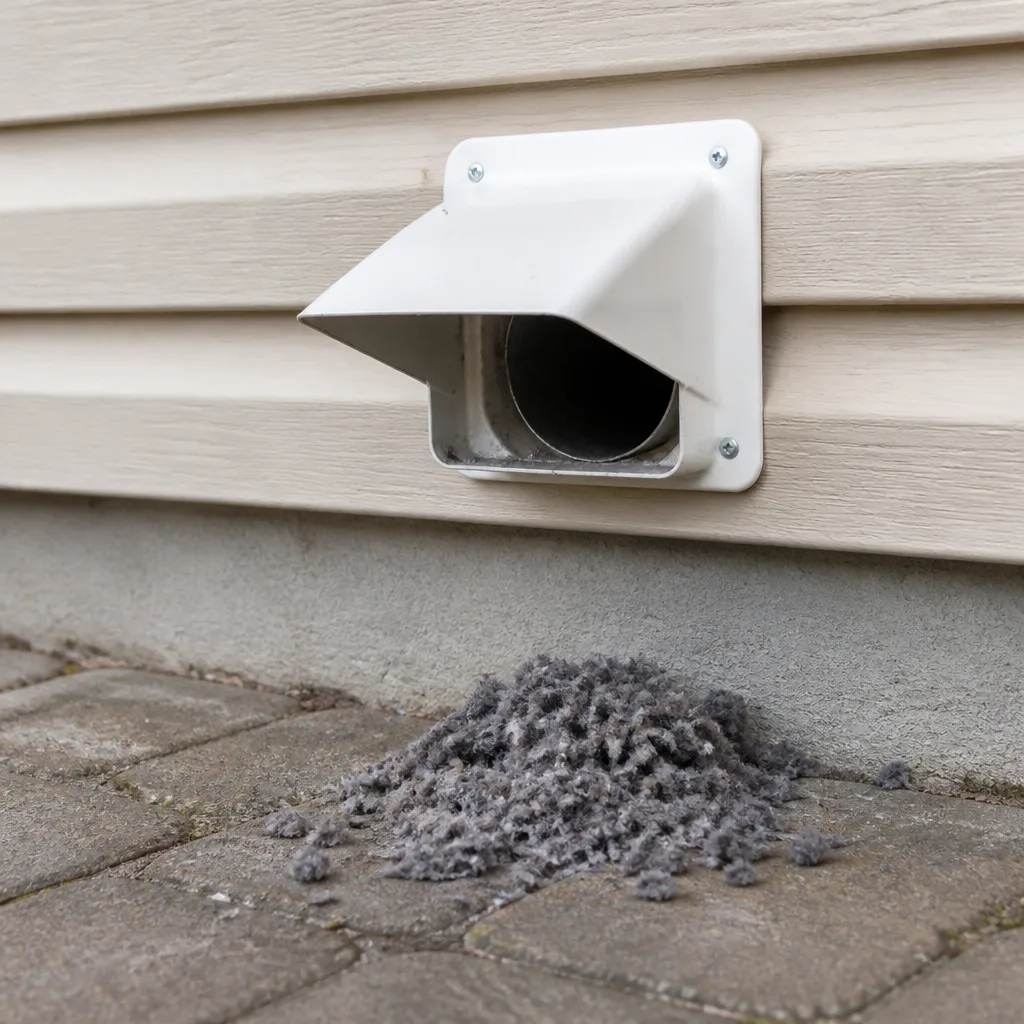 Dryer vent cleaning
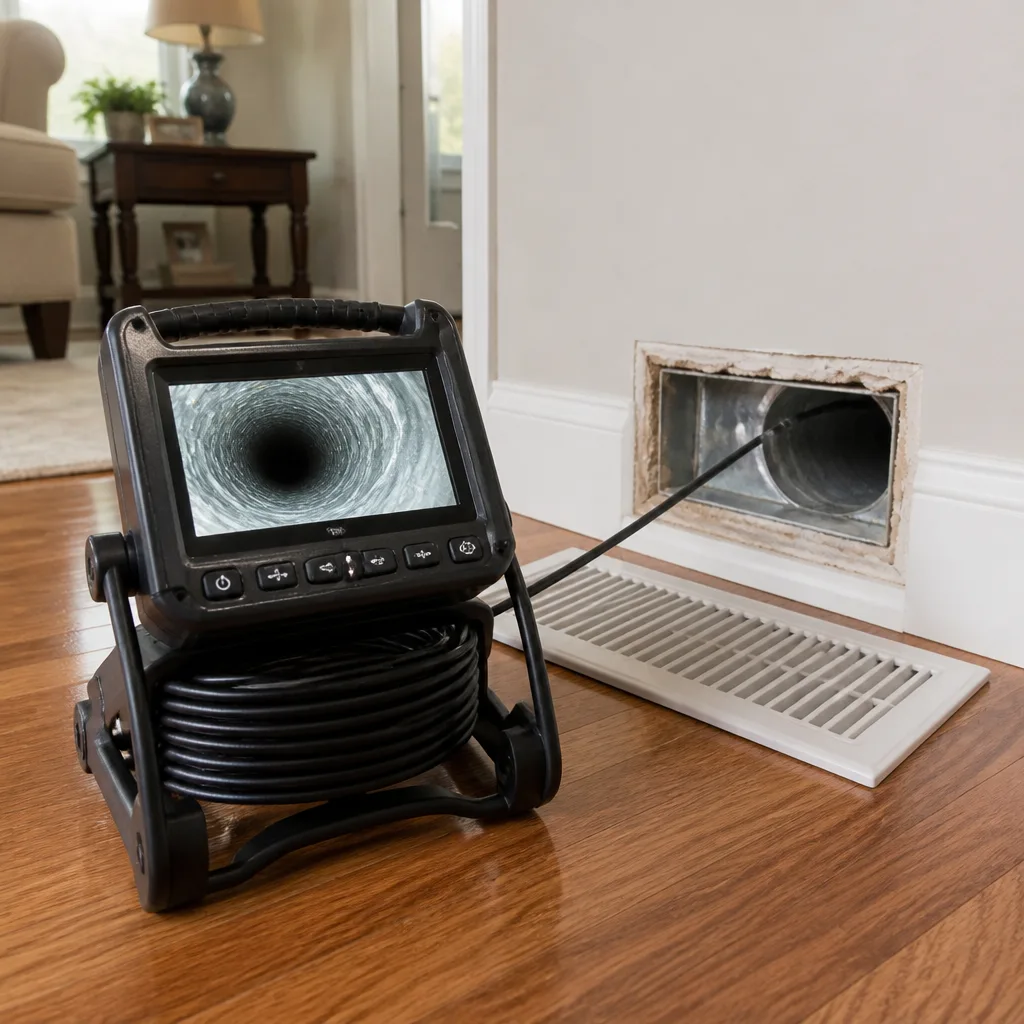 Camera inspection
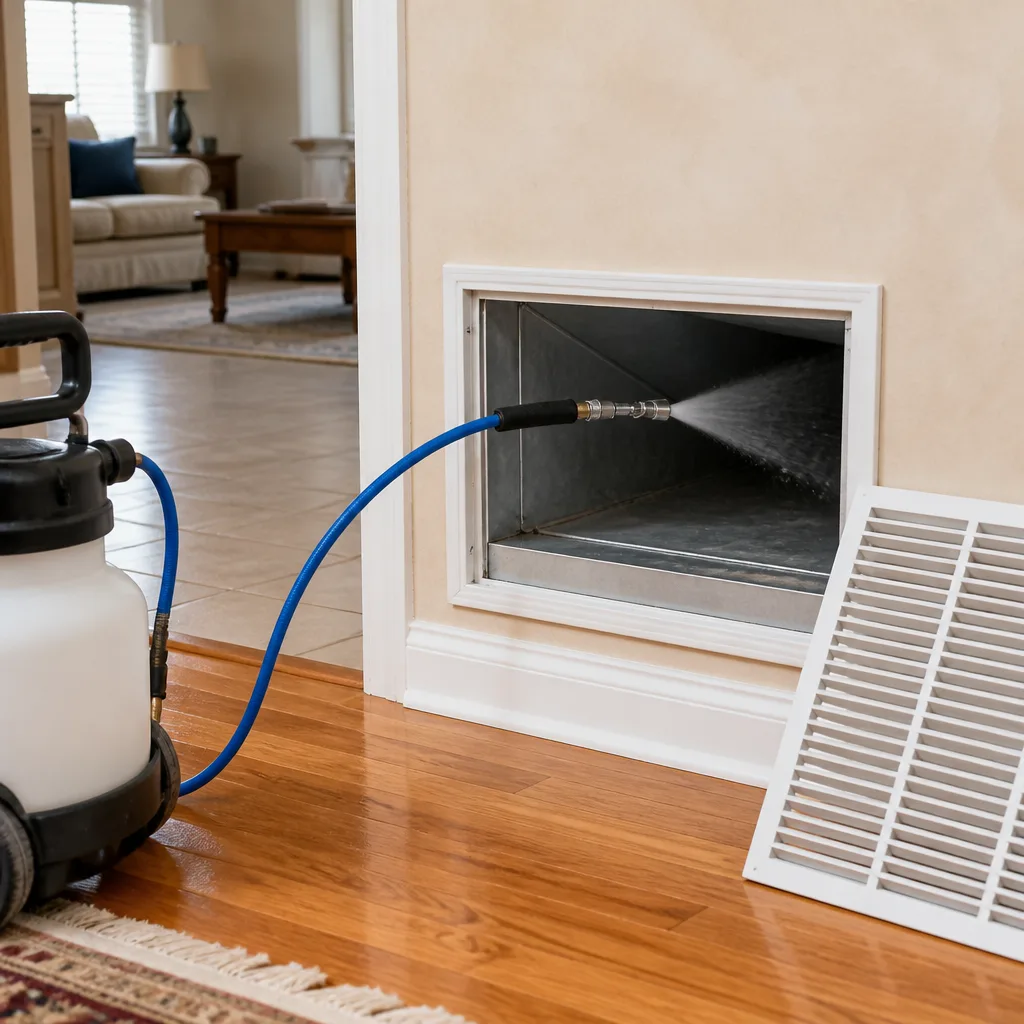 Sanitizing & deodorizing
Whole-system duct and dryer vent check with before-and-after photos - you see exactly what came out of your vents
That "$99 whole-house special" is a bait ad - the real number appears once they are in your hallway, or the "clean" is a shop-vac at the register. We photograph the inside of your ducts before and after instead.
Air Duct Cleaning Warning Signs: A Steele Creek Homeowner’s Reference Guide
A filter that maxes out in three weeks instead of three months isn’t a filter problem. It’s your duct system telling you there’s a contamination source upstream that no filter change will ever fix. Most homeowners in Steele Creek wait for visible dirt to fall out of a register before they think about their ducts, and by then the problem has usually been building for a season or two. The real indicators show up earlier: uneven airflow between rooms, the timing of a smell, how fast your furnace filter loads up, and what’s happening at the edges of a supply vent. This guide teaches you to read those signals, understand what each one points to, and decide when a professional inspection makes sense.
Quick Answer
Air ducts in Steele Creek usually need professional attention when you notice three or more of the following at once: uneven airflow between rooms, a musty or dusty smell that runs on the same timing as your HVAC cycle, filters that load up in weeks rather than months, black edging around supply registers, or allergy symptoms that ease when you leave the house. A single sign can be normal. A pattern of them points to contamination or a duct integrity problem that a standard filter can’t solve.
Styles & brands we work with
- Whole-home duct cleaning
- Dryer vent cleaning
- Camera inspection
- Sanitizing & deodorizing
Table of Contents
- Differential Airflow: When Rooms Tell You the Ducts Are Restricted
- The Smell Taxonomy: Reading Odor Type and Timing
- Visual Register Inspection: What Black Edging Actually Means
- The Post-Renovation Contamination Timeline
- Health Symptom Patterns That Point to Duct Contamination
- Filter Loading Rate: The Fastest Diagnostic You Have
- Duct Leaks and the Integrity Problem Cleaning Can’t Fix
- What a Professional Assessment Actually Involves
Differential Airflow: When Rooms Tell You the Ducts Are Restricted
The single most common misdiagnosis we run into in Steele Creek is a thermostat problem that isn’t a thermostat problem. If one bedroom runs warm all summer while the rest of the house sits fine, and one room upstairs never quite catches up in winter, the culprit is usually a restricted branch duct or a return that’s pulling harder than the supplies serving that zone. Homeowners often pay for a new thermostat or a zoning adjustment before anyone looks inside the duct run.
Here’s the reading method. Pick a day when the outdoor temperature is steady, set the system to a constant fan setting, and walk through every room with your hand held near the supply register. Compare the air throw, not just the temperature. A room that delivers a weak, thin stream while other rooms deliver a strong reach tells you the duct serving it is likely restricted by debris buildup, a collapsed flex run, or a mismatched damper setting. A cold room with a strong stream is more likely a balance problem. These are different fixes.
- Weak stream, cold room: likely a restricted or undersized duct branch, or a register that’s choked with dust matting.
- Strong stream, cold room: likely a balance or thermostat placement issue, not contamination.
- Weak stream, warm room in summer: often a return-side restriction pulling the house negative and starving the room.
- No stream at all: a disconnected flex duct or a fully blocked run. This one is worth a call.
One detail that matters in Steele Creek’s housing mix: many homes have long flex runs in the attic space, and flex duct is far easier to kink, crush, or partially collapse than rigid metal. A kinked flex run can look perfectly fine from the crawlspace access and still be delivering half the air it should. Professional-grade assessments involve a camera look into the run, which is why we use Rotobrush and Nikro systems with inspection capability rather than consumer shop vacuums. A thorough air duct cleaning visit starts with understanding where the restriction actually is.
The Smell Taxonomy: Reading Odor Type and Timing
Homeowners describe duct smells in vague terms, and that vagueness makes the problem harder to solve. Four odor categories matter, and each one points to a different type of contamination and a different location inside the system. If you can name what you’re smelling, you’ve already narrowed the search.
- Musty: this is the biological category, and it usually points to moisture. A musty smell that’s strongest right when the system first kicks on suggests condensation sitting in an evaporator coil pan, or microbial growth on a wet interior duct surface. This is the one that most often warrants Abatement Technologies-grade containment equipment, because you don’t want spores distributed through the house while you’re cleaning.
- Dusty or earthy: the classic dry dust smell, usually from accumulated particulate in the return-side trunk and the register faces. This is the most common complaint in older Steele Creek homes and generally the most straightforward to resolve.
- Chemical or off-gassing: a faint solvent or plastic smell after a renovation or new furniture installation, which usually points to VOCs rather than duct contamination. Cleaning alone won’t fix it. Filtration and ventilation improvements will help.
- Biological or animal: a sharp, ammonia-like or musky smell that arrives at odd times of day and doesn’t track your HVAC cycle. This is a pest-access indicator, and the fix starts with finding where the animal entered the duct system, usually a loose boot or a gap at the plenum.
Timing is the other half of the diagnostic. A smell that arrives the moment the air handler starts and fades within a few minutes is coming from the plenum or the return trunk, closest to the blower. A smell that appears only after the system has been running a while often comes from deeper in the supply run, where the air has had time to pick up moisture from a cold attic duct. Track the timing in a notebook for a week. The pattern will usually tell you which side of the system to focus on.
Visual Register Inspection: What Black Edging Actually Means
Pull the grille off one supply register and one return register. Hold a flashlight at a shallow angle across the interior of the boot and look at the edges. A thin, even film of gray dust on the visible surfaces is normal for a home that’s a few years old. The signal worth paying attention to is a distinct black band running around the perimeter of the boot where the metal meets the drywall or where the boot meets the duct, especially if the band is darker than the rest of the surface and slightly tacky to the touch.
Black edging means one of two things, and the location tells you which. If the black band shows up at the supply register, it usually indicates a small air leak around the boot seal that’s been pulling unfiltered attic or wall-cavity air into the airstream for a long time. That’s a duct sealing problem as much as a cleaning problem. If the black band is on the return register, it’s more likely accumulated particulate being drawn in by the return, which is a cleaning issue.
- Even gray film: normal, no action needed.
- Black band at supply boots: leak-driven, worth a duct sealing assessment.
- Black band at return registers: contamination load, worth a cleaning assessment.
- Visible mold or a fuzzy patch: stop and call a professional. Don’t scrub and don’t run the system on constant fan.
- Rust streaks on the metal: moisture problem upstream, usually at the coil.
In Steele Creek’s humid summers, the leak-driven black band at the supply boot is the more common of the two, because the attic air is warm and wet and the boot metal is cold. The resulting condensation grabs dust and turns it into a sticky film. This is also why duct repair and sealing is a core part of what we do rather than an afterthought. Cleaning a duct that still has a leaking boot at the register will be undone by next spring. The fix is to clean, seal the boot, and restore the run properly, which is what we mean when we describe a system as sealed and restored.
The Post-Renovation Contamination Timeline
Homeowners often assume that opening all the windows and changing the filter a few times after a renovation clears the ducts. It doesn’t. Drywall dust, insulation fibers, and construction debris take far longer to distribute through a system than most people realize, and the distribution actually gets worse over the first several weeks because the system keeps pulling fine particulate through the filter bypass.
- Day 1 to day 3 after rough-in work: the highest concentration of drywall dust enters the return side and settles in the filter box, the return trunk, and the first few inches of the plenum.
- Week 1 to week 2: finer particulate passes the filter and settles into the supply branch runs, coating the interior surfaces with a chalky film.
- Week 3 to week 6: the settled dust dries out, gets re-entrained by airflow, and starts showing up on register faces and inside supply boots throughout the home.
- Month 2 to month 4: if the filter has been changed regularly, the dust load on the interior surfaces stabilizes but doesn’t disappear on its own. In a humid Steele Creek summer, settled drywall dust can hold moisture and become a substrate for microbial growth.
The practical lesson is simple. If a renovation was completed in the last three to four months and you’re seeing dust on registers throughout the house, the timeline is normal and cleaning is likely needed. If the renovation was completed a year ago and the dust issues are still persistent, that’s a sign the contamination load settled into the ducts and never fully cleared. This is where we see HVAC cleaning as a needed first step, followed by a cleaning of the visible duct pathway, followed by a filtration upgrade if the household is dust-sensitive.
One related note for homes with a garage or attic access: construction debris is often blown into the duct pathway through a return that shares space with the garage or attic. If your return register is near a workshop or storage area, that return should be part of the cleaning scope. It’s a detail many estimates skip, and it’s why we walk the full return side before quoting any job.
Health Symptom Patterns That Point to Duct Contamination
Not every allergy symptom comes from the ducts, and treating every symptom as a duct problem is expensive and wrong. There’s a specific pattern that correlates with duct contamination, and it’s worth learning to recognize it because it changes the treatment approach.
The duct-contamination pattern has three markers. First, symptoms that are worse indoors than outdoors, and specifically worst during HVAC runtime. Second, symptoms that improve within a few hours of leaving the house consistently, not just once or twice. Third, symptoms that persist through a filter change and through a deep cleaning of the room itself. When all three are present, the ducts are a plausible source. When only one is present, other indoor air quality sources (mattress dust mites, a damp carpet, a hobby area with solvents) are more likely culprits.
- Worse indoors, worse during HVAC runtime, improved after leaving: duct contamination is worth investigating.
- Worse in the bedroom only, year-round: likely bedding-related dust mites, not duct contamination.
- Worse in one specific room and nowhere else: local source in that room, not the ducts.
- Worse during spring and fall outdoor peaks: outdoor pollen and insufficient filtration at the air handler, not duct contamination.
- Worse during the first 5 minutes after the system starts: contamination at the blower or plenum, worth an inspection.
The distinction matters for treatment, not just diagnosis. If the symptom pattern points to the ducts, cleaning and sanitizing the pathway with professional containment equipment (the Abatement Technologies side of our toolkit) is the right approach. If the pattern points to filtration gaps, Honeywell and Aprilaire filtration upgrades at the air handler are the more effective spend. Most Steele Creek homes benefit from a combination, which is why we frame the service as air quality rather than just duct cleaning. If your symptoms ease when you’re away from home for a few days, that’s the pattern worth acting on. For homes in the older neighborhoods around Steele Creek, a full assessment of the return and supply pathway is the only way to know what you’re dealing with.
Filter Loading Rate: The Fastest Diagnostic You Have
Write the date on your filter when you install it. Then note the date you pull it. The interval between those two dates is the fastest diagnostic you have, and it’s free. A filter that loads to a gray, matted surface in three weeks instead of three months is telling you there’s a large upstream contamination source, and no filter change will fix it. All you’re doing is paying for filters and protecting the blower from the worst of the load.
Loading rate has three common causes, and they can usually be told apart at the filter itself:
- Uniform gray loading: indicates general household dust and normal operation. If the interval is under a month, there’s likely a return-side contamination source in the ducts, often the return trunk interior or a return register that’s pulling more than its share.
- Loading concentrated on one side or corner of the filter: indicates uneven return airflow, often from a return that’s pulling harder than the other. This points at a duct balance issue as much as a contamination issue.
- Loading with visible fibers or construction debris: points to recent renovation or to attic insulation being drawn into the return. This one needs both a cleaning and a sealing check.
In Steele Creek, homes with long flexible return runs often load filters faster than homes with rigid metal returns, because flex has more surface area for particulate to cling to. If your filter interval has been shortening over the last two seasons, that shortening itself is a warning sign. It’s evidence that the interior of the ductwork is accumulating, not maintaining. A professional cleaning resets the baseline. If the interval shortens again within a year, that’s the signal to look for a leak rather than assume the ducts have re-contaminated.
The other practical move: switch to a filter with a clear MERV rating stated on the package, and compare loading rate across the same filter model across seasons. Changing filter brands between seasons makes the loading-rate signal useless. Standardize, then measure.
See the difference
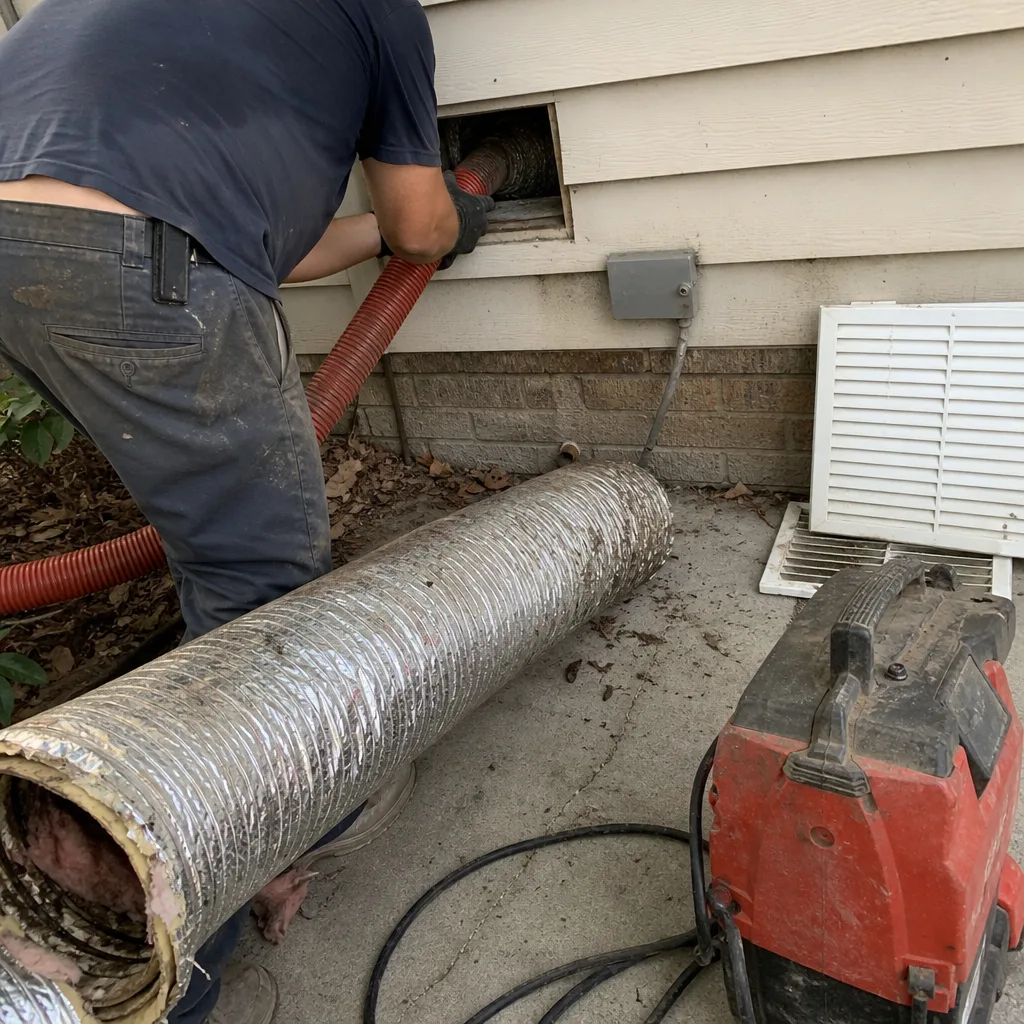 Before
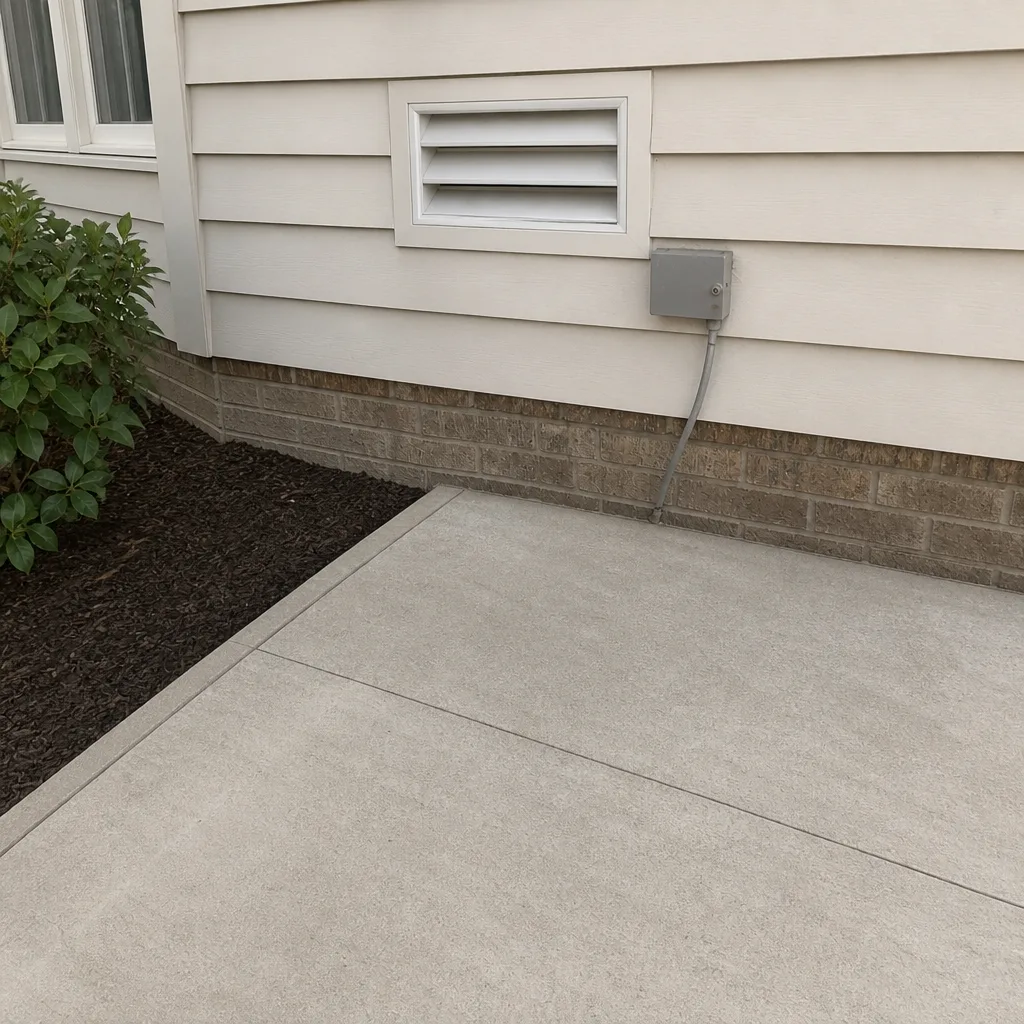 After
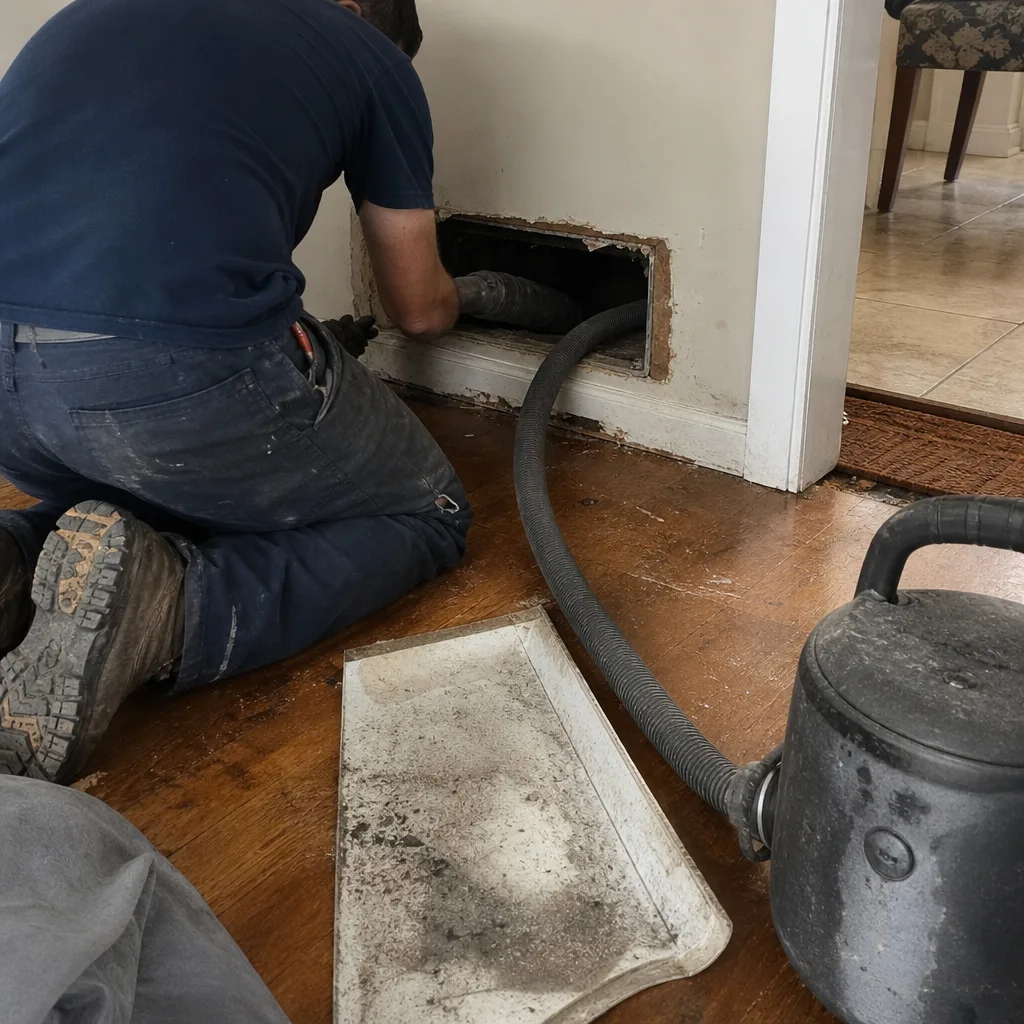 Before
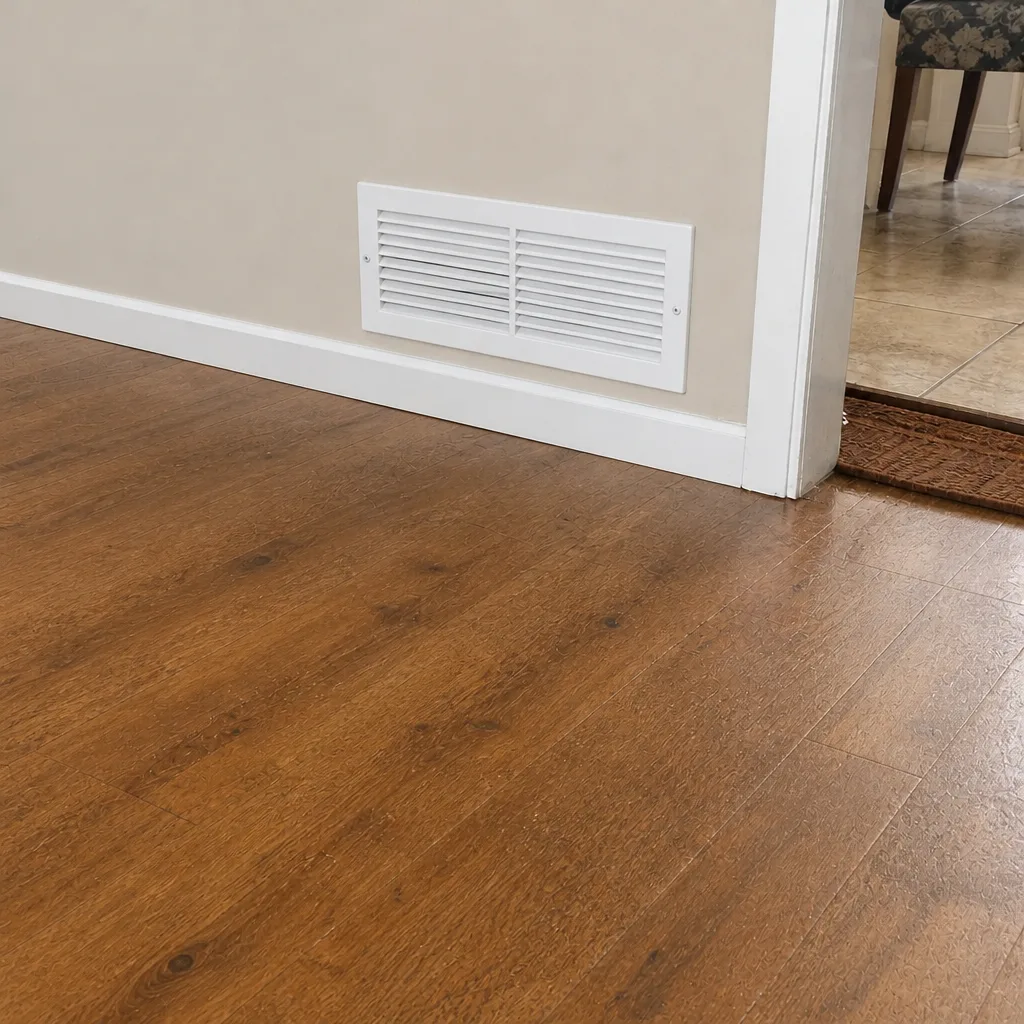 After
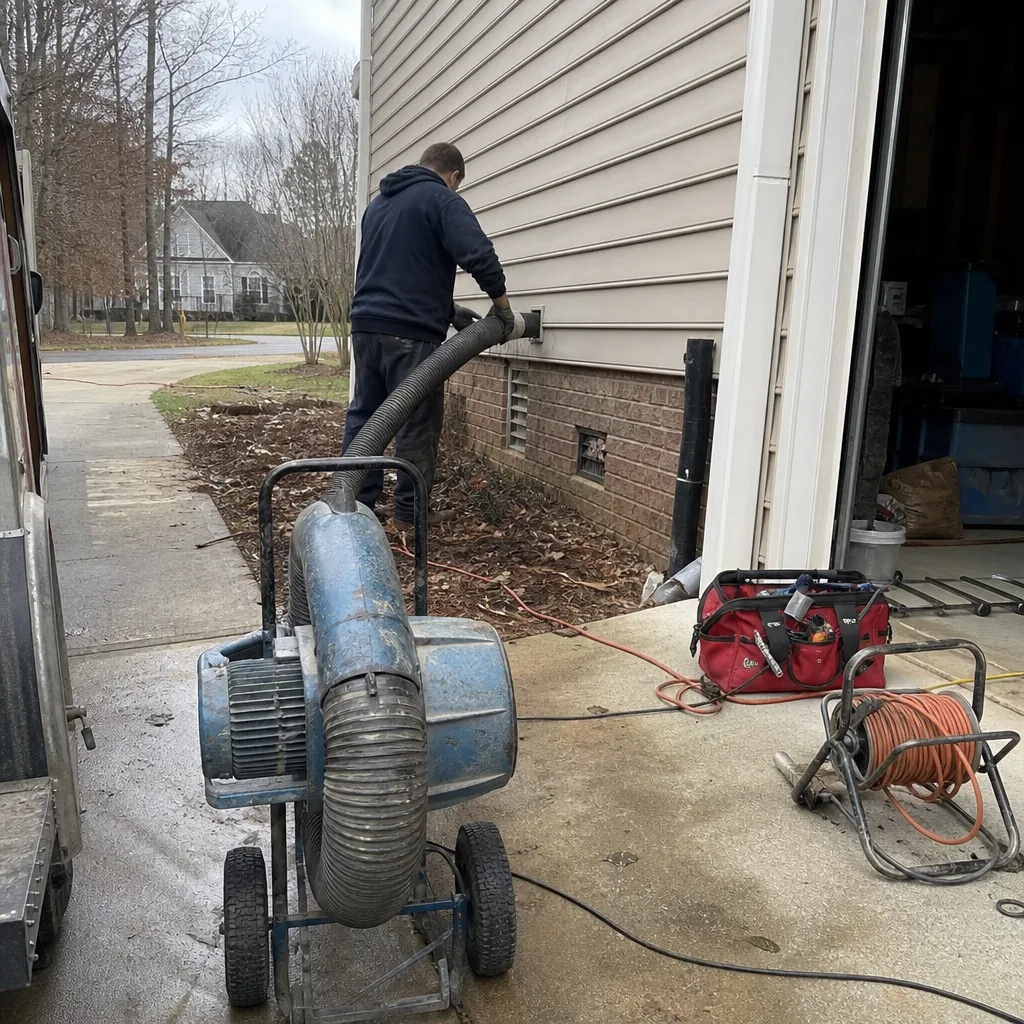 Before
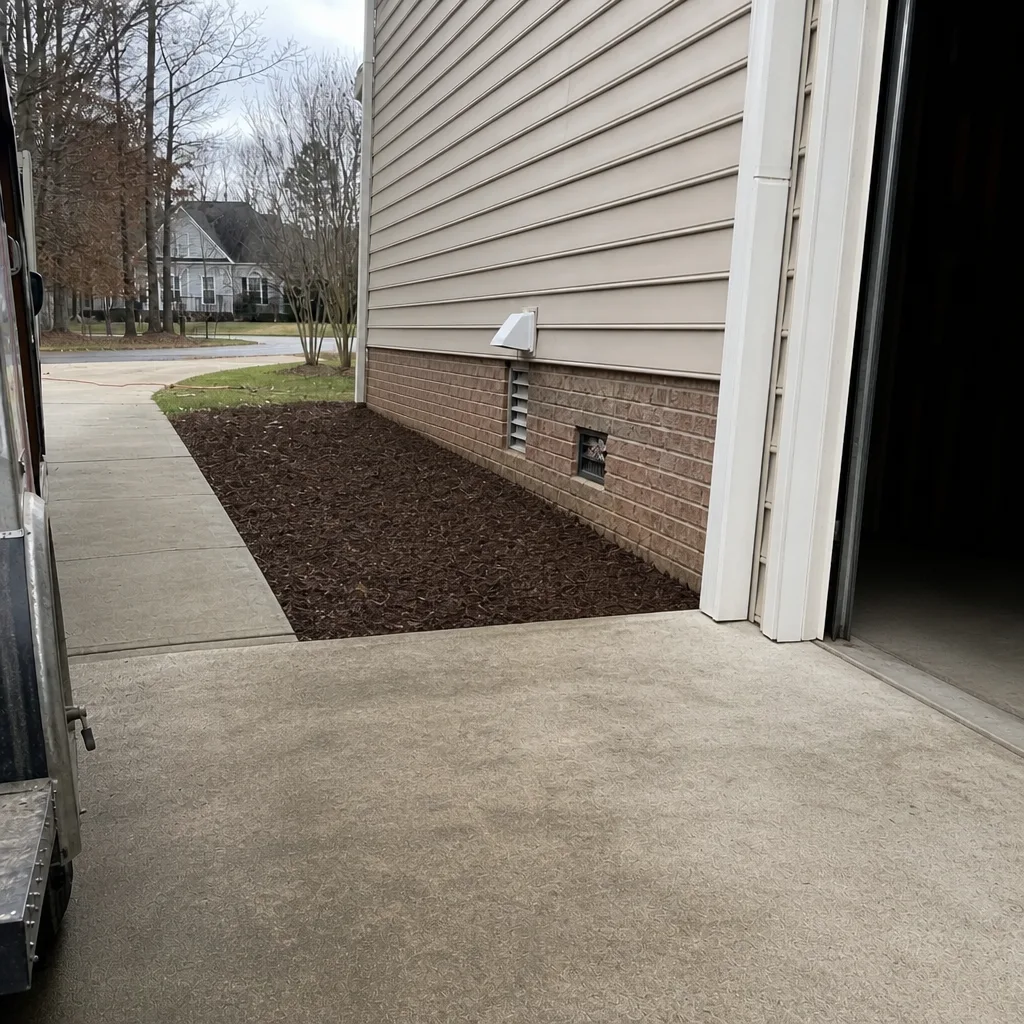 After
Duct Leaks and the Integrity Problem Cleaning Can’t Fix
Cleaning the inside of a duct is worthless if the duct is leaking air into the attic or wall cavity. We say this plainly because it’s the root cause of most re-contamination complaints in this trade. A supply run that’s leaking 20 percent of its air into the attic is pulling that much attic air back in through the pressure imbalance elsewhere in the system, and that attic air carries dust, insulation fibers, and, in a humid climate, moisture. You can clean the run every year and the air quality will come right back.
Several signs point to duct integrity as the real problem rather than contamination:
- Dust settling on horizontal surfaces in one or two rooms faster than the rest of the house.
- A whooshing or whistling sound at a register that changes with the system’s cycle.
- Visible gaps, taped joints pulling away, or unsupported flex runs in the attic or crawlspace.
- Rooms that get dustier after heavy rain, which suggests a leak in the run rather than interior buildup.
The fix is a proper seal, not a cleaning. Duct sealing involves finding the leaks, taping and mastic-sealing the joints, and restoring the run so it moves the air volume the system was designed to deliver. We treat this as a core service because ours is a full air pathway approach: cleaning the interior, repairing and sealing the pathway, and treating the air itself. Cleaning without sealing is a service that looks complete on the invoice and gets undone by the next season.
What a Professional Assessment Actually Involves
If you’ve read through the sections above and recognize three or more of the signals in your own home, an assessment is worth the call. Here’s what a credible one looks like, so you can compare what you’re being offered against what the actual work involves.
- Walk the return and supply side before the equipment comes in. Any assessment that begins with a truck-mounted vacuum and no visual inspection is skipping the diagnostic step. A proper visit starts with looking inside several runs with a camera.
- Check the boot seals at every register. This is where the black-edge problem usually originates, and it’s also where most cheap cleanings are undone by the next summer.
- Assess the plenum and the blower compartment. The blower is the point where every bit of return-side contamination gets pulled through. If the visible blower surface is coated, the duct interior is almost certainly worse.
- Use professional-grade cleaning equipment matched to the system. Rotobrush and Nikro systems are the two platforms we rely on, because they give controlled agitation and vacuum without over-pressurizing the duct or damaging flex runs.
- Address microbial and allergen concerns with containment. If there’s evidence of moisture or microbial growth, the cleaning has to run with containment equipment, which is where the Abatement Technologies side of our toolkit comes in. Standard cleaning without containment during a spore event does more harm than good.
- Sanitize and restore the pathway. A solution-based sanitizing treatment, using Guardsman-brand protection products as part of the process, closes the job properly. Then check for leaks and seal any that turned up.
- Recommend filtration improvements where they’ll help. Honeywell and Aprilaire filtration products address the ongoing load once the contamination is out, and they’re the difference between a one-time clean and a lasting improvement.
You can call us directly at (855) 550-7321 for a free estimate. A full assessment of the return side, the supply side, the plenum, and the filtration setup should be part of the quote, not a line item added later. If you’re in a Steele Creek home that’s more than a decade old and you’ve noticed a pattern of the signals above, the assessment is worth the appointment.
How Often Do Ducts Actually Need Cleaning?
Most homes in Steele Creek do well with a professional cleaning every three to five years, but the honest answer is that the interval depends on the home, not on a calendar. Several factors move the interval shorter:
- Pets in the house, especially cats and dogs that shed indoors year-round.
- Recent renovation work, whether or not the ducts were cleaned after the work finished.
- Older duct systems with unsealed joints, which pull unfiltered air in from attic or wall cavities.
- Homes with a smoker or a wood-burning stove, or with a workshop sharing return space.
- Any history of moisture in the system, a leaking evaporator coil pan, or a run that stays damp.
If none of those apply and your filter loading rate is stable, a five-year interval is reasonable. If several apply, a shorter interval makes more sense, and the visit usually combines cleaning with a leak check and a filtration review. The point of a maintenance interval is not the cleaning itself, it’s keeping the interior of the pathway from degrading between visits. A house that doesn’t need cleaning this year will probably need it in two or three, and knowing when is more useful than guessing.
The best method we’ve seen is to use your own filter interval as the tell. If you clean the ducts and the filter interval stays consistent for the next couple of years, you’re on schedule. If the interval shortens right after cleaning, that’s the leak signal described above, not a schedule issue.
Common Mistakes to Avoid
- Assuming a new filter solves a contamination problem. A filter protects the blower and the air handler, but it doesn’t clean the interior of the ducts, and a fast-loading filter is a sign of upstream debris that a replacement won’t touch. Change the filter, then look for the source.
- Cleaning the ducts before fixing a leaky boot or unsealed joint. Cleaning a leaking duct system in Steele Creek’s humid summers is a service that gets undone by the next cooling season. Seal first, then clean, then restore.
- Treating every smell the same way. A chemical off-gas smell from new furniture or a fresh paint job isn’t a duct problem and cleaning won’t resolve it. Track the odor category before you spend money on a cleaning.
- Skipping the return side. Most cheap estimates price only the supply registers because returns are harder to reach and harder to work. A real cleaning covers both, and any quote that doesn’t mention the returns is worth a second question.
- Trusting a “vent count” price. Per-vent pricing is the industry’s bait-and-switch mechanism: the low price gets the technician in the door and the invoice grows once he’s on site. Ask for one flat price per system before anything is scheduled.
- Letting a renovation reset the clock without cleaning. Drywall dust and insulation fibers take weeks to distribute, and in a Steele Creek home they can settle into the interior of the ductwork and stay there. If the renovation is done and the dust is still showing up a month later, the ducts need attention.
- Ignoring a fixable filtration gap at the air handler. A basic fiberglass filter that ships with the system won’t capture fine particulate well enough to protect the interior of the pathway. A filtration upgrade from Honeywell or Aprilaire is often a low-cost addition that extends the cleaning interval significantly.
When to Call a Professional
Some of the signals in this guide are worth watching, and some are worth acting on now. Call a professional if any of the following apply: visible mold or a fuzzy patch inside a register or boot, animal evidence in a duct run, a musty smell that’s strongest in the first few minutes of HVAC runtime, a filter that’s loading in under a month repeatedly, or a renovation completed in the last several months without a duct cleaning. Those all point to contamination the system won’t clear on its own, and waiting usually makes the job bigger. Routine dust and stable filter intervals are fine to monitor for another season. Air Duct Cleaning Steele Creek offers free estimates in Steele Creek – call (855) 550-7321. We answer 24/7. Fast dispatch from 7am to 7pm, Sunday through Friday.
Frequently Asked Questions
The earliest reliable sign is a filter that loads up in a fraction of its expected interval. If your filter is gray and matted in three weeks instead of three months, the ducts are holding a contamination load that a filter change won’t fix. Call (855) 550-7321 for a free estimate.
Most residential jobs are quoted as one flat price per system after an on-site assessment, not a per-vent rate, because the amount of work varies with the number of runs and how much sealing the system needs. A per-vent price on the phone is a signal the quote will grow once the technician is on site. Call (855) 550-7321 for an exact quote – estimates are free.
Cheap quotes usually price only the visible supply registers, skip the return side, and use consumer-grade vacuums rather than professional equipment. Cleaning a partial pathway with underpowered equipment leaves the deep debris in place and can stir contamination into the air. Ask what’s included, ask about the returns, ask about containment, and ask for the flat price per system before scheduling.
Look for before-and-after photos of your own ducts taken during the visit, an itemized invoice that lists the returns and the supply runs separately, and a camera look into at least one run after cleaning so you can see the interior yourself. If any of those don’t appear on the invoice or in the photos, ask why.
Three to five years is the typical interval for a Steele Creek home, but the honest answer depends on pets, renovations, moisture history, and whether the duct joints are sealed. Let your filter interval be the final say. If it’s stable between cleans, you’re on schedule. Call (855) 550-7321 to talk through a specific home.
It can, if the allergy pattern matches duct contamination: symptoms worse indoors than outdoors, worse during HVAC runtime, and improved within a few hours of leaving the house. If your symptoms run the other pattern, a filtration upgrade may be the more effective spend. Call (855) 550-7321 to walk through the specifics of your home.
Yes. The dryer vent is a separate fire-hazard concern from air quality, but we treat it as part of a complete home air pathway scope. A dedicated dryer vent cleaning visit is often scheduled alongside a duct cleaning appointment. Call (855) 550-7321 to book both at the same time.
The Bottom Line
The signs that your ducts need attention are quieter than most homeowners expect. They show up in airflow patterns between rooms, in the timing of a smell, in the loading rate of the filter, and in what’s going on at the edges of the boot seals. Read your system before you react to a visible pile of dust. Fix the leaks, clean the interior, and treat the air. Those three steps, in that order, are what produces a lasting result. If your filter is loading faster than it used to and the smell of the house changes when the HVAC kicks on, the ducts are already telling you. Listen, then call the team for a proper assessment with professional-grade equipment.
If any of what you’ve read describes your Steele Creek home, we’re glad to help with a straightforward assessment. We use Rotobrush and Nikro duct cleaning systems, Abatement Technologies containment equipment for microbial and allergen concerns, and Honeywell and Aprilaire filtration products when the fixing calls for one. Our technicians have up to 14 years of experience, and every quote is one flat price per system, agreed before work starts, with before-and-after photos of your own ducts. Call (855) 550-7321. We answer 24/7. Fast dispatch from 7am to 7pm, Sunday through Friday. See our air duct cleaning page for the full scope of what a visit covers.
Written by the team at Air Duct Cleaning Steele Creek.