
Last updated November 25, 2026
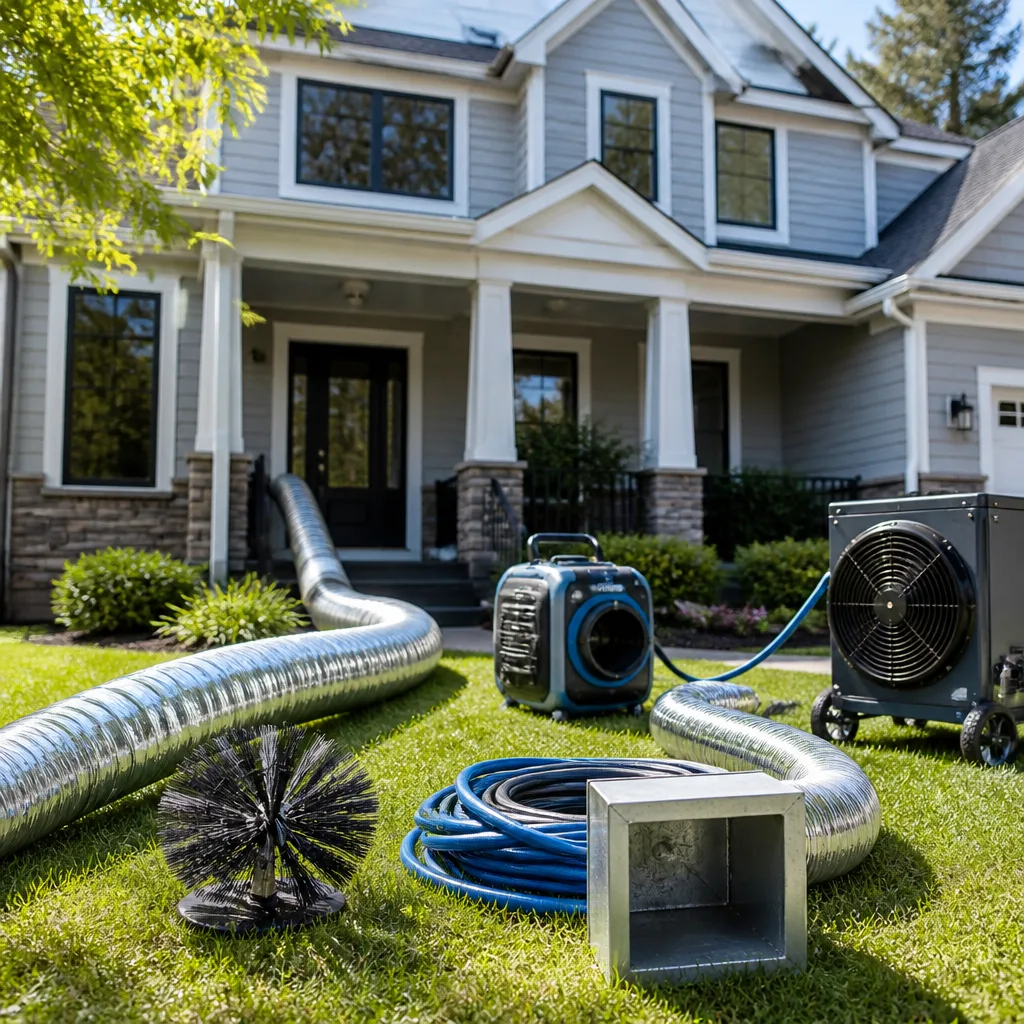 Whole-home duct cleaning
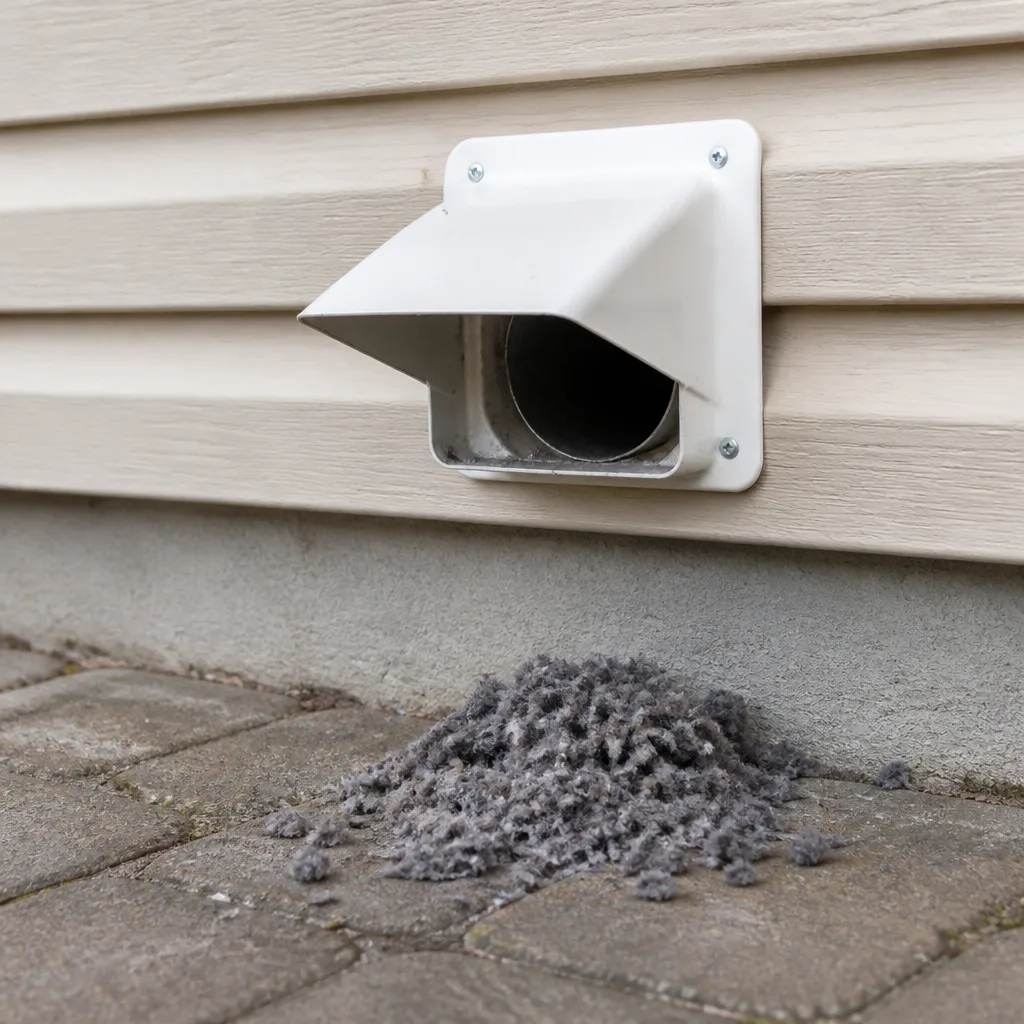 Dryer vent cleaning
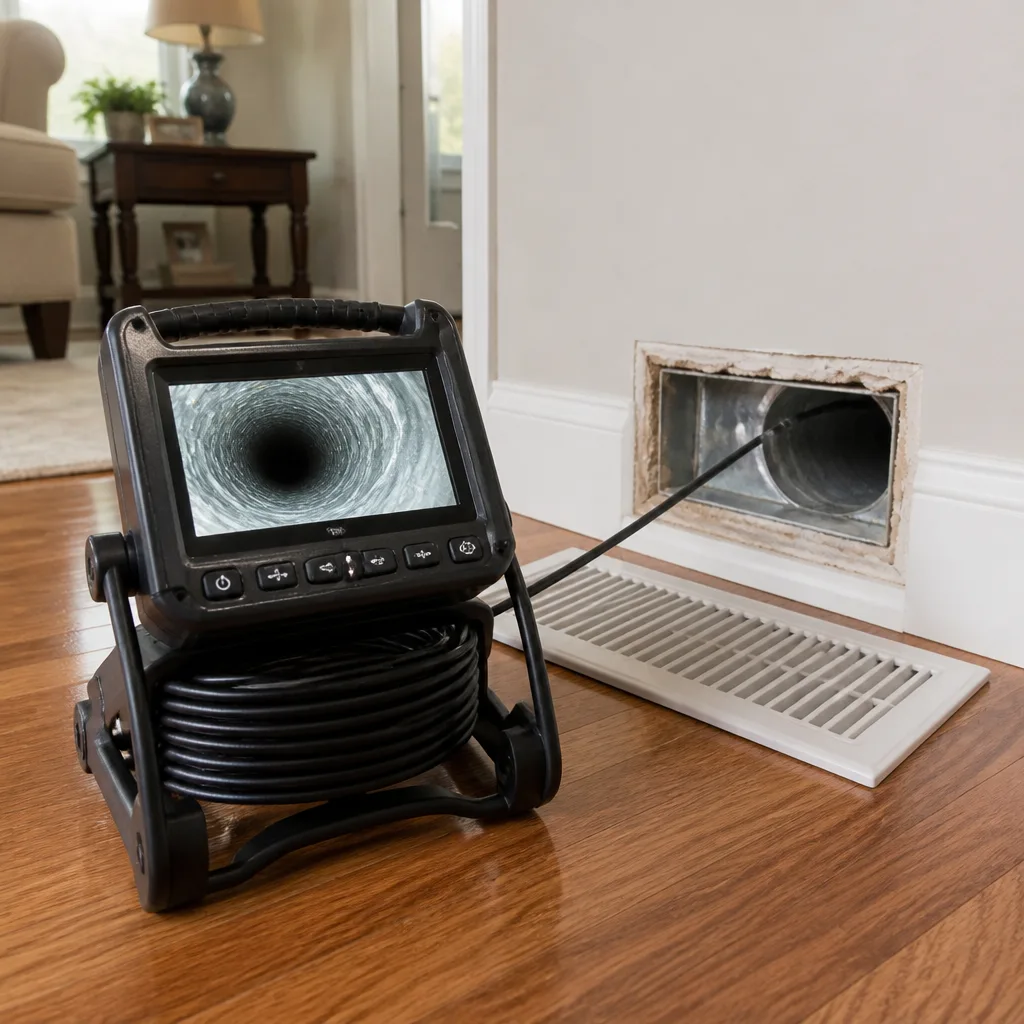 Camera inspection
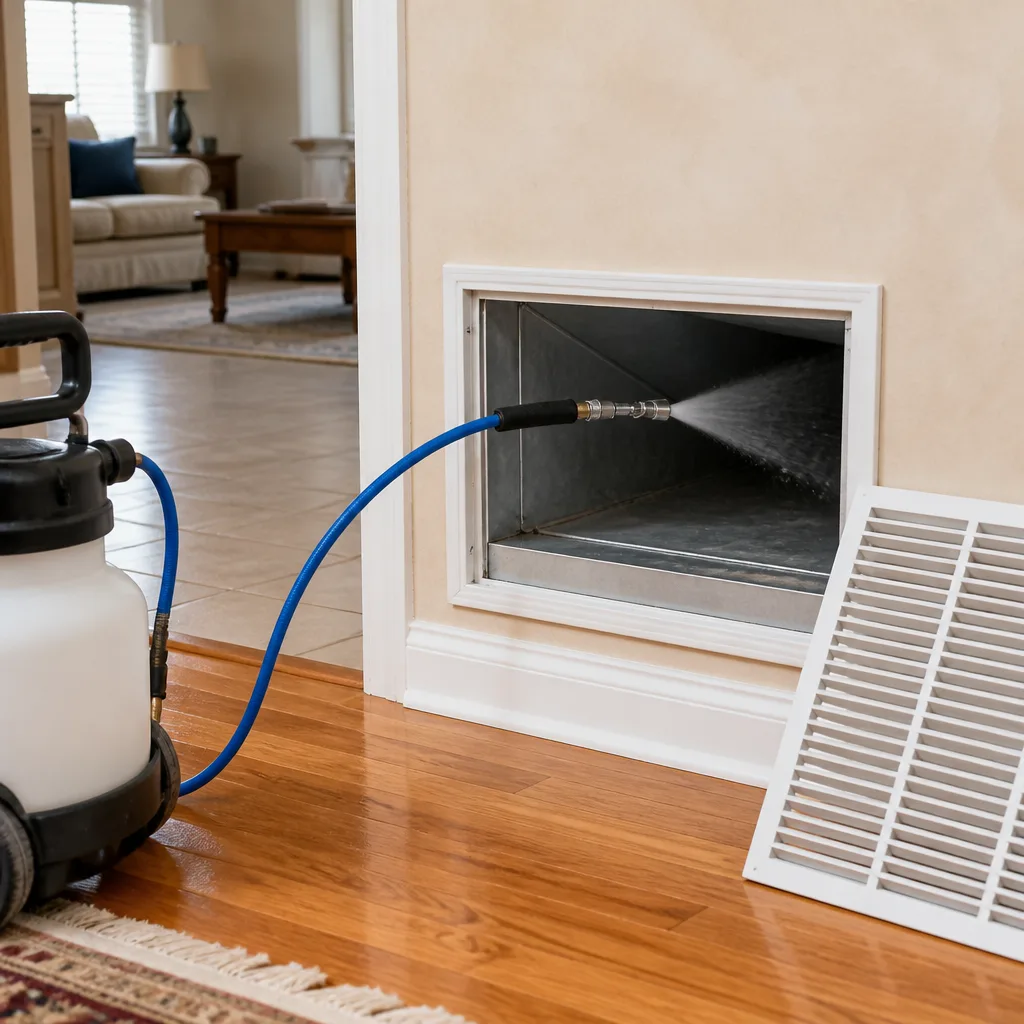 Sanitizing & deodorizing
Whole-system duct and dryer vent check with before-and-after photos - you see exactly what came out of your vents
That "$99 whole-house special" is a bait ad - the real number appears once they are in your hallway, or the "clean" is a shop-vac at the register. We photograph the inside of your ducts before and after instead.
The Complete Guide to Air Duct Cleaning in Steele Creek
The EPA has never recommended a standard cleaning frequency. That’s worth sitting with for a second, because the internet is full of confident claims about every three to five years, and almost none of them cite anything. Those numbers come from people selling cleanings, not from people studying them. So what should actually drive the decision? Not a calendar, but the condition of your system. In Steele Creek, that condition is shaped by red clay soil, long humid summers, and a housing mix that spans new construction and homes old enough to have duct systems that have never been touched. This guide maps the whole mechanical chain, from return grille to supply register, so you can tell a real cleaning from a cosmetic one.
Quick Answer
Air duct cleaning in Steele Creek is worth doing when your system shows real evidence of contamination, not simply because time has passed. A proper job means source removal across the full air pathway (ducts, air handler, blower, coil, and drain pan) using professional-grade equipment, followed by verification you can see. Cleaning alone won’t fix leaky or disconnected ductwork; if the ducts are failing, repair and sealing is the actual solution.
Styles & brands we work with
- Whole-home duct cleaning
- Dryer vent cleaning
- Camera inspection
- Sanitizing & deodorizing
Table of Contents
- What “Air Duct Cleaning” Actually Means
- Why Steele Creek Has Its Own Contamination Profile
- The Full Air Pathway: What Has to Be Addressed
- Source Removal vs. Surface Wiping
- How to Read a Post-Cleaning Verification
- When Cleaning Isn’t Enough
- Sanitizing, Filtration, and the Dryer Vent
- What Air Duct Cleaning Costs in Steele Creek
What “Air Duct Cleaning” Actually Means
Most people picture a vacuum hose pushed into a floor vent. That image is the source of a lot of disappointment. Real duct cleaning is a controlled process with three parts: contain the debris, agitate what’s stuck to the duct walls, and extract it out of the system entirely. Skip any one of those and you’ve mostly rearranged the dust.
The industry reference point is the NADCA standard, which calls for source removal, meaning the contaminants are physically taken out of the system rather than knocked loose to resettle later. Source removal requires two things working at once: negative pressure so the duct is under vacuum, and mechanical agitation so the debris actually releases from the metal or flex lining instead of sitting there. A shop vac at the register does neither.
Professional truck-mounted and portable systems are built for this. We run Rotobrush and Nikro equipment, both well-known platforms in the trade, alongside Abatement Technologies air filtration and containment gear when the job involves fine particulate, allergen loads, or mold spore concerns. That distinction matters most in homes where someone is reacting to the air, because ordinary dust removal doesn’t address what’s making them react.
One more piece people don’t expect: intake. What comes into your system has to be filtered before it reaches the blower. If you haven’t looked at your filter lately, that’s the cheapest diagnostic in the house, and it’s the first thing we check. It also feeds directly into when air duct cleaning is genuinely needed versus when a filter change and a coil cleaning will do more good.
Why Steele Creek Has Its Own Contamination Profile
Steele Creek sits on clay-heavy soil, and the summers are long, hot, and humid. That combination produces a contamination profile you won’t find described in a generic cleaning article, and it explains why some homes here need attention sooner than the internet’s favorite three-to-five-year rule would suggest.
Clay soil is fine and it doesn’t drain well. Around construction, landscaping, and any ground disturbance, that fine particulate becomes airborne dust, and it finds its way into return air. Once inside, humid air gives dust mites and mold spores the moisture they need to persist on duct surfaces. A dry climate tends to leave debris inert. Here, it stays biologically active in the system through most of the cooling season.
Then there’s the housing itself. Steele Creek spans newer construction and established neighborhoods, and the two fail in different ways:
- Newer homes often have sealed, tight envelopes, which means less outside air exchange and more recirculation of whatever is already inside. Ductwork built fast can also have flex runs with slack, kinks, or poor connections.
- Established homes may have original duct systems with deteriorating internal lining, joints that have loosened, and decades of settled debris in the low runs.
- Crawl space and garage-adjacent runs are common in the area and can pull soil dust, humidity, and sometimes pest debris into the system if the connections aren’t tight.
None of that means every Steele Creek home needs cleaning right now. It means the decision should be based on what your specific system is doing, not on a number someone posted online. If you want the local picture from the service side, our air duct cleaning in Steele Creek page covers what we look at during an assessment.
The Full Air Pathway: What Has to Be Addressed
Here’s the core idea of this guide: most Steele Creek homeowners don’t have a dirty duct problem. They have a system problem. Cleaning the ducts while leaving the air handler, blower, coil, and drain pan untouched is why a lot of cleanings don’t hold. Contamination upstream keeps feeding the ducts downstream.
A complete job covers the entire mechanical chain in this order:
- Return grilles and return trunks. This is where the air enters. Loose debris, pet hair, and dust bunnies collect here first and get pulled toward the rest of the system.
- The air handler cabinet and blower wheel. The blower wheel accumulates a sticky film of dust that throws it out of balance and reduces airflow. Cleaning the cabinet without cleaning the wheel is half a job.
- The evaporator coil. A dirty coil ices up, loses capacity, and makes the system run longer. It’s one of the most overlooked components in residential air quality.
- The drain pan and condensate line. Standing water in a humid climate is where biological growth starts. If the pan is sludged, that gets addressed, not ignored.
- Supply trunks and branch runs. Agitated and extracted under negative pressure, run by run, so nothing is left loose.
- Supply registers and diffusers. Removed, cleaned, and reinstalled.
- Duct integrity check. Every joint, connection, and accessible run is inspected for leaks, disconnections, or failing lining before anything gets buttoned back up.
That sequence is the difference between a cleaning and a system service. It’s also why HVAC cleaning and duct cleaning belong in the same conversation rather than being sold as separate line items.
Source Removal vs. Surface Wiping
Two trucks can pull up to the same house and do completely different work. The homeowner often can’t tell until weeks later, when the smell comes back or the airflow doesn’t improve. The gap between source removal and surface wiping is bigger than the price difference.
Surface wiping is what a budget crew does when it isn’t equipped for the real thing: a shop vac at the register, a rag over the grille, maybe a quick pass at the visible return. It looks productive because it’s visible. What it doesn’t do is put the duct under negative pressure, agitate the walls, or reach the components upstream. Debris stays put, the blower and coil stay dirty, and the system keeps redistributing what was never removed.
Source removal works on the opposite principle. Containment first, so nothing escapes into the living space. Then negative pressure, so the entire duct is pulling inward. Then mechanical agitation with a rotary brush or air whip, which breaks the bond between the debris and the duct wall. Then extraction into a HEPA-filtered collection system. When there’s a microbial or allergen concern, Air Duct Cleaning Steele Creek uses Abatement Technologies filtration and containment equipment to handle fine particulate properly rather than stirring it up.
A simple question separates the two approaches in a phone call: what equipment do you bring, and can you tell me the order you work in? A source-removal crew answers without hesitation and names their platform. A surface-wiping crew gets vague. It’s not a trick question; it’s the actual job.
How to Read a Post-Cleaning Verification
You shouldn’t have to take anyone’s word for it. An honest technician documents the before and after, because the evidence exists whether or not anyone looks. A dishonest one avoids showing you anything, and that avoidance is itself information.
Here’s what an honest post-cleaning walkthrough looks like:
- Before-and-after photos of your own ducts. Not stock images, not a binder of someone else’s job. Yours, taken in your house, ideally at the same angle so the comparison is real.
- A look at the parts you can’t normally see. The blower wheel, the coil face, and the drain pan are the tell. If those stayed dirty, the rest of the work is questionable.
- Airflow at the registers before and after. A hand test or a simple measurement. If a return was blocked or a supply run was disconnected, cleaning should have improved the flow.
- A clear answer on what was found. Leaking joints, disconnected flex, degraded lining, and rodent access are things you should hear about whether or not anything is being sold to you.
- No surprise line items. Per-vent pricing discovered mid-job is the classic bait-and-switch. One flat price per system, agreed before work starts, is the only structure that protects you.
If a technician won’t show you the inside of your own system, that’s your answer regarding the quality of what you paid for. Verification isn’t a nice extra; it’s the proof of work.
When Cleaning Isn’t Enough
Sometimes the ducts are clean and the problem persists. That’s a repair problem, not a cleaning problem, and no amount of vacuuming fixes it. Cleaning a duct system that’s leaking or disconnected is like mopping a floor with the roof open.
In Steele Creek, the failures we see most often are:
- Disconnected or slipped flex runs. Newer construction with poorly secured flex is prone to this. Air that should reach a bedroom ends up in the attic instead.
- Leaking joints at the trunk and takeoff. Small gaps at every connection add up. You pay to condition air that never arrives at the register.
- Degraded internal lining. Older rigid duct with failing liner sheds material into the airstream. Cleaning can’t restore it.
- Crushed or kinked runs. Ductwork routed too tightly around framing loses capacity permanently.
- Unsealed boots and wall penetrations. These pull attic or crawl space air through gaps that should have been sealed at install.
When those show up, the right fix is duct repair and sealing, followed by cleaning once the pathway is tight. Sealed and restored ductwork holds its performance; a cleaned but leaky system drifts back to the same condition because the leak is still pulling contaminants in. Our technicians have up to 14 years of experience identifying exactly this distinction, and we’d rather tell you that a repair is the real solution than sell a cleaning that won’t hold.
Sanitizing, Filtration, and the Dryer Vent
Cleaning removes what’s there. It doesn’t stop the next batch from accumulating. That’s the logic behind treating air quality as an ongoing setup rather than a one-time service call.
After source removal, sanitizing addresses what cleaning alone can’t reach. We incorporate Guardsman protection products into the sanitizing and treatment process, and follow up with filtration recommendations where warranted. As an authorized dealer for Honeywell and Aprilaire air quality and filtration products, we can recommend a filter setup matched to the home’s return-air configuration and the specific concern (allergens, fine dust, humidity). It’s a meaningful upgrade over a standard one-inch filter, and it’s the piece that keeps results from fading.
The dryer vent deserves its own mention. It’s the most overlooked fire hazard in a house, and in a humid climate where lint stays slightly damp, it packs against the duct wall and restricts airflow. dryer vent cleaning is a dedicated service for us, not an upsell tacked onto a duct cleaning, because the risk profile is entirely different. If you can’t remember the last time yours was cleared, that’s a legitimate reason to call regardless of the condition of your ducts.
| Service | What It Addresses | Typical Estimate |
|---|---|---|
| Full-system duct cleaning | Source removal of debris from the whole air pathway | Varies by system size and run count |
| Air handler, blower, coil | Upstream contamination feeding the ducts | Priced with the system service |
| Duct repair and sealing | Leaks, disconnections, degraded lining | Per job, by written estimate |
| Sanitizing and treatment | Microbial, allergen, and odor concerns | Per job, by written estimate |
| Dryer vent cleaning | Lint buildup and fire risk | Per job, by written estimate |
What Air Duct Cleaning Costs in Steele Creek
Honest answer: it depends on the system, and anyone who quotes you a flat figure before seeing the house is guessing. What we can say with confidence is how pricing should be structured. One flat price per system, agreed in writing before work starts. Not per vent. Not a teaser number that becomes a much larger invoice once the equipment is inside.
The reason per-vent pricing is a red flag is simple. A home with twenty registers and a home with eight can take wildly different amounts of time to do correctly, but the price should reflect the whole system, not a count that invites upselling mid-job. What drives the estimate:
- System size and number of runs. More branch runs mean more time under agitation and extraction.
- Access. Ductwork in a crawl space, tight attic, or behind finished walls takes longer.
- Condition found during assessment. Heavy debris, microbial growth, pest evidence, or disconnected runs change the scope.
- Whether repair or sealing is needed. A separate line item, quoted honestly before the work begins.
- Add-ons you actually need. Dryer vent, sanitizing, filtration recommendations.
Why are some quotes so much cheaper? Because a shop vac and a rag is a fraction of the cost of a Rotobrush or Nikro system and a HEPA-contained extraction setup. Cheap isn’t wrong by itself, but it’s worth knowing you’re comparing different jobs. Call (855) 550-7321 for an exact quote. Estimates are free, the price is set by the written estimate, and you’ll know what’s being done and what it costs before anything starts.
Common Mistakes to Avoid
- Hiring on price alone. The cheapest quote in Steele Creek is usually the surface-wipe crew. You’ll pay for it again when the musty smell returns a month later.
- Accepting a per-vent quote. Per-vent pricing invites mid-job upcharges and rarely reflects the actual work involved. Ask for a flat price per system.
- Skipping the air handler and coil. Cleaning the ducts while leaving the blower and coil dirty means the system keeps reseeding the ducts. Full air pathway or nothing.
- Believing the three-to-five-year rule. It has no basis in official guidance. Base the decision on filter condition, airflow, visible debris, and allergy symptoms.
- Not looking at the filter first. A clogged filter mimics a duct problem. Replacing it is the cheapest diagnostic in the house.
- Ignoring the dryer vent. It’s a separate fire risk entirely, and in a humid climate lint packs tightly against the duct wall. It deserves its own cleaning.
- Cleaning without inspecting for leaks. In Steele Creek’s housing mix, disconnected flex and loose joints are common. Clean, seal, and restore, or the improvement won’t last.
See the difference
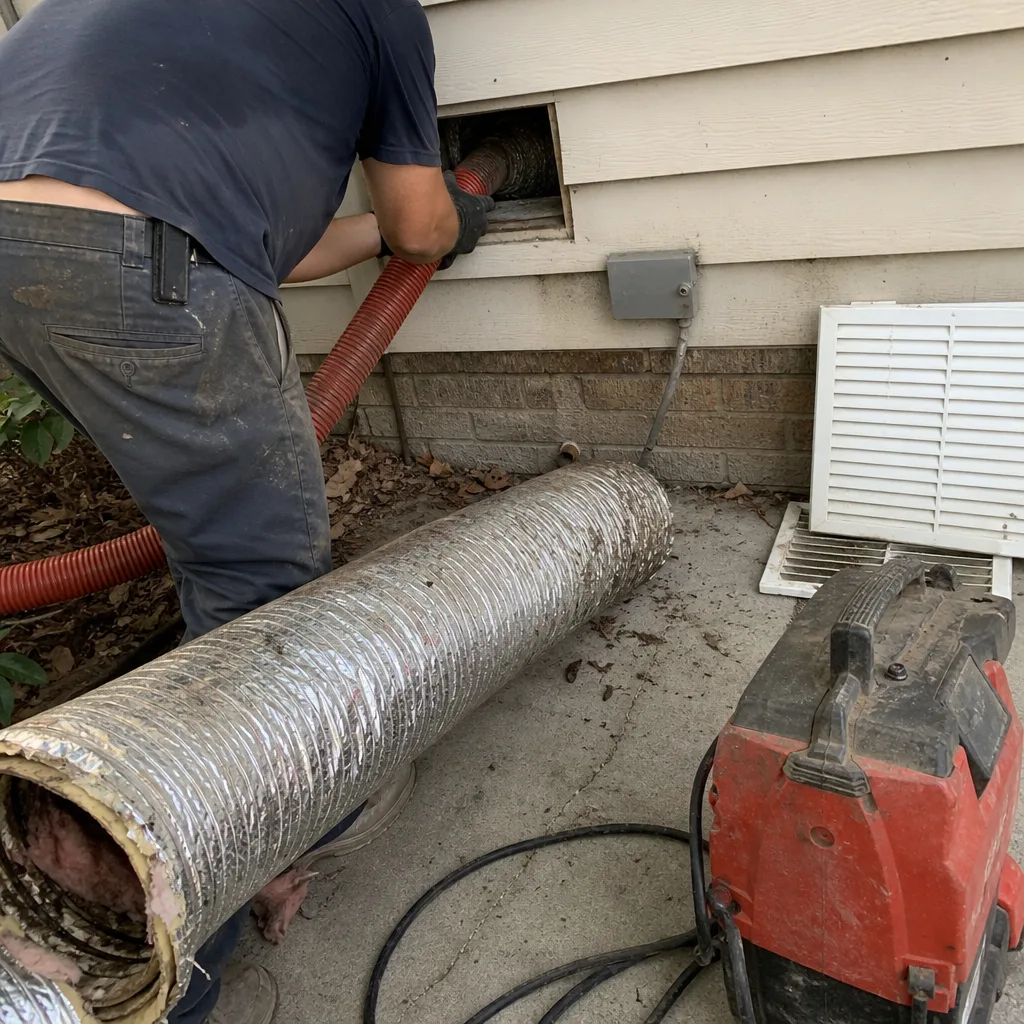 Before
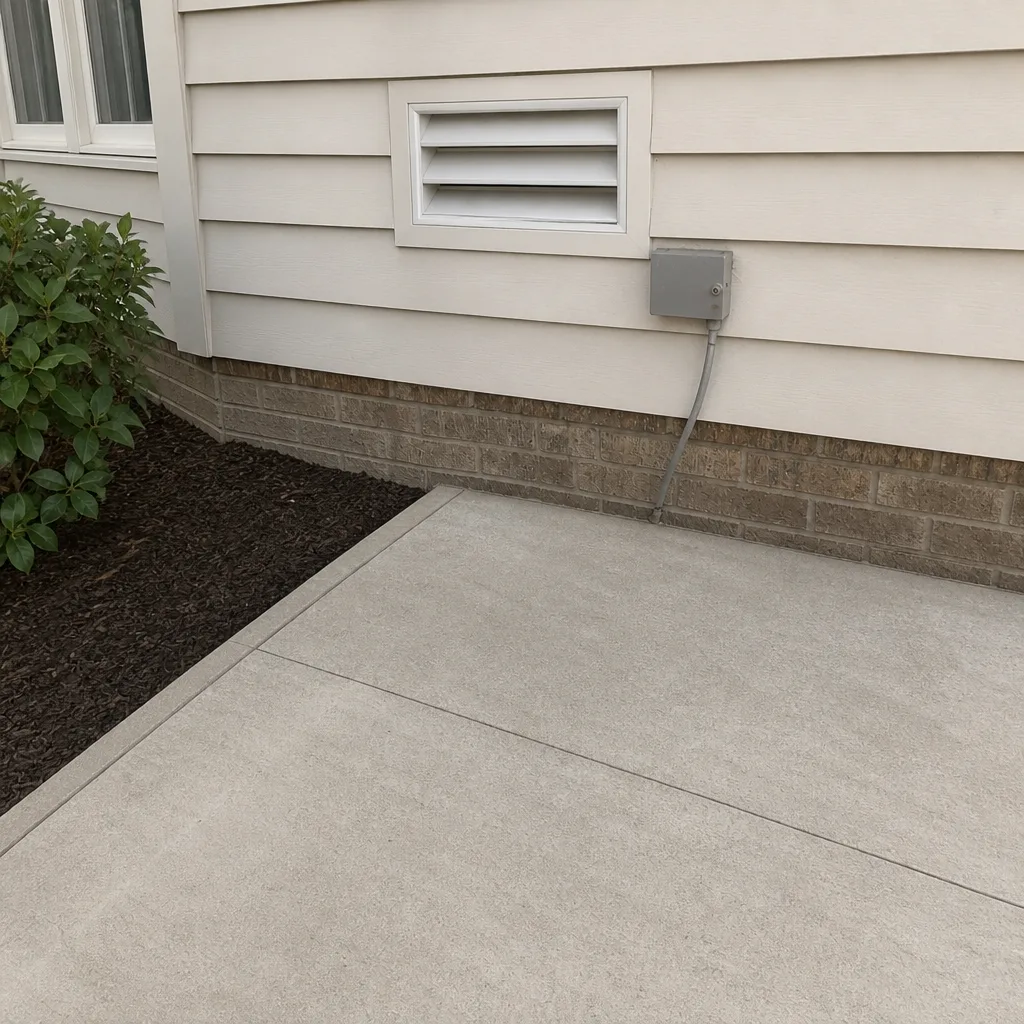 After
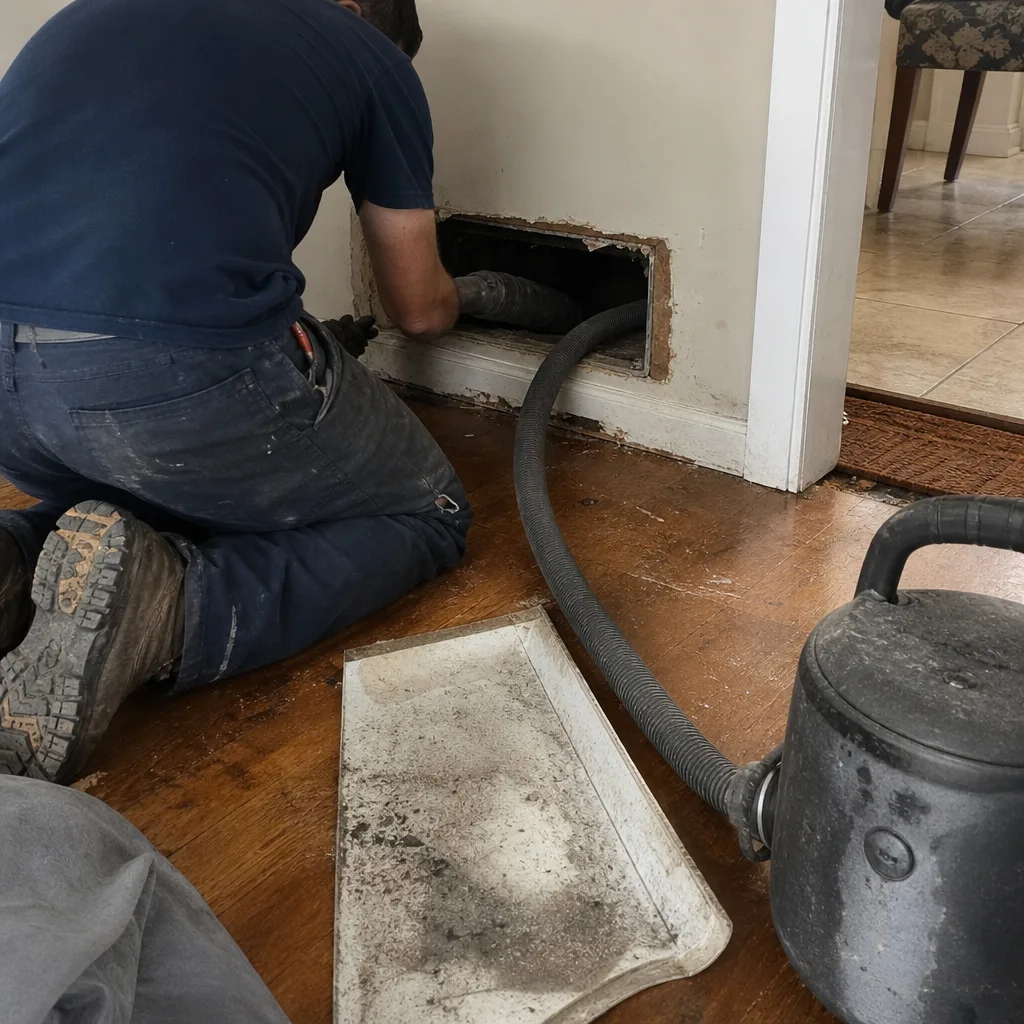 Before
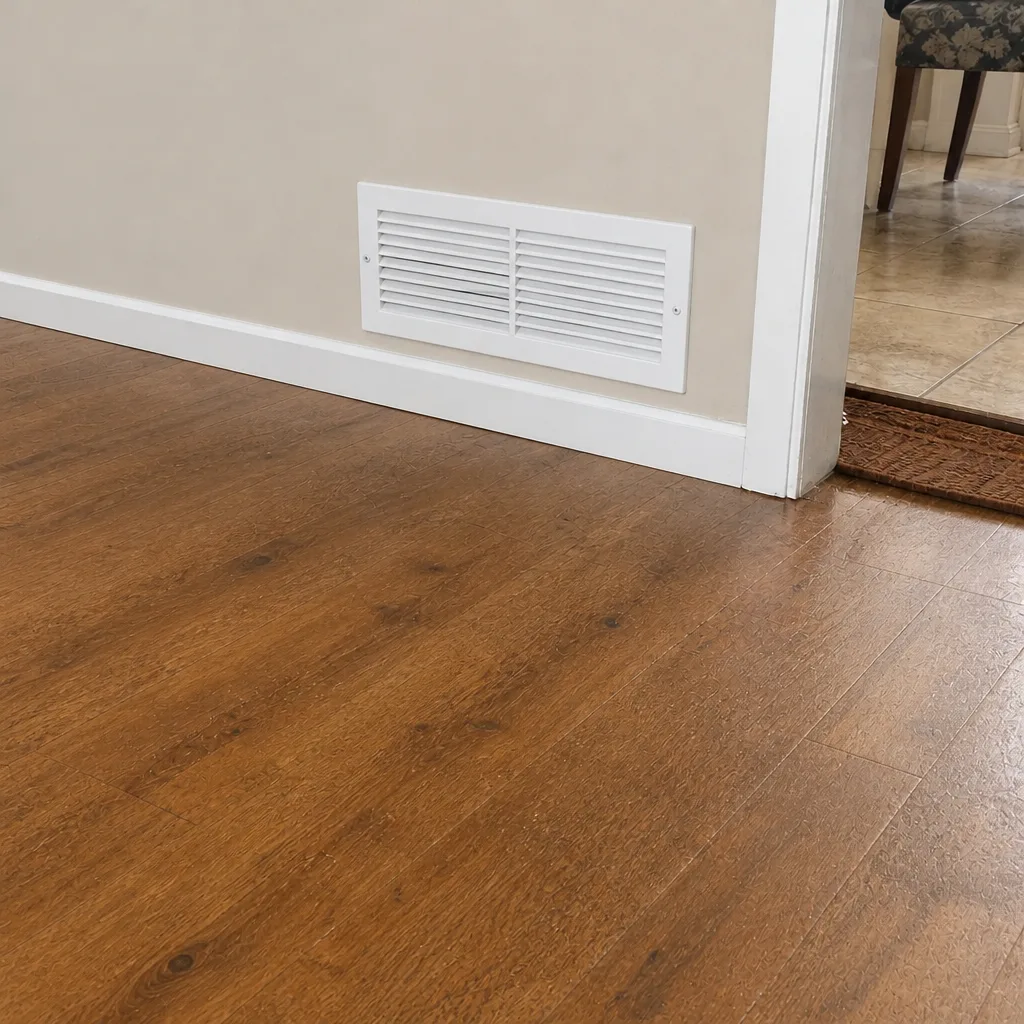 After
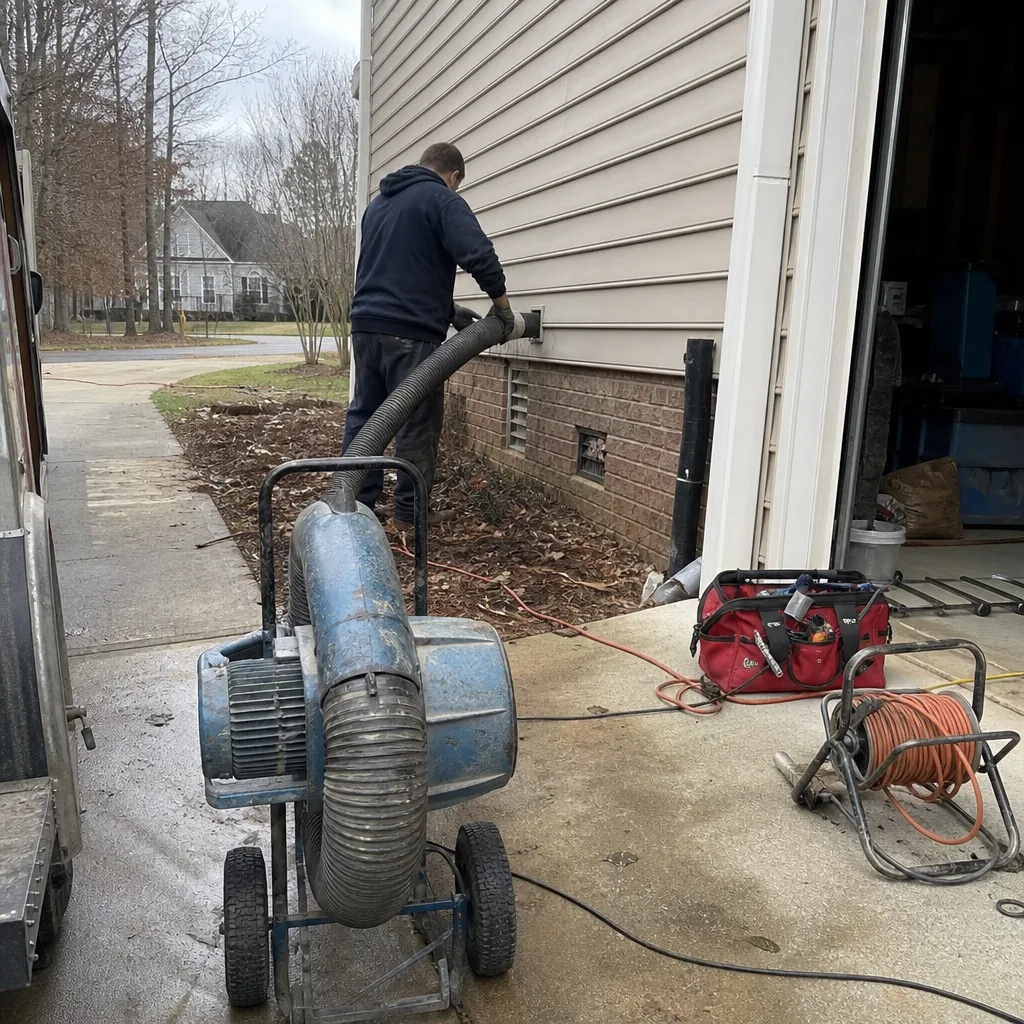 Before
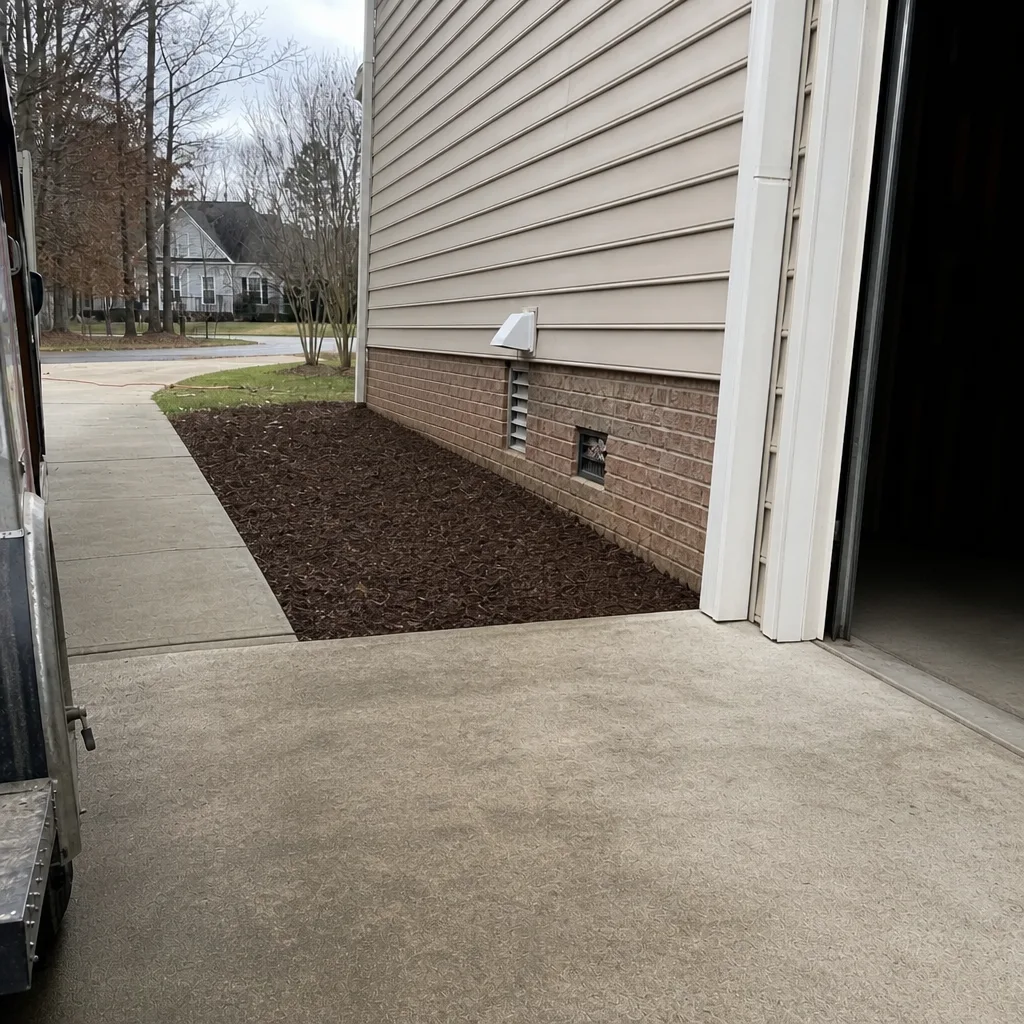 After
When to Call a Professional
Call a professional when the signs point to something a filter change won’t fix: a persistent musty smell that returns after you vacuum, allergy or asthma symptoms that get worse at home and better away, visible debris blowing out of a supply register, airflow that’s weak in some rooms and fine in others, or a filter that turns dark within a month. Rodent droppings in the ductwork, water staining near the air handler, or a dryer that takes noticeably longer than it used to all warrant a look as well. These are situations where source removal, containment, and a proper inspection of the whole pathway are the right response. Air Duct Cleaning Steele Creek offers free estimates in Steele Creek; call (855) 550-7321 and you’ll know before anything starts.
Frequently Asked Questions
There’s no official recommended frequency. The EPA has never set one, so any specific number you read online is an opinion, not a standard. In practice, we recommend basing the decision on the system itself: filter loading rate, airflow at the registers, visible debris, moisture or microbial growth, allergy symptoms, and any pest or water intrusion. Homes near construction or in dusty clay areas may need attention sooner; a clean, well-sealed system may go much longer. Call (855) 550-7321 for an assessment – estimates are free.
Cost depends on the size of the system, access, condition, and whether repair or sealing is needed. What matters more than any figure quoted in an article is the pricing structure: one flat price per system, agreed in writing before the work starts, with no per-vent charges and no surprise line items. That’s how we price, and it’s the structure to look for no matter who you hire. Call (855) 550-7321 for an exact quote – estimates are free.
Because they describe different work. A budget crew uses a shop vac and a rag; a source-removal job requires professional equipment, negative pressure, mechanical agitation, and filtration. The cheaper option cleans what you can see and leaves the blower, coil, and duct interior untouched. If the quote seems too good, ask what equipment they bring and what order they work in. Call (855) 550-7321 if you want to talk through what a full-system job involves.
You ask to see before-and-after photos of your own ducts, taken in your house, at the same angles, plus a look at the blower wheel, coil, and drain pan. A technician who did the work will show you. One who didn’t will change the subject. Verification should be part of the walkthrough, not something you have to request. Call (855) 550-7321 for an assessment – estimates are free.
It can, if the source of the reaction is what’s in the ductwork. In our humid climate, dust mites and mold spores persist on duct surfaces through the cooling season, and source removal plus sanitizing directly addresses that. If results fade within weeks, the cause is usually leaked or disconnected ductwork pulling contaminants back in, which requires repair. That’s why we inspect duct integrity as part of every job. Call (855) 550-7321 to talk through your situation.
Yes, and as a dedicated service, not an afterthought. Dryer vent cleaning addresses a fire risk that’s separate from duct cleaning entirely, and in a humid climate lint stays damp and packs against the duct wall, restricting airflow and creating re-ignition risk. If it’s been a long time since yours was cleared, that alone is a good reason to call. Call (855) 550-7321 for a free estimate.
The Bottom Line
Most Steele Creek duct problems are system problems. The three-to-five-year rule is invented, and the real decision should be driven by what your system is actually doing. A proper job means source removal across the full air pathway – ducts, air handler, blower, coil, and drain pan – using professional-grade equipment like Rotobrush, Nikro, and Abatement Technologies filtration, with before-and-after verification you can see. If results don’t hold, the ducts probably need repair and sealing, not another cleaning. One flat price per system, agreed before work starts, is the structure that protects you. That’s the guide in one paragraph.
Ready for a real assessment of your Steele Creek home? Call (855) 550-7321. We answer 24/7. Fast dispatch from 7am to 7pm, Sunday through Friday. Estimates are free, and the price is set by the written estimate before any work begins.
Written by the team at Air Duct Cleaning Steele Creek.